Child Development

Search documents
Fostering Creativity in Children | Cormac Flanigan | TEDxBolingbrook Youth
TEDx Talks· 2025-07-21 16:52
Child Development & Education - Early childhood experiences significantly impact future potential [4] - Opportunities in arts, science, math, and writing can spark passion and future careers [5] - Encouraging curiosity and exploration in children is crucial for development [3][11] Creativity & Innovation - Creativity evolves throughout life, adapting to different stages and challenges [6][7] - Engaging in creative activities is linked to higher life satisfaction [7] - Even seemingly uncreative jobs require unique forms of creativity [10] Job Market & Career Trends - Computer science fields are projected to grow by 26% from 2023 to 2033 [9] - Creative thinking is increasingly valued in various professions [8][9] - Diverse career paths benefit from creative problem-solving skills [10]


Redefining Brilliance in Slow Learners | Dr. Mala Dasgupta Sengupta | TEDxSGNS Youth
TEDx Talks· 2025-07-08 15:48
Core Argument - The current education system often labels children as "slow" based on standardized metrics, failing to recognize their unique learning styles and potential [3][4][5] - This labeling can lead to fear, loss of confidence, and a belief in their own inadequacy, hindering their learning process [6][7] - The system should shift from ranking and comparing children to recognizing and nurturing their individual strengths and talents [12] Proposed Solutions - Educators should avoid labeling children and appreciate their efforts, understanding their power to positively influence a child's life [13] - Parents should provide a safe and supportive environment, celebrating their children's successes and avoiding comparisons [14] - Policymakers should create a system that accommodates the uniqueness of each child, rather than forcing children to fit into a rigid structure [14] - Alternative forms of intelligence and learning, such as art, movement, and music, should be valued and integrated into the educational process [9][10] Call to Action - Society needs to believe in these children and provide them with opportunities to flourish, recognizing that they are not problems to be solved but dreams waiting to be realized [14][15] - It is crucial to change the narrative from labeling to learning, fostering an environment where all children can bloom in their own time [16]

Wonder Wisdom and the World We Need | Deb Nichols | TEDxSouth Congress
TEDx Talks· 2025-07-03 15:39
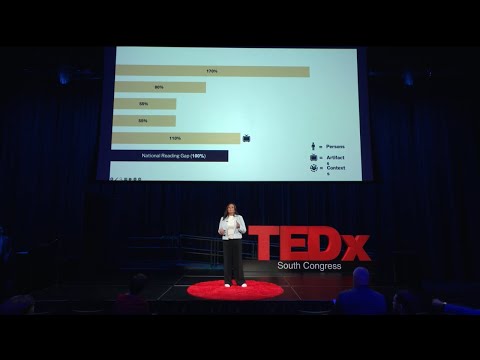
Core Argument: The PAC Framework - The core argument is that effective systems, whether for learning, health, or any aspect of life, must be designed with a focus on Persons, Artifacts, and Context (PAC) [7] - Alignment of these three elements (Persons, Artifacts, and Context) leads to transformative outcomes, whereas misalignment can cause systems to fail or even cause harm [9][14][21] - The industry should prioritize understanding and fitting systems to the lives of the people they are intended to serve, rather than standardizing approaches [21][25] Application of PAC in Education - The "Between the Lions" case study demonstrates the PAC framework in action, showing how aligning media (Artifacts), culturally relevant materials (Context), and teacher support (Persons) significantly improved reading outcomes [9][16] - Initial attempts to implement the program without adapting materials to local cultures (Mississippi) or providing adequate teacher support resulted in reduced impact [13][14] - When all three elements were aligned, the impact jumped to 170%, exceeding the national baseline and demonstrating the power of the PAC framework [16] Application of PAC in Caregiving - A national study of caregivers revealed that their motives and mindsets significantly affect their well-being and ability to cope with caregiving tasks [19][20] - Systems should be responsive to the individual needs and circumstances of caregivers, recognizing that care is personal and contextual [21][22] - The industry should anchor its work in the PAC corners, considering the caregivers (Persons), a system responsive to their motives (Artifacts), and the messy reality of their lives (Context) [21][22] Implications for System Design - The industry should move away from designing for simplicity and standardization, and instead design for complexity, recognizing the importance of individual differences and contextual factors [6][21] - Systems should be built with empathy, focusing on understanding and meeting people where they are [25] - The most important question when designing a system should be whether it fits the life someone is actually living [25][28]