Discretionary Spending

Search documents
American Express: Too Expensive Even With A Resilient Customer Base (NYSE:AXP)
Seeking Alpha· 2025-11-18 18:07
Core Viewpoint - American Express (AXP) shares have performed well over the past year, increasing by over 20%, but have recently faced pressure due to concerns about discretionary spending, resulting in a decline of approximately 9% from their highs [1] Group 1 - The stock has shown solid performance, adding over 20% in the past year [1] - Recent concerns about discretionary spending have led to a decline of about 9% from its peak [1] - The company is noted for having a higher-quality customer base, which may influence its resilience in challenging economic conditions [1]



Cognizant plans India IPO, listing to make it India's 2nd largest IT company
MINT· 2025-10-29 15:44
Core Viewpoint - Cognizant Technology Solutions Corp. is considering a public listing on Indian stock exchanges, which would position it as India's second-largest listed IT services company, following Tata Consultancy Services (TCS) [1][2] Company Strategy - Cognizant's board and management are evaluating opportunities to enhance shareholder value, including a potential primary offering and secondary listing in India, with legal and financial advisors involved [2][3] - The company ended the previous year with $19.74 billion in revenue and has a significant workforce in India, with over two-thirds of its 241,500 employees based there [2] Market Valuation - The motivation behind the potential India listing is attributed to better valuation opportunities in the Indian market, where Cognizant's price-to-earnings ratio is around 13, compared to 22-23 for local firms like TCS and Infosys [4][5] Industry Context - Cognizant's potential listing follows the upcoming public listing of Carlyle-backed Hexaware Technologies Ltd. in February 2025, indicating a trend of American firms seeking to tap into the Indian market [6] Financial Performance - Cognizant reported better-than-expected performance for the July-September period, with revenue of $5.42 billion, reflecting a 3.24% sequential increase and a 7.36% year-over-year growth, surpassing analyst estimates [7][8] - The company raised its full-year revenue guidance to $21.05-$21.1 billion, indicating a projected annual growth of 6.6%-6.9%, up from a previous range of 4.7%-6.7% [11] Growth Dynamics - Cognizant's organic growth has improved as reliance on acquisitions has decreased, with year-on-year growth rates of 8.2%, 7.2%, and 6.5% in the first three quarters of the year [12][13] - The Belcan acquisition contributed significantly to growth in earlier quarters, but its impact has diminished, suggesting a shift towards more sustainable growth strategies [13][14] Operational Insights - The company's net profit declined by over half sequentially to $274 million due to higher one-time income tax expenses [15] - Operating margin increased by 40 basis points to 16%, attributed to a depreciating Indian rupee and disciplined expense management [16] Workforce and Hiring Practices - Cognizant's employee count rose to 349,800, an increase of 6,000 from the previous quarter, amidst scrutiny over hiring practices in the US [17][18] - The company has reduced its dependency on visas and increased local hiring, mitigating potential impacts from recent US policy changes [19][20]


The wealthy are spending more and everyone else is not, says Zeta Global CEO David Steinberg
CNBC Television· 2025-10-01 19:39
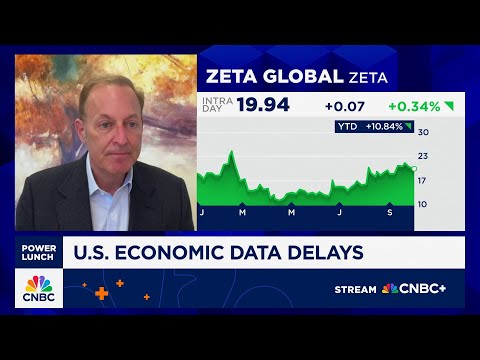
Joining us now is David Steinberg. He's the CEO of Zeta Global. David, we're gonna maybe brand this as David Zeta data.What do you think. >> I don't know. My my wife and kids might like it, but the uh you know, as you've said, in the current environment, getting access to data is getting harder.And what we're seeing is more and more people looking at private indicacies like the Zeta Economic Index. Yeah, because with you know and now there's all this also it's not just that government data may not happen Da ...

The wealthy are spending more and everyone else is not, says Zeta Global CEO David Steinberg
Youtube· 2025-10-01 19:39
Core Insights - The current economic environment shows a disparity in spending habits, with wealthier individuals increasing their spending while others are reducing discretionary expenses [3][7] - There is a notable decline in consumer interest in credit, with a 22% drop from July to August, impacting larger purchases for non-wealthy consumers [5][10] - Essential spending is on the rise, which is helping to maintain overall economic growth despite the drop in discretionary spending [6][7] Economic Indicators - The Zeta Economic Index decreased by four points from July to August, indicating a potential slowdown, but GDP is still expected to grow at or above 2% for the remainder of the year [6][7] - Essential items are being purchased at a greater rate, offsetting declines in discretionary spending and contributing to GDP growth [7][11] - Labor Day sales are anticipated to provide a boost in retail activity for September [8] Consumer Behavior - There is an increasing aversion to risk among consumers, which is reflected in their spending patterns [3][4][11] - The automotive sector has seen a decline in spending, with a noted drop of four points [4] - Consumers are still willing to spend on essential items, which is crucial for maintaining economic stability [10][11]

Carnival Says Cruise Bookings Are Strong. Its Stock Slides Anyway.
Investopedia· 2025-09-29 20:15
Core Insights - Carnival Corporation (CCL) raised its full-year outlook for the third time in 2025 after reporting better-than-expected third-quarter results, with booking volumes significantly outpacing capacity growth [1][8]. Financial Performance - Carnival reported third-quarter adjusted earnings per share (EPS) of $1.43 on revenue of $8.15 billion, surpassing analyst expectations of $1.32 EPS and $8.11 billion in revenue [9]. - The company anticipates adjusted net income to be nearly 55% higher than in 2024, amounting to $235 million more than its previous guidance in June [9]. - Adjusted EBITDA is projected to be around $7.05 billion, reflecting a 15% increase compared to 2024 and exceeding the June guidance of $6.9 billion [9]. Market Trends - Booking trends have strengthened since May, with higher booking volumes compared to the previous year, significantly outpacing capacity growth [5][4]. - Carnival has nearly half of 2026 booked, aligning with record levels from 2025 but at historically high prices in constant currency for both North America and Europe segments [4]. Revenue Projections - Despite strong bookings, Carnival's projection for passenger revenue fell short of analysts' estimates, with expected net yields rising by 5.3% in 2025, compared to the 5.79% increase anticipated by analysts [3][8]. - Net yields increased by 4.6% year-over-year in the third quarter [5].

Why Costco Stock Was Heading Lower Today
Yahoo Finance· 2025-09-26 16:33
Core Insights - Costco's stock experienced a 2.5% decline following the release of its fourth-quarter results, which, while solid, did not meet the high expectations set by its valuation [2][5] - Management's comments regarding a decrease in discretionary spending raised concerns among investors [2][5] Financial Performance - Same-store sales increased by 6.4% after adjusting for fuel prices and currency exchange, leading to total revenue of $86.2 billion, an 8% increase year-over-year, surpassing estimates of $86.1 billion [4] - Membership fee income rose by 14% to $1.72 billion, supported by a fee increase implemented a year ago, with global renewal rates at 90% [5] - Earnings per share grew by 11% to $5.87, exceeding the consensus estimate of $5.81 [5][6] Market Position and Valuation - Costco primarily generates revenue from essential items, but higher margins are associated with discretionary products such as electronics and furniture [7] - The company's price-to-earnings (P/E) ratio is around 50, which may exert pressure on the stock and create elevated expectations for future earnings reports [6][8] Future Outlook - Although management does not provide specific guidance, Costco's results are typically stable from quarter to quarter [8] - The company remains resilient, but it is not immune to potential economic downturns [8]

X @Investopedia
Investopedia· 2025-09-21 18:00
Tourism Industry Trends - Las Vegas experienced a 7% decrease in visitor numbers during the first half of the year [1] Economic Implications - The decline in visitors could be a potential warning sign for the economy due to the discretionary nature of tourism spending in Las Vegas [1]
From Old School to New School: Retro Gaming's Potential Drop May Point to Cracks That Could Spill Over Into Trading Cards
Yahoo Finance· 2025-09-08 18:10
Core Insights - The retro video game collecting market, which saw significant growth during the pandemic, is now experiencing a downturn, leading to challenges for sellers in moving inventory [1][2] - The market is described as a "bubble" that is deflating, as disposable income previously allocated to hobbies like retro game collecting is now constrained by economic pressures [2][4] - The decline in retro gaming is attributed to a shift in collector interest towards trading card games, particularly Pokémon cards, which are gaining popularity and investment interest [6][7] Market Dynamics - The pandemic led to increased disposable income for many consumers, which was funneled into retro game collecting as entertainment options were limited [2] - Sellers are facing difficulties, with reports of no bids on eBay and minimal interest on platforms like Facebook Marketplace, even at reduced prices [3] - The economic environment, characterized by mass layoffs, inflation, and stagnant wages, is impacting discretionary spending, making luxury items like vintage video games less justifiable for consumers [4] Consumer Behavior - While the retro gaming market is declining, other entertainment sectors such as concert tickets and theme park admissions are still performing well, indicating uneven economic impacts across consumer segments [5] - The shift in spending from retro games to trading card games reflects a broader change in collector interests and cultural trends within the hobbyist community [6][7]
Consumer rebounded in June but didn't offset declines from April, May: BofA's Liz Everett Krisberg
CNBC Television· 2025-07-10 11:59
Consumer Spending Trends - Bank of America Institute data indicates a 2% increase in debit and credit card spending in June [1] - While consumer spending rebounded in June, it didn't fully offset earlier declines, suggesting a cooling trend [2] - Lower-income households are primarily driving the pullback in spending, while higher-income household spending accelerated by 1.2% [5] - Discretionary travel spending is declining, but restaurant spending shows a dichotomy, with fewer households dining out but spending more per transaction [6][7] Income and Wage Growth - Higher-income households experienced accelerated after-tax wage growth, nearing 3%, for the third consecutive month [9] - Lower-income households saw decelerated after-tax wage growth, increasing by 1.6% compared to 1.8% previously [10] Credit Card Usage - Younger generations entering a challenging labor market are a focal point regarding credit card usage [11]
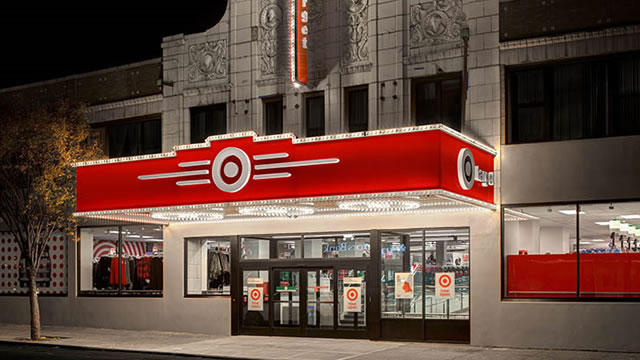
Target Reports Sales Drop as Consumers Focus on ‘Needs-Based Categories'
PYMNTS.com· 2025-05-21 16:45
Core Insights - Target reported a 3.8% decrease in comparable sales for Q1 and anticipates a low single-digit decline in sales for fiscal 2025 [1] - The decline in sales is attributed to five consecutive months of declining consumer confidence and uncertainty regarding tariffs [2] - Target's comparable digital sales grew by 4.7%, while comparable store sales fell by 5.7% [4] Sales Performance - The company experienced a decline in both traffic and sales, particularly in discretionary categories [1] - Comparable store sales fell by 5.7%, contributing to the overall decline in sales [4] - Same-day delivery grew by 36%, and curbside pickup now accounts for nearly half of digital sales [5] Consumer Behavior - Consumers are becoming more cautious and focused on saving as they manage their budgets, influenced by declining consumer confidence [3] - There is a noticeable shift from discretionary spending to needs-based categories due to high inflation [2] Strategic Responses - To mitigate tariff impacts, Target is negotiating with vendors, reevaluating product assortments, changing production locations, and adjusting pricing as a last resort [3][4] - The company has reduced the share of its own brand products made in China from 60% in 2017 to 30% currently, with a goal of lowering it to under 25% by the end of 2026 [4] Financial Position - Target maintains a strong balance sheet and ample cash, allowing it to navigate near-term challenges while continuing to invest in new stores, remodels, and technology [6]