GNI

Search documents
“既看GDP也看GNI” GDP与GNI有何区别和联系?详解
Di Yi Cai Jing· 2025-10-24 04:51
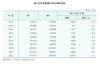
Core Viewpoint - The article discusses the importance of both GDP and GNI as economic indicators, emphasizing their roles in assessing a country's economic performance and investment environment [1][2][3]. Group 1: Definitions and Concepts - Gross Domestic Product (GDP) measures the total value of all goods and services produced within a country during a specific period, reflecting domestic production [2]. - Gross National Income (GNI) represents the total income earned by a country's residents and businesses, including any income earned abroad, and is calculated as GDP plus net income from abroad [2][3]. Group 2: Relationship and Differences - GDP serves as the foundation for calculating GNI, with the formula GNI = GDP + net income from abroad [3]. - The distinction between GDP and GNI lies in their focus: GDP emphasizes production within a country's borders, while GNI focuses on the income received by residents, regardless of where it is generated [3]. Group 3: Importance and Usage - GDP is primarily used to analyze economic growth, while GNI is more relevant for assessing income distribution and living standards [4]. - International organizations like the United Nations and World Bank utilize these indicators for various assessments, with GDP often being favored for economic performance evaluations and GNI for income level classifications [4]. Group 4: Historical Data - Historical data from 2013 to 2022 shows fluctuations in GNI and GDP, with GNI consistently being lower than GDP, indicating net outflows of income to foreign entities [6]. - For instance, in 2022, GNI was 1,191,767 million, while GDP was 1,204,724 million, resulting in a difference of -12,957 million, which reflects a -1.1% rate [6].

“既看GDP也看GNI”,GDP与GNI有何区别和联系?详解→
第一财经· 2025-10-24 04:48
Core Viewpoint - The article discusses the importance of both GDP and GNI as key indicators for measuring a country's economic status and development level, emphasizing the need for a transparent and stable institutional environment to attract foreign investment [1][2]. Group 1: Definitions of GDP and GNI - Gross Domestic Product (GDP) refers to the total value of all final goods and services produced within a country or region during a specific period, highlighting domestic production [2]. - Gross National Income (GNI) is the total income received by residents of a country or region, including income from abroad, and was previously known as Gross National Product (GNP) until its renaming in 1993 [2]. Group 2: Relationship and Differences between GDP and GNI - GDP serves as the foundation for calculating GNI, with the relationship expressed as GNI = GDP + net income from abroad [3][4]. - The distinction lies in their focus: GDP measures production output, while GNI measures income distribution, accounting for foreign investments and income [3][4]. Group 3: Importance of GDP and GNI - Both GDP and GNI are crucial for international analysis, with GDP being more relevant for assessing economic growth and GNI for evaluating income disparities and living standards [5]. - Organizations like the United Nations and World Bank utilize these indicators differently, with GDP often used for overall economic performance and GNI for classifying countries by income levels [5]. Group 4: Historical Data on GNI and GDP - A table presents historical data from 2013 to 2022, showing GNI, GDP, and the difference between the two, indicating fluctuations in the relationship over the years [6].