Geopolitical turmoil

Search documents
Why ConocoPhillips Rallied Double-Digits in January
The Motley Fool· 2026-02-10 08:15
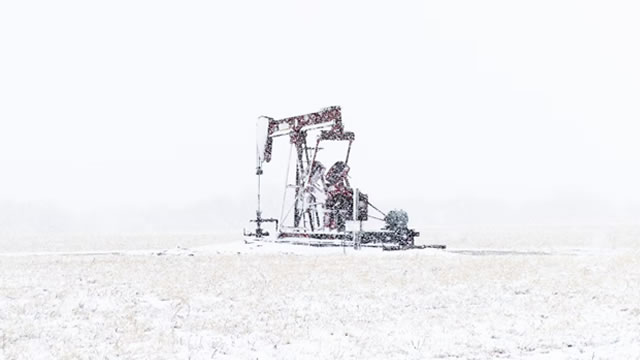
Group 1: Core Insights - ConocoPhillips shares increased by 11.3% in January, driven by rising oil prices due to geopolitical events in Venezuela and Iran [1] - Oil prices rose from approximately $57 to $65 in January, influenced by the U.S. ousting of Venezuelan President Nicolás Maduro [2][6] - The potential regime change in Venezuela raises the possibility of unlocking unexploited oil reserves, despite current low production levels [3][4] Group 2: Company Performance - ConocoPhillips reported adjusted earnings per share of $1.02, which missed analyst estimates by $0.08, but the stock price remained stable due to higher current oil prices [8] - The company is owed $10 billion by Venezuela, a significant amount representing 7.4% of its current market cap, which could be recovered if the political situation improves [5][9] - CEO Ryan Lance indicated that the company would prioritize recovering the owed amount before considering reentering the Venezuelan market [9] Group 3: Market Context - Political instability in Venezuela and Iran has contributed to an upward trend in oil prices, with Iran being the ninth-largest oil producer, accounting for about 4% of global supply [6][10] - The geopolitical turmoil has created a mixed signal for oil prices, as disruptions could affect supply while potential regime changes may lead to increased production [3][4]


Tech Hasn't Said Its Last Word - Dow Jones And U.S. Index Outlook
Seeking Alpha· 2026-02-09 15:10
Group 1 - Geopolitical turmoil is diminishing as traders shift focus to upcoming US data stress tests [5] - The past week has seen a significant change in risk positioning among traders [5]

Dollar Defies Trump Turmoil, Rising With Focus on the Fed’s Path
Yahoo Finance· 2026-01-09 21:08
Core Viewpoint - The resilience of the US economy is currently overpowering geopolitical turmoil, leading to a surprising strength in the US dollar despite expectations of a decline due to Federal Reserve interest rate cuts [1][2]. Economic Indicators - Traders had increased their bets against the US dollar, anticipating a decline as the Federal Reserve cuts interest rates, which would incentivize global investors to seek higher returns elsewhere [2]. - The December jobs report revealed a surprising decline in the unemployment rate, which countered weaker-than-expected growth in nonfarm payrolls, contributing to doubts about the extent of future interest rate cuts by the Federal Reserve [4]. Market Performance - The Bloomberg Dollar Spot Index rose for the fourth consecutive day, reaching its highest level since December 10, with a 0.6% increase this week, marking the largest advance since November [5]. - Options positioning has become increasingly positive, with market sentiment being the most bullish since early December [5]. Market Sentiment - The dollar's recent upward movement illustrates the challenges faced by Wall Street forecasters in predicting market directions during the Trump administration, highlighting the volatility and unpredictability of the current economic landscape [6]. - The post-pandemic economy has defied recession fears, with ongoing uncertainties stemming from Trump's trade policies and military threats, further complicating market predictions [7].
Markets react mildly to the US capture of Venezuelan leader Maduro
Yahoo Finance· 2026-01-05 02:02
Group 1: Oil Market Reaction - Oil prices experienced a decline, with U.S. benchmark crude oil trading at $56.80 per barrel, down 52 cents, and Brent crude at $60.26 per barrel, down 49 cents [2] - Venezuela's oil industry, currently producing about 1.1 million barrels per day, is expected by some analysts to potentially double or triple its output in the coming years, despite its current state of disrepair due to years of neglect and sanctions [3] Group 2: Precious Metals Surge - The price of gold increased by 2.4% and silver surged by 6%, as these assets are often viewed as safe havens during geopolitical turmoil [4] Group 3: Asian Market Performance - Asian shares saw significant gains, with the Nikkei 225 index rising 3% to close at 51,832.80, marking its highest close since reaching a record of 52,411.34 on October 31 [5] - South Korea's Kospi index surged 3.4% to a record high of 4,457.52, also closing at a record high on the previous Friday [7]
Precious Metals Pare Gains
Barrons· 2025-12-23 16:23
Core Viewpoint - Precious metal futures have experienced a decline after a period of strength, influenced by geopolitical factors and a weaker dollar [1] Group 1: Market Dynamics - Precious metals gained due to geopolitical turmoil and a softer dollar, as noted by Li Xing of Exness [1] - Gold is benefiting from a weaker dollar, driven by expectations of U.S. monetary easing impacting the currency and treasury yields [1] Group 2: Federal Reserve Expectations - Markets currently anticipate that the Federal Reserve will maintain unchanged rates in January [1] - There is an expectation of two rate cuts by the end of 2026 [1]
Oil is in broader, bottoming phase, says Veriten's Arjun Murti
CNBC Television· 2025-10-23 21:32
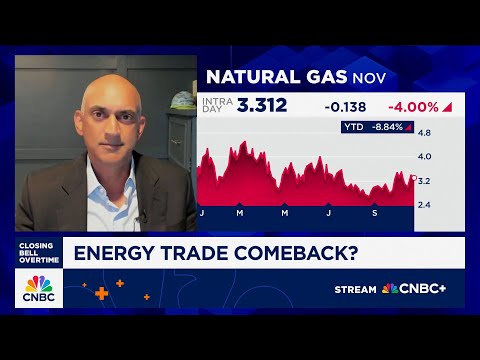
Joining us now is Arjun Merty, partner at Veritin. Arjun, a lot of this seems to be driven by the macro and uh certainly in this administration, the headlines can change quickly. How much can investors bank on this.>> John, we've been here before. We've had a bunch of bouts of geopolitical turmoil, both bullish and bearish. Bullish, the sanctions on Russia announced over the weekend.We saw Israel bomb Iran. And previously we've had bearish headlines whether it was liberation day tariffs or spiking uh China ...
Oil is in broader, bottoming phase, says Veriten's Arjun Murti
Youtube· 2025-10-23 21:32
Core Viewpoint - The current oil market is experiencing a bottoming phase, influenced by geopolitical events and macroeconomic factors, with expectations of a structural bottom being reached in the next one to six months [3][4][5]. Geopolitical Influence - Recent geopolitical events, such as sanctions on Russia and military actions in the Middle East, have historically led to volatility in oil prices, but investors are advised to look beyond these headlines [1][2]. Market Demand and Supply Dynamics - Global demand for oil is not sharply increasing, but developing market demand is performing better than anticipated, while OPEC has released oil back into the market, contributing to current supply dynamics [3][4]. - There is a belief that the oil market is not as oversupplied as some analysts suggest, although a degree of oversupply is expected in the coming months [5][6]. Price Predictions - Short-term price predictions are challenging, with potential for prices to dip below $50 temporarily, but any low prices are expected to be short-lived [5]. - The expectation is that the oil trade could become more sustainable as the market works through the current downturn, which has persisted since the peak related to the Russia-Ukraine conflict [5]. Seasonal Factors - Weather conditions, particularly winter temperatures, will play a significant role in the energy trade, affecting both oil and natural gas markets [6][7]. - A colder winter could lead to a quicker market bottom, while a warmer winter may delay recovery until spring [7].