Oil Shock

Search documents
X @The Wall Street Journal
The Wall Street Journal· 2026-04-05 15:52
Central banks live in fear of their last mistake: waiting too long to raise rates in the post-pandemic boom. But there’s a difference between that boom and this oil shock. https://t.co/OcVVyGYhcw ...
'It doesn't add up': MS NOW reporter takes down Trump’s chaotic Iran strategy
MSNBC· 2026-04-01 02:00
AFFRONT TO YOUR EXPERTISE TO HAVE TO ASK YOU TO PARSE OUT THIS GOBBLEGOOK BECAUSE IT DOESN'T MAKE ANY SENSE THAT THE PRESIDENT THROUGH HIS OWN ACTIONS ENDED UP CLOSING THE STRAIGHT OF HER MOVES IS NOW SAYING HE'S WILLING TO WALK AWAY FROM IT AND LET OTHER PEOPLE CLEAN UP HIS MASS. HOW DOES THAT ACTUALLY PLAY WELL, WHAT'S REALLY SMART IS WHEN YOU TELL YOUR ENEMY, YOU'RE GOING TO GIVE UP IN TWO WEEKS. SO IT'S A MESSAGE TO THE IRANIANS, JUST WAIT TWO WEEKS.BUT THE TIMELINE IS POLITICAL FOR THEM, RIGHT. THAT'S ...


Oil Shock Meets Asset Price Deflation
Seeking Alpha· 2026-03-31 01:10
Group 1 - The article does not provide any relevant content regarding company or industry insights [1]

Powell Says Fed Can Look Past Oil Shock, but Warns Patience Has Limits
WSJ· 2026-03-30 15:02
Core Viewpoint - The Fed chair indicated that energy disruptions are typically short-lived but emphasized that the central bank cannot assume this will always be the case, especially in the context of prolonged elevated inflation [1] Group 1 - Energy disruptions are generally temporary in nature [1] - The central bank's caution stems from the experience of sustained high inflation over recent years [1]
How Worried Are Fed Leaders About Oil Shock? 4 Events Thursday Will Provide Clues.
Barrons· 2026-03-26 18:02
Core Insights - Oil prices have surged due to the ongoing conflict with Iran, indicating a significant impact on the energy market [1] - Gasoline prices have jumped, reflecting the broader implications of rising oil prices on consumer costs [1] - Markets experienced a sharp sell-off following the Federal Reserve's decision in March to maintain steady interest rates, highlighting investor concerns [1] Industry Impact - The conflict with Iran has led to increased volatility in oil prices, which could affect supply chains and operational costs for various industries reliant on oil [1] - Rising gasoline prices may lead to higher transportation and logistics costs, impacting consumer goods and overall inflation [1] - The Federal Reserve's decision to keep rates steady may influence investment strategies within the energy sector and related markets [1]

X @The Economist
The Economist· 2026-03-22 01:00
American GDP growth slowed after the last big oil shock, when Russia invaded Ukraine in 2022. The economic hit may be harder this time https://t.co/Zuuf8cTZos ...
Gas Prices Just Jumped $0.48 in One Week, and History Says They're Going Higher
Yahoo Finance· 2026-03-21 10:25
Core Insights - The ongoing conflict in Iran has led to a significant increase in gasoline prices in the U.S., with prices rising from an average of $3.46 per gallon on March 7 to $3.88 per gallon recently, marking a total increase of $0.90 within a few weeks [1][2]. Historical Context - Historical oil shocks, particularly those originating from the Persian Gulf, provide insight into the current situation. Notable events include the 1973 OPEC oil embargo, the 1979 Iranian Revolution, and the 1990 Gulf War, all of which resulted in substantial increases in gasoline prices [2][3][4]. 1973 OPEC Oil Embargo - During the 1973 OPEC oil embargo, gas prices rose only 10% initially to $0.39 per gallon, but surged to $0.53 per gallon by 1975, representing a 47% increase from 1973 levels [5]. 1979 Iranian Revolution - In 1979, gas prices averaged $0.63, increasing by 36% to $0.86 per gallon in 1980, and then by another 38% in 1981, totaling a 89% increase from the initial price [6]. 1990 Gulf War - Prior to the 1990 Gulf War, gas prices averaged $1 per gallon. The swift response to the invasion of Kuwait limited the price increase to $1.14 per gallon by 1991 [9].
X @The Economist
The Economist· 2026-03-21 02:00
China’s response to the oil shock stems from decades of work to confront what its rulers see as a major vulnerability: reliance on the fickle outside world https://t.co/96hCzrwGLnIllustration: Hanna Barczyk https://t.co/qInGfIcoje ...
X @The Economist
The Economist· 2026-03-20 22:40
The oil shock is colliding with an economy that, fairly or not, Americans already hate. The backlash against Donald Trump’s administration could be fierce https://t.co/tLpOpJWGGk ...
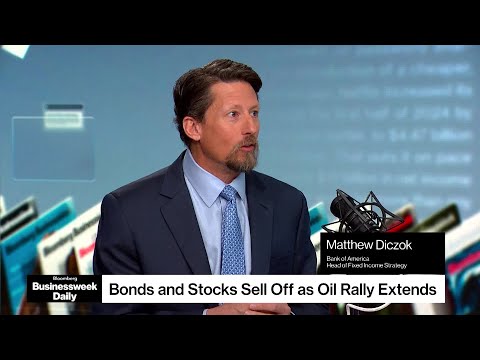
Bond Markets Hit by Oil Shock
Bloomberg Television· 2026-03-20 14:47
Global rates. The global bond selloff. We kind of understand what's going on here, but are we entering.In your view, a new era when it comes to the global bond trade. We're not overly concerned about it, particularly from a U.S. perspective. Right.If you think about what Japan is going through now with the, you know, be a little behind the curve catching inflation. We've been through that. We got through that five years ago.The best way to look at its real yields rate, inflation adjusted yields, not exactly ...