Premium travel

Search documents
United Airlines' Premium Focus And Cost Discipline Set Stage For Q4 Recovery
Benzinga· 2025-07-18 18:40
Core Viewpoint - United Airlines Holdings, Inc. is focusing on premium travel, operational efficiency, and global expansion, leading to positive financial projections and a raised price forecast by Bank of America Securities analyst Andrew G. Didora from $90 to $108 [1][5]. Financial Performance - The airline reported second-quarter adjusted earnings of $3.87 per share, surpassing analyst estimates of $3.77 per share [1]. - The full-year 2025 EPS estimate has been increased to $10.50 from $10.00, and the 2026 EPS is raised to $12.40 from $11.41, indicating nearly 20% year-over-year growth [5]. Revenue and Demand Trends - United Airlines' emphasis on premium travel, international routes, and loyalty programs is contributing to industry-leading margins [2]. - There are signs of domestic demand recovery in early July, with unit revenue performance expected to rebound, nearing flat in Q4 2025 after a 4% decline in Q2 [2]. Cost Management - Cost trends are improving, with second-half unit cost growth projected to be around 2.5%, lower than the previously estimated range of 3.5%-4.0% [3]. - Despite potential cost headwinds from a new flight attendant contract, the outlook for unit costs remains positive, with expected growth of about 2.5% into 2026 [4]. Earnings Projections - The third quarter 2025 EPS is now projected at $2.70, at the higher end of the guided range of $2.25–$2.75 [4].


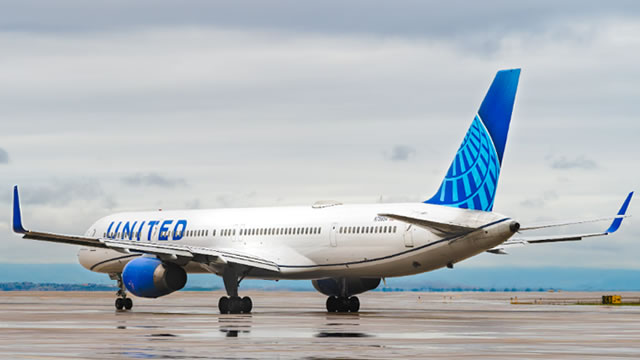
Why Delta and United are pulling away from the airline pack
CNBC· 2025-07-18 14:55
Core Insights - Delta Air Lines and United Airlines dominate the U.S. airline industry, accounting for over 86% of profits among the seven largest airlines last year, despite overall airline margins being less than 4% [2][3] - Both airlines are expected to perform better than competitors due to their strong networks and focus on premium travel, with analysts noting a clear distinction between brand loyalty towards Delta and United versus other carriers [3][4] - The airline industry is facing challenges with falling airfare and weaker domestic travel demand, leading to a 3.5% drop in airfare in June compared to the previous year, despite overall inflation rising [6][10] Financial Performance - United Airlines reported a 7% drop in domestic revenue per available seat mile in the second quarter, while Delta's domestic revenue decreased by 5% [10][11] - Delta's revenue from its American Express partnership rose by 10% to $2 billion in the second quarter, indicating strength in premium-class revenue, which was up 5% [12][11] Strategic Initiatives - Airlines are exploring new revenue streams, with Southwest Airlines introducing checked bag fees and plans for assigned seating, while Delta is testing segmentation in premium cabins [13][14][15] - United Airlines is focusing on expanding its premium-economy cabin, which is generating good returns, and is revamping its Polaris class for long-haul flights [17][18] Market Dynamics - The competitive landscape is intensifying, with Delta and United both trimming their 2025 outlooks while emphasizing international travel and loyalty programs to boost revenues [9][10] - The industry is experiencing oversupply in certain markets, particularly in trans-Atlantic routes, as demand stabilizes post-pandemic [11][9]


Delta hits record profits and airline stocks bounce as passengers trade economy for luxury
Business Insider· 2025-07-11 11:36
Core Insights - Airlines are experiencing a turnaround due to a surge in premium travel, despite initial economic uncertainties and tariff announcements affecting the industry negatively at the start of the year [1][2]. Financial Performance - Delta Air Lines reported record revenue of $15.5 billion for Q2, with pre-tax profits of $1.8 billion, leading to a 12% increase in stock price after exceeding Wall Street estimates [2]. - Delta's stock has gained over one-third in value over the past three months after a significant drop earlier in the year [2]. Market Trends - There is a notable shift in consumer behavior, with a decline in economy seat bookings being offset by a 5% increase in demand for premium products [6]. - Delta's target consumer demographic has a household income of at least $100,000, which constitutes about 40% of the U.S. population, indicating a wealth accumulation trend post-COVID [7]. Capacity Adjustments - Airlines have reduced domestic flight capacity, which is expected to decrease by 1% industry-wide by September, following a rise of about four percentage points through April [12]. - Delta's transatlantic capacity has increased, with revenues rising by 2% compared to last year's records, despite a slight decline in European travelers to the U.S. [14][15]. Future Outlook - The airline industry is expected to have a strong summer, particularly in transatlantic travel, although potential heatwaves and overtourism protests may lead to a shift in travel plans for Americans [16].