Value trap

Search documents
Warren Buffett Is One of the World's Most Successful Investors but These 3 Berkshire Stocks Have Vastly Underperformed the Market in the Past 5 Years
The Motley Fool· 2025-10-02 07:15
Group 1: Overview of Berkshire Hathaway's Investments - Berkshire Hathaway's investment strategy often leads to increased stock value when it invests in a company, but not all investments yield positive returns [1][2] - Three of Berkshire's top holdings—Coca-Cola, Kraft Heinz, and SiriusXM—have significantly underperformed the market over the past five years [2] Group 2: Coca-Cola Performance - Coca-Cola's stock has increased by 34% over the past five years, which is underwhelming compared to the S&P 500's approximate doubling in value during the same period [3] - The company offers a high dividend yield of 3.1%, making it attractive for income investors, but growth potential appears limited due to market challenges [4][6] - Future sales growth may be hindered by health trends and competition from weight loss drugs, despite Coca-Cola's status as a Dividend King [5][6] Group 3: Kraft Heinz Performance - Kraft Heinz's stock has declined by 14% over the past five years, with revenue stagnating around $25.8 billion in the last year, down from over $26 billion in 2021 [7][8] - The company plans to split into two entities focusing on different product lines, but there is skepticism about whether this will enhance shareholder value [8][9] - Kraft Heinz currently offers a dividend yield exceeding 6%, but its safety is uncertain amid ongoing restructuring efforts [9] Group 4: SiriusXM Performance - SiriusXM's stock has plummeted by 57% over the past five years, with a decline in total subscribers from over 34 million to 33 million [10][11] - The ease of streaming content via smartphones poses a significant challenge to SiriusXM's subscriber growth potential [11] - Despite a low P/E ratio of 7, SiriusXM may represent a value trap rather than a genuine investment opportunity [12]


Conagra Brands Hits 46th 52 Week Low: Value Play or Value Trap?
Yahoo Finance· 2025-09-24 14:16
Company Performance - Conagra Brands (CAG) has hit a new 52-week low, marking the 46th low in the past 12 months, and the stock is currently at a 10-year low [2] - Over the past 20 years, CAG stock has declined by 5.5%, while the S&P 500 has gained 442%, indicating significant value destruction [4] - In the last 10 years, CAG stock has declined by 42%, with an annualized total return of 0.78%, which still reflects poor performance [4] Analyst Ratings and Market Outlook - Among 17 analysts covering CAG, only two rate it as a Buy, with a target price of $20.60, approximately 13% higher than its current trading price, suggesting limited upside potential [5] - The near-term technicals suggest that CAG's stock is a strong sell, indicating it may be a value trap rather than a value buy [3] Financial Growth - Conagra's revenue growth over 20 years has been minimal, with fiscal 2005 revenue at $11.38 billion and fiscal 2025 revenue at $11.61 billion, representing only a $230 million increase [5]

Bear of the Day: Wendy's (WEN)
Nasdaq· 2025-09-13 08:30
Core Viewpoint - Wendy's is facing significant challenges including stagnant sales growth, a declining stock price, and negative earnings revisions, which are impacting its outlook negatively [1][4][9] Company Performance - Wendy's has experienced flat to negative comparable sales growth and has struggled to adapt to changing consumer preferences for healthier options and convenience-driven formats [2][5] - Current quarter EPS projections have been cut by 16%, and next quarter estimates are down 17.4%, indicating a loss of confidence in the company's near-term performance [5] - Sales are expected to decline by 3.4% this year, with only a modest rebound of 4.5% projected for 2026, while earnings are anticipated to drop by 12% this year with a 7.9% recovery next year [6] Valuation and Market Sentiment - Despite weak fundamentals, Wendy's stock trades at a forward earnings multiple of 11.1x, its lowest in a decade, but the weak growth profile makes this valuation appear expensive [6][9] - Analysts have been cutting estimates across various timeframes, pushing Wendy's stock into Zacks Rank 5 (Strong Sell) territory [3][5] - The stock has failed to gain momentum even after an earnings beat, and it is trading close to new lows, which could lead to further selling pressure [8][9] Investment Outlook - Without a clear path to sustainable growth, it is suggested that investors may want to avoid Wendy's and focus on stronger operators in the restaurant space [10]



Down 30% This Year, Is Target Stock a Bargain Buy or a Value Trap?
The Motley Fool· 2025-06-24 17:14
Core Viewpoint - Target has been one of the worst-performing stocks in the S&P 500 this year, with poor growth numbers and economic concerns affecting its valuation [1][2] Company Performance - Target has struggled to generate positive growth in recent quarters, following a pandemic-induced boom [4] - The company heavily relies on discretionary spending, making it vulnerable to economic slowdowns, with potential for a deeper decline if a recession occurs [6] Stock Valuation - Target's shares have declined by approximately 30% as of June 20, bringing the stock to levels not seen since early 2020, with a price-to-earnings (P/E) multiple well below its five-year average [7][9] - The low P/E ratio indicates investor concerns about future growth and potential challenges ahead [9] Investment Perspective - Despite the low valuation, it provides a margin of safety for investors, as buying at a discount may reduce vulnerability to price drops [10] - The current economic conditions affect many retailers, and while Target is facing challenges, it may not be a value trap; the company has previously shown strong growth [11][12] - Holding the stock for multiple years could yield positive returns if the company performs better than expected in the long run [12]


Congress is relentlessly buying UnitedHealth stock despite $40% drop; What's the catch?
Finbold· 2025-06-23 09:18
Core Insights - UnitedHealth Group's stock has declined 40% year-to-date in 2025, yet members of Congress continue to purchase shares despite the stock being underwater [1][11] - The buying activity peaked in early February, coinciding with UnitedHealth facing significant challenges, including leadership changes and financial guidance suspensions [2][8] Congressional Trading Activity - There have been 19 trades by Congress members in 2025, with notable purchases from both Republican and Democratic lawmakers [1][3] - Representative Michael McCaul made several large purchases ranging from $15,000 to $100,000, while Democratic Rep. Ro Khanna also bought shares during the stock's decline [2][3] Company Challenges - The troubles for UnitedHealth began with the abrupt resignation of CEO Andrew Witty on May 13, which raised concerns about the company's stability [8] - Following this, UnitedHealth suspended its full-year 2025 guidance due to rising medical costs and increased healthcare utilization, particularly in the Medicare Advantage segment [9] - A criminal investigation by the Department of Justice into UnitedHealth's Medicare Advantage billing practices was reported, further impacting investor sentiment [10] Market Reaction - Many congressional trades are currently at a loss, with estimated returns ranging from -10% to -65%, indicating a potential value trap or high-conviction bets on a distressed asset [4][11] - As of the latest update, UnitedHealth's stock was trading at $302 [4]


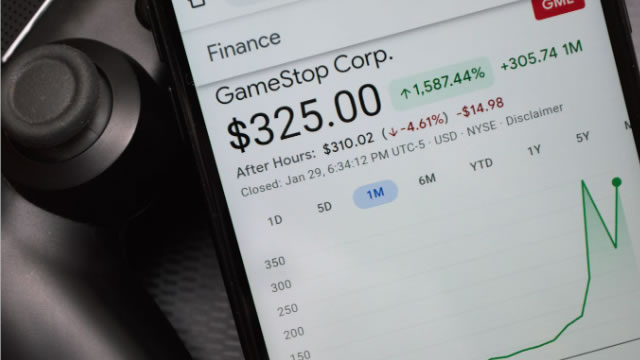
GameStop Stock Selloff Explained - Buy Chance or Value Trap?
ZACKS· 2025-06-13 20:01
Core Insights - GameStop Corp. (GME) shares experienced significant volatility in 2021 due to a short squeeze, followed by a decline attributed to lower quarterly revenues and investor dissatisfaction with a new capital raise policy [1] - The company recently announced a plan to raise $1.75 billion in debt financing, which led to a drop of over 20% in its share price [1][9] - GameStop's shift from selling video games to investing in Bitcoin aims to enhance company value and liquidity, but this decision has not been well-received by investors due to Bitcoin's volatility [2][3] Financial Performance - GameStop's revenues decreased by 28% to $3.8 billion in 2024 from $5.3 billion in 2023, with a 17% decline in the first quarter of 2025 compared to the previous year [5][9] - The company reported a profit of nearly $45 million in the first quarter of 2025, indicating improved financial stability despite revenue challenges [9] - GameStop's debt-to-equity ratio stands at 29.7%, significantly lower than the gaming industry's average of 186.4%, suggesting a reliance on shareholders' equity over borrowed capital [9][10] Strategic Moves - GameStop has implemented cost-cutting measures, including closing stores in various countries, to improve profitability [8] - The company is planning further store closures in Canada and France this year as part of its strategy to enhance financial performance [8] Market Position - GameStop's investment strategy mirrors that of Strategy Incorporated (MSTR), which has seen significant stock appreciation due to Bitcoin investments [4] - Despite trading at a discount, GameStop faces challenges in revenue growth and business sustainability, leading to questions about whether it represents a buying opportunity or a value trap [6][7]

If You Buy This Beaten-Down Stock Right Now, Will You Become a Millionaire by 2035?
The Motley Fool· 2025-05-26 13:00
Core Viewpoint - Peloton Interactive's stock has significantly declined, trading 96% below its peak in January 2021, despite a 120% increase over the past year, raising questions about its potential for long-term wealth generation for investors [1]. Financial Performance - Peloton's net loss reached $2.8 billion in fiscal 2022, indicating struggles with profitability [3]. - In Q3 2025, Peloton reported a net loss of $48 million, a reduction from $167 million in the same quarter the previous year, and is on track to achieve $200 million in annual cost savings [4]. - The company's net debt decreased by 35% year-over-year to $585 million as of March 31 [5]. Demand Challenges - Peloton is facing a significant decline in demand post-pandemic, with Q3 revenue at $624 million, down 13% year-over-year and half of the revenue from the same period four years ago [9]. - The number of connected-fitness subscribers and paid digital app subscribers has also decreased compared to Q3 2024 [9]. Market Valuation - Peloton's price-to-sales ratio is currently at 1.1, indicating market pessimism about its business outlook, and is 94% below its peak valuation from January 2021 [11]. - The current market capitalization of Peloton is $2.9 billion, a stark contrast to its previous valuation of $49.3 billion [12]. Investment Outlook - Despite the low valuation, Peloton is viewed as a potential value trap, with limited chances of turning investors into millionaires over the next decade [13].


1 Ultra-High-Yield Dividend Stock Down 57% to Buy Hand Over Fist
The Motley Fool· 2025-05-24 08:51
Core Viewpoint - Pfizer's stock has significantly declined, presenting a potential buying opportunity despite underlying challenges [2][3][7] Company Challenges - Pfizer's stock decline is primarily due to rapidly decreasing sales of COVID-19 products, compounded by vaccine skepticism and reduced pandemic concerns [3] - The company faced setbacks with product withdrawals, including the sickle cell disease therapy Oxbryta and the oral obesity drug danuglipron due to safety concerns [4] - Patent expirations for key drugs, such as Inlyta, Xeljanz, and Eliquis, are imminent, which could impact revenue [5] - Potential regulatory challenges from the Trump administration, including tariffs and international reference pricing, add to the uncertainty [6][12] Market Sentiment - Despite the challenges, there is a level of optimism among analysts, with 8 out of 25 rating Pfizer as a buy or strong buy, and an average 12-month price target indicating a 28% upside potential [7] - Pfizer's reliance on COVID-19 product sales has decreased, with these products accounting for less than 7.7% of total revenue in Q1 2025 [8] Growth Prospects - Pfizer is exploring patent term extensions and has several promising products in its pipeline that could offset revenue losses from expiring patents [9] - The company is actively seeking business development opportunities, including licensing agreements and potential acquisitions to enhance its product offerings [11] Financial Metrics - Pfizer's shares are trading at over 8 times forward earnings, with a low price-to-earnings-to-growth (PEG) ratio of 0.6, indicating attractive valuation relative to growth prospects [14] - The forward dividend yield stands at 7.47%, and despite a high payout ratio of 122.5%, Pfizer has sufficient free cash flow and anticipates $7.2 billion in cost savings by 2027 [15] Conclusion - Overall, Pfizer is positioned to navigate its challenges effectively, with a low stock price and high dividend yield suggesting solid total return potential [16][17]


Why Helen of Troy Stock Plunged Today
The Motley Fool· 2025-05-05 20:57
Core Viewpoint - Helen of Troy's shares dropped 10.4% following the abrupt resignation of CEO Noel Geoffroy, raising concerns about underlying issues within the company [1][2][3] Company Leadership Changes - CEO Noel Geoffroy stepped down "effective immediately" after only one year in the role, which suggests a sudden decision that may indicate deeper problems [3] - CFO Brian Grass has been appointed as interim CEO while the board searches for a permanent successor, but this has not alleviated investor concerns [4] Financial Performance - Helen of Troy's stock has declined 58% year-to-date, despite slightly beating revenue expectations last quarter [5] - The company's adjusted (non-GAAP) EPS fell short of estimates, and overall revenue decreased by 0.7%, with organic revenue declining by 4.9% [5] - The acquisition of Olive & June increased the company's debt by $235 million, adding financial pressure in a potential recession [5] Market Conditions and Risks - The decline in stock price is largely attributed to the uncertainty surrounding tariffs, as the company manufactures products in China, Vietnam, and Mexico [8] - Investors are apprehensive due to the sudden CEO resignation and lack of a prepared successor, which contributes to the perception of risk despite a low valuation based on expected earnings [9]


Why Opendoor Stock Plunged 25% in April
The Motley Fool· 2025-05-02 10:40
Group 1: Company Performance - Opendoor Technologies' stock dropped 25% in April, reflecting ongoing challenges in the housing market [1] - The company has seen a 25% year-over-year increase in revenue, indicating some internal progress despite market conditions [5] - Opendoor's stock is currently trading at less than $1, representing a 98% decline from its all-time highs, with a price-to-sales ratio of only 0.1 [6] Group 2: Market Conditions - The real estate outlook remains bleak, with home prices at record highs and mortgage applications down 6% year-over-year in April [3] - Pending home sales decreased by 2.8%, and the median U.S. monthly housing payment reached a record high of $2,870 due to rising home prices and interest rates [3] - Although new listings increased by 6.1% and total homes for sale rose by 13.7%, the lack of buyers may limit the impact on Opendoor's business [4] Group 3: Future Outlook - Despite some operational improvements, the stalled housing market poses significant challenges for Opendoor's ability to sell homes [5] - The market currently perceives little upside for Opendoor's stock, raising concerns about it being a potential value trap for investors [7] - There is a possibility for future recovery and disruption in the real estate market, but this may take time [7]