manufacturing

Search documents
特斯拉-电动汽车业务之困与机器人业务之得-Tesla Inc-EV Pain vs. Robo Gain
2025-07-24 05:03
Summary of Tesla Inc Earnings Call Company Overview - **Company**: Tesla Inc - **Industry**: Automotive, specifically Electric Vehicles (EVs) - **Market Cap**: $1,170,279 million as of July 23, 2025 - **Stock Rating**: Overweight - **Price Target**: $410.00 Key Financial Highlights - **2Q Results**: Slight beat with Free Cash Flow (FCF) near break-even [1][2] - **Deliveries**: FY25 deliveries forecast lowered to 1.53 million, down 14.2% year-over-year [8] - **Revenue**: FY25 revenue forecast largely unchanged at $63.4 billion [8] - **Auto Gross Margin**: FY25 Auto Gross Margin (ex-ZEV credits) increased to 13.4% [8] - **Operating Margin**: FY25 GAAP Operating Margin decreased to 2.9% [8] - **EPS**: FY25 Non-GAAP diluted EPS decreased to $1.37 from $1.58 previously [8] - **Free Cash Flow**: FY25 forecasted at ~$1 billion, up from a previous burn of ~$250 million [8] Core Insights and Concerns - **Outlook Transparency**: Tesla's outlook lacks specific targets on revenues or margins, raising concerns about future performance [6] - **Robotaxi Progress**: Limited information on the current fleet size or performance, despite ambitious expansion targets [6] - **Optimus Production**: Production ramp for Optimus pushed slightly, with a target of 1 million units annually within 5 years [6] - **Market Headwinds**: Elon Musk indicated that the next few quarters may be 'rough' due to demand changes and regulatory environment [6] - **Consensus Direction**: Likely modestly lower, especially for FY26, with updated FY25 EPS 14% lower than prior forecasts [6] Changes to Estimates - **Deliveries**: FY26 deliveries forecast lowered to 1.85 million from 1.89 million [8] - **Revenue Adjustments**: FY26 revenues slightly lower due to lower deliveries [8] - **Operating Expenses**: Increased R&D and SG&A expenses impacting margins [8] - **Free Cash Flow**: FY26 forecast lowered to $2.4 billion from $5.3 billion [8] Valuation and Price Target Methodology - **Price Target Components**: - Core Tesla Auto business valued at $76/share - Network Services at $159/share - Tesla Mobility at $90/share - Energy at $68/share - Third-party supplier at $17/share [19][24] Investment Thesis - **Growth Potential**: Tesla's capabilities in physical AI, robotics, and energy storage present significant growth opportunities beyond traditional EV business [12][13] - **Market Position**: Tesla is well-positioned in data, robotics, and manufacturing, with a strong competitive edge [12][13] - **Risk Factors**: Potential risks include competition from traditional OEMs and execution risks related to factory ramps and market recognition of service opportunities [36] Additional Insights - **Analyst Sentiment**: The consensus rating distribution shows 44% Overweight, 37% Equal-weight, and 19% Underweight [27] - **Long-term Projections**: Forecasts suggest Tesla could sell 4.6 million units by 2030 with a 25% revenue CAGR [26] This summary encapsulates the key points from Tesla Inc's earnings call, highlighting financial performance, strategic insights, and market outlook.

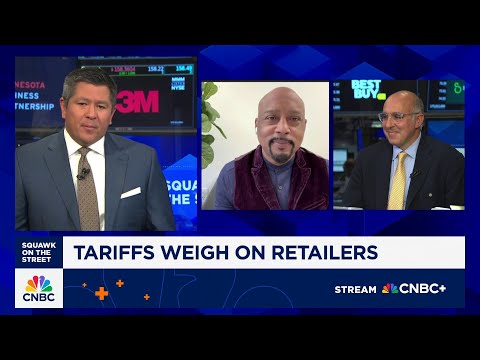
Daymond John: Margin pressure from tariffs is still to come
CNBC Television· 2025-07-10 15:24
Tariffs and Margin Pressure - Margin pressure from tariffs is expected to increase, creating uncertainty for retailers, manufacturers, and consumers regarding pricing and spending [1][2] - Frontloading is occurring, but domestic manufacturers are also raising prices, creating a dilemma for businesses [3] - The cost of tariffs will ultimately be passed on to the consumer [4] Supply Chain Strategies - Companies should consider absorption, deferral, pricing terms, cost engineering, and alternative supply chains to address tariffs [6] - Alternative supply chains require careful consideration of materials, output, resources, technology, and costs [7] - Africa and South America present potential opportunities for alternative supply chains [8][9] - Erratic supply chain decisions can disrupt a business; a gradual, accommodating approach is recommended [10][11] Retail and Consumer Behavior - Consumer retail is facing uncertainty, with retailers unsure of their future direction [15] - Trade shows are shrinking, indicating a shift towards live selling and direct-to-consumer platforms like Amazon and TikTok [15][16] - The focus is on acquiring new customers, upselling to existing ones, and increasing purchase frequency [16] Holiday Season Impact - Holiday inventory is expected to be unaffected by the tariffs at the moment [12][14] - Businesses should not become complacent and should continue to develop alternative strategies [14]