
Climate Change

Search documents
X @Bloomberg
Bloomberg· 2025-11-17 22:00
Play Pointed, Bloomberg’s news quiz for risk-takers.This week's categories include sports betting, climate change and retail.Bet big on the topics you know, and maximize your score by leveraging your wagers. Choose wisely—wrong answers will cost you https://t.co/VrOkE6cyOx https://t.co/TAT8s0hibd ...
X @Bloomberg
Bloomberg· 2025-11-17 18:16
The UK is no longer the most ambitious nation in the world when it comes to cutting CO2 emissions in the fight against climate change over the next decade https://t.co/leKloyjS1y ...
Climate Change Threatening Arts & Heritage | Omar Al-Hosseiny | TEDxAlexandriaUniversity
TEDx Talks· 2025-11-17 17:06
اهلا بحضراتكم طيب انا شايف التايتل مكتوب فيه كلام ايجابي كتير جدا زي كلايمتينج مثلا طارت مناخيه كلمه لا هي مش ايجابيه بصراحه لكن في كلاماني ايجابي شايفه فن شايف فيه تراث شايف في اسكندريه تخيل كلنا بنحب اسكندريه اناسال سؤال بب ان احنا هنا في اسكندريه وجامعه اسكندريه كم واحد هنا من اسكندريه سؤال غير المنطقي ده عرف انا هنزل ليه لان انا مش من اسكندريه دي اول معلومه تعرفوها عني انا فعلا مش من اسكندريه ولكن انا بحب اسكندريه جدا وفي نفس الوقت انا جاي اكلمكم على حاجه تخصها انا جاي اكلمكم عن يوم الرعب ده اليوم اللي ...


X @Bloomberg
Bloomberg· 2025-11-17 14:22
Environmental Policy - Brazil aims to achieve net-zero emissions by 2050 [1] - Brazil is initiating a plan to reduce industrial emissions [1]
Billions Spent, But Mumbai Still Floods Every Monsoon
Bloomberg Television· 2025-11-16 23:29
Mumbai, India's financial capital, is pouring billions into new highways, train lines and airports. Yet every year, the city is still brought to its knees by relentless rains and floods. A new study reveals that severe flooding in Mumbai claimed more than 2700 lives annually over a decade, while causing economic losses of $1.2% billion each year.Deaths were linked to drowning, electrocution and disease with conditions like diarrhea and tuberculosis worsening dramatically during flood seasons. I mean, we're ...

X @Bloomberg
Bloomberg· 2025-11-16 14:02
Startups are rushing in to monetize the COP30 host’s push to preserve the rainforest before it turns into a driver of climate change. https://t.co/qbLuiNbH5Y ...
X @Bloomberg
Bloomberg· 2025-11-15 12:03
Climate protesters are once again taking to the streets (and water) as the COP summit comes to a democratic country, Brazil https://t.co/hZY60YAoAx ...
South Korean growers sue state power utility, blaming climate change for crop damage
ABC News· 2025-11-14 03:48
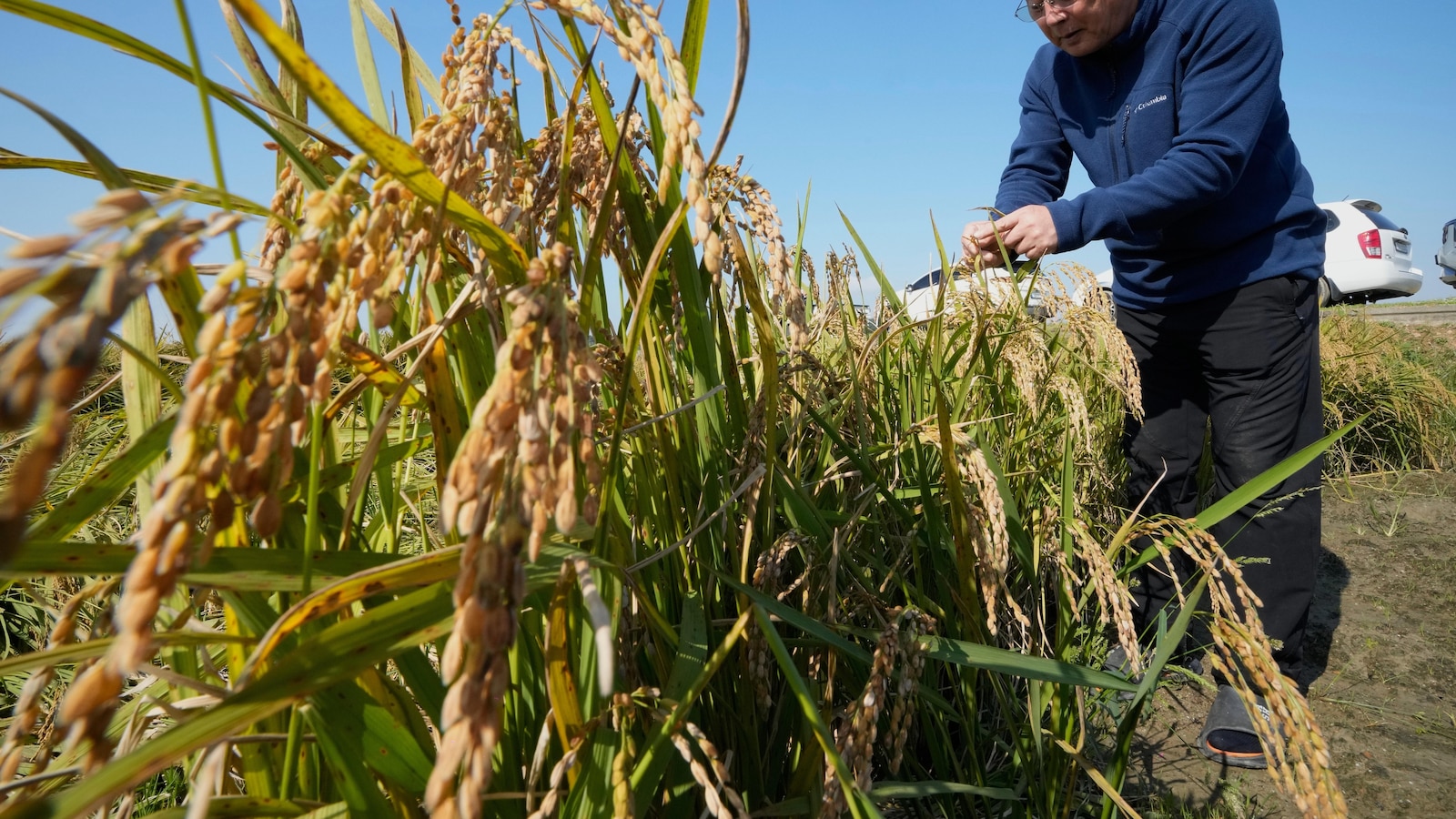
Core Perspective - A group of South Korean farmers, led by Hwang Seong-yeol, has filed a lawsuit against Korea Electric Power Corporation (KEPCO) and its subsidiaries, claiming that their reliance on fossil fuels has exacerbated climate change, leading to agricultural losses [3][4][9]. Group 1: Lawsuit Details - The lawsuit is the first of its kind in South Korea, questioning the quantification of power companies' contributions to climate change and the resulting agricultural damage [4]. - The plaintiffs are seeking initial damages of 5 million won ($3,400) per farmer, with a symbolic request for 2,035 won ($1.4) each to advocate for the phase-out of coal power by 2035 [11]. - KEPCO produced approximately 30% of South Korea's greenhouse gas emissions from 2011 to 2022, which corresponds to about 0.4% of global emissions [10]. Group 2: Impact on Agriculture - Farmers are experiencing significant crop damage due to increasingly erratic weather patterns attributed to climate change, with Hwang expecting a yield reduction of 20% to 25% this year [6][8]. - The South Korean government reported that extreme weather events in 2024 led to "agricultural disasters," affecting thousands of hectares of cropland, particularly rice [8]. - Farmers are facing higher production costs and must use more labor and pesticides to manage the impacts of climate change on their crops [17]. Group 3: Energy Transition Challenges - South Korea's energy mix in 2024 included only 10.5% renewable energy, with KEPCO subsidiaries relying on coal for over 71% of their electricity production [11]. - Experts highlight that KEPCO's significant debt, exceeding 200 trillion won ($137 billion), limits its ability to invest in renewable energy and modernize the power grid [12]. - The slow transition to renewable energy in South Korea may hinder the country's ambitions in advanced technology sectors, as global pressure mounts for cleaner energy operations [16].

X @The Economist
The Economist· 2025-11-14 03:00
Environmental Concerns - Solving the country's air pollution problem may lead to increased temperatures [1]
X @Bloomberg
Bloomberg· 2025-11-13 15:34
A top UN climate official demanded Brazilian authorities immediately develop a plan for addressing security lapses, soaring temperatures, flooding and other poor conditions https://t.co/6zjAgbbkRo ...