
Mortgage rates

Search documents
Mortgage rates rise for first time since July
Fox Business· 2025-09-25 18:33
Group 1: Mortgage Rates - Mortgage rates increased for the first time since mid-July, with the average rate on a 30-year fixed mortgage rising to 6.3% from 6.26% last week [1] - The average rate on a 15-year fixed mortgage also rose to 5.49% from 5.41% last week [4] - Despite the recent uptick, mortgage rates remain near 11-month lows, providing opportunities for buyers and homeowners considering refinancing [5] Group 2: Housing Market Activity - Housing market activity remains robust, with purchase applications increasing by 18% and refinance applications rising by 42% compared to the same time last year [4] - Sales of new U.S. single-family homes surged to the highest level in over 3.5 years in August, although this may not accurately reflect the housing market's health [7] - Economists noted that the increase in new home sales was unexpected and may be reversed in the coming months due to volatile data and subdued homebuilder sentiment [9][10] Group 3: Economic Context - The Federal Reserve recently cut the benchmark interest rate by 25 basis points, bringing the federal funds rate to a new range of 4% to 4.25% [6] - The rate cut follows a period of economic uncertainty, during which the Fed left rates unchanged at its first five meetings of the year [6] - The current rate environment is seen as beneficial for affordability, despite only 28% of U.S. homes being affordable for the typical American household [5]

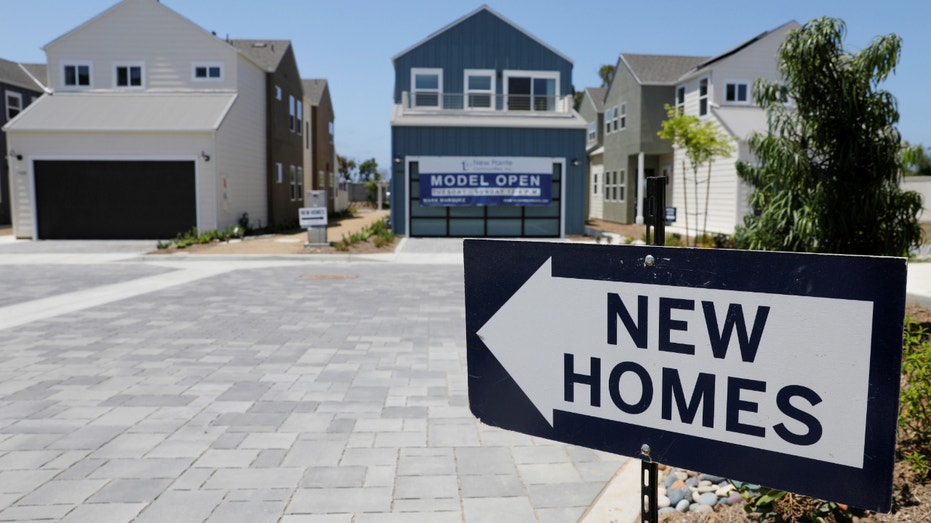
Why haven’t mortgage rates been falling since the last Federal Reserve rate cut?
Yahoo Finance· 2025-09-25 16:51
Core Insights - The Federal Reserve's actions to lower short-term interest rates do not always correlate with a decrease in mortgage rates, which are influenced by long-term economic factors [1][5]. Group 1: Federal Reserve Actions - The Federal Reserve cut the federal funds rate by a quarter-point on September 17, 2025, but mortgage rates increased shortly after [2][4]. - Mortgage rates are tied to longer-term benchmarks, such as the 10-year Treasury, rather than directly to the Fed's short-term rate adjustments [3][5]. Group 2: Mortgage Rate Dynamics - Following the Fed's rate cut, 30-year fixed mortgage rates dropped from 6.89% to 6.26% before rising again to 6.30% after the cut [4]. - The bond market's reaction to macroeconomic trends, such as inflation and employment, plays a significant role in determining mortgage rates [3][5]. Group 3: Economic Influences - For mortgage rates to trend downward, softer labor or inflation data is necessary to support lower yields [5]. - The overall economic environment, rather than the Fed's actions alone, is crucial in influencing mortgage rates [5].
Why haven’t mortgage rates fallen since the last Federal Reserve decision?
Yahoo Finance· 2025-09-25 16:51
The Federal Reserve has decided to hold off on further cuts to short-term interest rates for an undetermined period. Meanwhile, a new Fed chairman is waiting in the wings. What does all this mean for mortgage rates? What happens when the Fed lowers interest rates First of all, the Federal Reserve and mortgage rates are working on two ends of a timeline. The Fed steers short-term interest rates, and mortgage rates are influenced by long-term bonds. When the Fed cuts its federal funds rate, as it did by ...
Mortgage rates inch up after several weeks of decline (XLRE:NYSEARCA)
Seeking Alpha· 2025-09-25 16:11
Core Insights - Mortgage rates have increased slightly after a period of decline, yet housing market activity remains robust [2] Mortgage Rates - The average rate for 30-year fixed-rate mortgages rose to 6.30% as of September 25, up from 6.26% the previous week and 6.08% a year ago [3]

Mortgage rates move higher despite Fed rate cut
Yahoo Finance· 2025-09-25 16:02
Core Insights - Mortgage rates have increased slightly following the Federal Reserve's cut to the benchmark federal funds rate, with the average 30-year mortgage rate rising to 6.3% from 6.26% and 15-year rates increasing to 5.49% from 5.41% [1][2] Mortgage Rate Dynamics - The Federal Reserve does not directly control mortgage rates, and it is common for mortgage rates to rise even after a cut in benchmark interest rates, as seen in previous years [2] - Mortgage markets tend to be forward-looking, often pricing in anticipated Fed moves ahead of time, which was evident when rates initially dropped in anticipation of the Fed's rate cut but later rose [3] Refinancing and Home Sales Activity - Refinancing activity has surged by 80% compared to four weeks ago, although refinancing applications increased only 1% week-over-week, while applications for home purchases remained nearly unchanged [4] - Existing home sales have slightly declined in August, with projections indicating that sales for the year may reach a 30-year low [5]
Mortgage Rates Inch Up
Globenewswire· 2025-09-25 16:00
Core Insights - Freddie Mac reported that the average 30-year fixed-rate mortgage (FRM) increased to 6.30% as of September 25, 2025, up from 6.26% the previous week and 6.08% a year ago [1][4] - The housing market remains resilient, with purchase applications rising by 18% and refinance applications increasing by 42% compared to the same period last year [1] Mortgage Rate Details - The 30-year FRM averaged 6.30% as of September 25, 2025, compared to 6.26% the previous week and 6.08% a year ago [4] - The 15-year FRM averaged 5.49%, up from 5.41% the previous week and 5.16% a year ago [4] Freddie Mac's Mission - Freddie Mac aims to enhance liquidity, stability, and affordability in the housing market across all economic cycles, having assisted millions of families since its inception in 1970 [3]
Mortgage and refinance interest rates today, September 25, 2025: Rates inch up in spite of the Fed
Yahoo Finance· 2025-09-25 10:00
Core Insights - Mortgage rates have increased slightly, with the 30-year fixed-rate home loan rising to 6.45% and the 15-year fixed-rate mortgage to 5.77% [1] - The 10-year Treasury yield, which serves as a benchmark for mortgage rates, has generally risen following the Federal Reserve's rate cut last week [1] Current Mortgage Rates - The current national average mortgage rates are as follows: - 30-year fixed: 6.45% - 20-year fixed: 6.07% - 15-year fixed: 5.77% - 5/1 ARM: 7.10% - 7/1 ARM: 7.17% - 30-year VA: 5.94% - 15-year VA: 5.44% - 5/1 VA: 5.92% [4] Refinance Rates - Today's mortgage refinance interest rates are also provided, with national averages rounded to the nearest hundredth [2] - Refinance rates can sometimes be higher than purchase mortgage rates, but this is not always the case [2] Factors Influencing Mortgage Rates - Mortgage rates are influenced by both controllable and uncontrollable factors. Controllable factors include comparing lenders and improving credit scores, while uncontrollable factors are primarily economic conditions [9][10] - A struggling economy typically leads to lower mortgage rates to encourage borrowing, whereas a strong economy tends to increase rates to temper spending [10] Types of Mortgages - Fixed-rate mortgages lock in the interest rate for the entire loan term, while adjustable-rate mortgages (ARMs) have a fixed rate for an initial period before adjusting periodically [7] - The 30-year fixed mortgage is popular for its lower monthly payments but results in higher total interest paid over time, while the 15-year fixed mortgage has higher monthly payments but lower total interest costs [11][12][13] Additional Information - The lowest-ever 30-year fixed mortgage rate recorded was 2.65% in January 2021, and it is unlikely rates will drop below 3% in the near future [16] - Experts suggest refinancing when a new rate is at least 1% to 2% lower than the current rate, depending on individual financial goals [17]
New home sales soar 20% in August to a three-year high
CNBC· 2025-09-24 14:56
Group 1 - Sales of newly built homes increased by 20.5% in August compared to July, reaching the highest level since January 2022, and marking the largest one-month gain since August 2022 [1] - Sales in August were 15.4% higher than in August 2024, indicating a strong year-over-year performance [1] - The average rate on the 30-year fixed mortgage was 6.63% at the beginning of August, which did not fluctuate significantly during the month [2] Group 2 - A notable decline in mortgage rates began in September, dropping to a three-year low of 6.13% before the Federal Reserve cut its lending rate [2] - The increase in August sales is surprising given that mortgage rates had not yet fallen, suggesting potential anomalies in the data [3] - The margin of error for new home sales is significant, and further revisions and September data will be necessary to confirm the trends [3]

New home sales jump
Youtube· 2025-09-24 14:50
Core Insights - New home sales in August reached an annualized rate of 800,000, significantly exceeding the expected 650,000, marking a 20.5% increase from July and a 15.4% increase from August 2024 [1][5]. Sales and Pricing - The average price of a new home sold in August was $413,500, which is 4.7% higher than July and 1.9% higher than August 2024 [3][4]. - Despite high mortgage rates in August, which were over 6.5%, the sales numbers indicate strong demand, suggesting buyers were active in the market prior to the anticipated drop in rates [2][4]. Inventory and Builder Sentiment - The inventory of new homes has decreased to a 7.4-month supply from a 9-month supply in July, indicating a tightening market [4][5]. - Builder sentiment remains low despite the increase in sales and prices, suggesting potential underlying challenges in the market [5].

Mortgage and refinance interest rates today for September 22, 2025: A gap between market and Fed expectations
Yahoo Finance· 2025-09-22 10:00
Core Insights - Current mortgage rates are stabilizing as the Federal Reserve considers rate cuts, with the 30-year fixed mortgage rate at 6.32% and the 15-year fixed rate at 5.70% [1][17][18] - The recent drop in mortgage rates has benefited consumers, bringing rates below 6.5% for the first time in nearly a year, although there remains some risk of upward pressure on rates [2][19] Current Mortgage Rates - The national average mortgage rates are as follows: - 30-year fixed: 6.32% - 20-year fixed: 5.86% - 15-year fixed: 5.70% - 5/1 ARM: 6.84% - 7/1 ARM: 6.92% - 30-year VA: 5.83% - 15-year VA: 5.36% - 5/1 VA: 5.83% [4][17] Mortgage Payment Calculations - For a $300,000 mortgage at a 30-year term with a 6.32% rate, the monthly payment would be approximately $2,481, resulting in a total interest payment of $493,199 over the loan's life [8] - For the same mortgage amount at a 15-year term with a 5.70% rate, the monthly payment would increase to $3,311, with total interest paid being $195,969 [10] Adjustable-Rate Mortgages (ARMs) - ARMs typically start with lower rates than fixed-rate mortgages but carry the risk of rate increases after the initial fixed period [11][12] - Recent trends show that ARM rates can be similar to or even higher than fixed rates, necessitating careful comparison among lenders [13] Strategies for Lower Mortgage Rates - Lenders offer the best rates to borrowers with higher down payments, excellent credit scores, and low debt-to-income ratios [14] - Options for reducing interest rates include paying for discount points at closing or utilizing temporary interest rate buydowns [15][16]