Asset Quality

Search documents
中国金融服务 - 回应 3 季度投资者日会议的九大核心问题-China Financial Services_ Addressing nine top of mind questions from our 3Q NDR meetings
2025-12-03 02:16
Summary of Key Points from the Conference Call Industry Overview - The conference call involved 21 China financial companies, including banks, brokers, and fintech firms, discussing the financial services industry in China, particularly focusing on the third quarter results and outlook for the future [1][2]. Key Insights on Banks 1. **Net Interest Margins (NIMs) Outlook**: - Commercial bank NIM was flat quarter-on-quarter in 3Q25, indicating signs of stabilization. Banks expect NIMs to stabilize in 1H26, driven by slower declines in loan yields and ongoing repricing of time deposits [4][6]. - NIMs may face downward pressure due to concentrated loan repricing in 1Q26, but banks generally believe the decline will continue to narrow [4][6]. 2. **Credit Demand**: - Year-to-date, bank loan growth has been primarily driven by corporate loans, contributing 92% of new loans. Credit demand remains weak, particularly in retail loans, with expectations of further slowdown in 4Q25 [12][18]. - Mortgage demand is weak due to a sluggish property market, and while non-mortgage retail loans are growing slightly faster, banks remain cautious in lending [13][14]. 3. **Asset Quality Risks**: - Banks report a year-on-year decrease in new non-performing loan (NPL) formation for corporate loans, but property loans remain a significant source of new corporate NPLs. Banks have made sufficient provisions for property loans, providing a buffer against NPL ratios [19][20]. - Retail loan NPL formation has increased year-on-year, but risks are considered manageable due to low proportions of non-mortgage consumer loans and low loan-to-value ratios [25][27]. 4. **Non-Interest Income Growth**: - Fee income showed strong performance in 3Q25, driven by capital market activities and corporate loan growth. Banks expect continued positive trends in fee income despite potential impacts from fee cuts in mutual funds [32][35]. 5. **Capital Adequacy and Shareholder Returns**: - Some banks experienced a decline in CET-1 ratios due to rising bond market rates and new loans with higher risk weightings. However, capital adequacy is improving overall, supporting asset growth and risk absorption [40][41]. - Banks are gradually increasing dividend payout ratios, attracting long-term investors despite a decline in dividend yields from previous highs [41][43]. Regulatory Impacts 1. **Loan Facilitation Platforms**: - New regulations require clear disclosure of loan costs, impacting pricing and risk. Loan volumes are expected to contract in 4Q25 and 1Q26, with a potential recovery in 2Q26 if risks stabilize [46][47]. - Consumer finance companies are required to lower average loan interest rates, but the impact is expected to be manageable for top-tier platforms [48][51]. 2. **Consumer Finance**: - Banks are shrinking their internet loan portfolios and focusing on self-operated loans due to rising retail risks. This shift may suppress retail credit growth in the short term [50][51]. Capital Markets Insights 1. **Broker Performance**: - Brokers experienced higher trading volumes in 3Q25, with expectations of sustained performance due to ongoing bank deposit migration and strong investor sentiment [53][54]. - CICC is focusing on institutional business but sees rising wealth management income due to strong demand in IPO subscriptions [53][54]. 2. **Financial Software Companies**: - Financial software companies may benefit from capital market recovery, but outcomes vary. Brokers are increasing IT budgets due to trading activity, while fund companies are cautious due to declining AUM and fee rates [59][61]. Conclusion - The financial services industry in China is navigating a complex landscape with stabilizing NIMs, weak credit demand, manageable asset quality risks, and evolving regulatory impacts. The outlook for banks and brokers remains cautiously optimistic, with potential growth in non-interest income and capital markets activity.
Barclays Shares Surge 68.4% YTD: How to Play the Stock Now
ZACKS· 2025-11-28 16:21
Core Insights - Barclays (BCS) shares have increased by 68.4% year-to-date, outperforming the industry growth of 45.5% and surpassing peers like HSBC (42.7%) and NatWest (61.1%) [1][9]. Factors Driving Barclays Stock - Business Streamlining Initiatives: Barclays is focusing on core operations, selling its stake in Entercard Group for $273 million and acquiring a U.S. credit card portfolio worth $1.6 billion [5][6]. - Cost-Mitigation Efforts: The company achieved gross savings of £1 billion in 2024 and expects total gross efficiency savings of £2 billion by the end of 2026 [8]. - Robust Capital Position: Barclays maintains a solid capital position, planning to return at least £10 billion to shareholders from 2024 to 2026, with a preference for buybacks [11][9]. Roadblocks in Barclays' Growth Path - Subdued Top-Line Growth: Core operating performance remains unsatisfactory, with net interest income and other income showing volatility due to a challenging environment [12]. - Weak Asset Quality: Rising credit impairment charges are a concern, with significant increases noted since 2022 [13]. Valuation and Market Position - BCS stock appears inexpensive, trading at a price-to-tangible book (P/TB) ratio of 0.85X, below the industry average of 2.77X and lower than peers HSBC (1.23X) and NatWest (1.41X) [14][16]. - Analysts have revised earnings estimates downward for 2025 and 2026, indicating a cautious outlook despite the stock's current discount [17][20].



Commerzbank (OTCPK:CRZB.F) Conference Transcript
2025-11-21 09:02
Summary of Commerzbank Conference Call Company Overview - **Company**: Commerzbank - **CFO**: Carsten Key Points Strategic Focus - Commerzbank is fully focused and unified in its strategy, which was announced at the beginning of the year, targeting growth and transformation by 2028 [2][3] Economic Outlook - The bank anticipates a **1.2% GDP growth** in Germany for the next year, with **0.8%** of this growth expected to be fueled by the government stimulus package [4][5] Net Interest Income (NII) - Guidance for NII has been increased to **EUR 8.4 billion** for 2026, up from an initial target of **EUR 7.7 billion** at the start of the year [6][9] - The bank expects **EUR 8.2 billion** for the current year, indicating a stable and upward trajectory for NII [9][11] Lending Growth - Corporate lending has shown strong growth at **13% year-on-year**, while mortgage growth is recovering from a depressed market [14][16] - The bank expects continued strong loan growth, particularly in the corporate segment, as stimulus packages take effect [17][19] Deposit Growth - Commerzbank has successfully attracted deposits, collecting **EUR 8 billion** through promotional offers [26] - The bank is guiding for a **43% beta** in Q4, with an average of around **40%** for the year [28] Asset Quality - The bank maintains a stable credit book with no significant concerns, expecting a risk guidance of **25 basis points** by 2028 [52][54] Capital Management - Commerzbank's capital ratio is strong at **14.7%**, with a target of **100% payout ratio** by 2028 [56][57] Fee Income - The bank is targeting a **7% annual growth** in commission income, already running at **7%** this year [38][41] Structural Hedge - The structural hedge is currently at **EUR 147 billion**, with potential to increase based on deposit growth [35] Competition and Market Dynamics - The bank acknowledges a competitive environment for deposits but has a strong depositor base and effective channels for attracting funds [62][63] Future Outlook - Commerzbank is optimistic about the impact of government stimulus on economic activity and its own business growth, particularly in lending and fee income [44][54] Additional Insights - The bank is transforming its branch setup, reducing the number of branches significantly while focusing on advisory services [50] - There is a growing trend in Germany for retail deposit collection to be price-led, but Commerzbank has managed to maintain a relatively high level of customer retention even after promotional rates expire [62][63]
Citigroup's Card Metrics Improve Y/Y: What it Means for Asset Quality?
ZACKS· 2025-11-20 18:40
Core Insights - Citigroup's subsidiary, Citibank N.A., reported mixed credit card performance for October 2025, with an increase in delinquency rates but a decrease in charge-off rates [1][2][10] Credit Card Performance - The delinquency rate for Citibank Credit Card Master Trust rose to 1.42% in October 2025 from 1.38% in September 2025, but decreased from 1.52% in October 2024 and 1.58% in October 2019 [1] - The charge-off rate for the Credit Card Issuance Trustnet fell to 1.95% in October 2025 from 2.50% in the previous month, and also dropped from 2.36% in October 2024 and 2.61% in October 2019 [2] Lending Activity - Citibank's principal receivables were $20.2 billion, slightly down from $20.3 billion at the beginning of September 2025, reflecting a year-over-year decline of 6.9% [2][10] Credit Losses and Provisions - Net credit losses (NCL) experienced a compounded annual growth rate (CAGR) of 4.3% over the past four years ending in 2024, with a 2.2% year-over-year increase in the first nine months of 2025 [3] - Provisions for credit losses expanded at a CAGR of 38.9% from 2022 to 2024, continuing to rise in the first nine months of 2025 [3] Future Outlook - Citigroup's profitability may face challenges due to rising credit losses in its Branded Cards portfolio, with expected NCL between 3.50% and 4% in 2025, and Retail Services NCL projected between 5.75% and 6.25% [4] - Economic conditions could further weaken, leading to accelerated losses and higher loan-loss provisions, putting pressure on earnings [5] Peer Comparison - Bank of America reported a delinquency rate of 1.38% in October 2025, down from 1.52% a year earlier, with a net charge-off rate of 2.11% [6] - JPMorgan's delinquency rate edged up to 0.88% in October 2025, while its net charge-off rate declined to 1.44% [7] Stock Performance and Valuation - Citigroup shares have increased by 36% over the past six months, outperforming the industry's growth of 18.8% [8] - The forward price-to-earnings (P/E) ratio for Citigroup is 10.35X, below the industry's average of 14.06X [12] Earnings Estimates - The Zacks Consensus Estimate for Citigroup's earnings implies year-over-year increases of 27.4% for 2025 and 31.2% for 2026, with upward revisions in estimates over the past 30 days [14]


3 REITs I’d Own for Steady Monthly Income (Part 1)
The Smart Investor· 2025-11-19 23:30
Core Viewpoint - Investing in Singapore REITs (S-REITs) can provide stable and reliable passive income for investors, with specific focus on three REITs for long-term monthly income generation. Group 1: CapitaLand Integrated Commercial Trust (CICT) - CICT is Singapore's largest REIT with a total property value of S$27.0 billion, comprising 21 properties in Singapore, two in Frankfurt, and three in Sydney [2][3] - The portfolio's occupancy rate is 97.2%, with a weighted average lease expiry (WALE) of 3.2 years, and a distribution yield of 4.8% [5][4] - CICT's net property income grew by 0.2% year-on-year to S$874.2 million, with a slight increase in gearing ratio to 39.2% and an improved interest coverage ratio of 3.5 [4][5] Group 2: CapitaLand Ascendas REIT (CLAR) - CLAR is Singapore's first and largest listed industrial REIT, with a portfolio value of S$17.7 billion and 228 properties [8][9] - The portfolio occupancy rate is 91.3%, with a WALE of 3.6 years, and a distribution yield of 5.4% [10][9] - CLAR's DPU has shown stability, with a slight increase to S$0.15205 in 2024, and a healthy rental reversion rate of 7.6% in Q3 2025 [10][11] Group 3: Frasers Centrepoint Trust (FCT) - FCT is a suburban retail REIT with assets under management of approximately S$8.3 billion, owning four of Singapore's top ten largest prime suburban malls [14][15] - In FY2025, FCT's gross revenue increased by 10.8% year-on-year to S$389.6 million, with a total DPU of S$0.12113 [15][16] - The overall portfolio occupancy rate is strong at 98.1%, with a distribution yield of 5.4% and a rental reversion rate of 7.8% in FY2025 [16][18]

Zacks Industry Outlook Ares Capital, Hercules Capital and Runway Growth Finance (Revised)
ZACKS· 2025-11-12 09:31
Core Industry Insights - The Zacks SBIC & Commercial Finance industry is facing margin compression and lower investment income due to declining interest rates, as most loans are tied to floating rates [5][6] - Asset quality is at risk as prolonged high rates may strain borrowers' ability to repay, although initial support from stimulus packages helped mitigate delinquency rates post-COVID-19 [7][8] - Regulatory changes, particularly the amendment to the Investment Company Act of 1940, have provided funding flexibility and growth opportunities for industry players [9][10] Industry Performance - The Zacks SBIC & Commercial Finance industry has underperformed the S&P 500 and the broader finance sector, with a collective loss of 13% over the past year compared to gains of 14.2% for the S&P 500 [15] - The industry's Zacks Industry Rank is 209, placing it in the bottom 14% of over 250 Zacks industries, indicating a discouraging earnings outlook [11][12][13] Valuation Metrics - The industry has a trailing 12-month price-to-tangible book (P/TB) ratio of 0.96X, significantly lower than the S&P 500's ratio of 12.55X, indicating a substantial discount compared to the market [17][18] Company Highlights - **Ares Capital Corp. (ARCC)**: A specialty finance firm focused on U.S. middle-market companies, with a market cap of $14.5 billion and total debt of $15.6 billion as of September 30, 2025. The company has seen growth in total investment income and is expected to continue this trend [19][21] - **Hercules Capital, Inc. (HTGC)**: A specialty finance company providing venture capital to technology and life science firms, with a market cap of $3.3 billion. The company maintains a robust balance sheet and is expected to benefit from rising demand for customized financing [22][24][25] - **Runway Growth Finance Corp. (RWAY)**: Focused on providing senior secured loans to growth-stage companies, with a market cap of $357.4 million. The company has posted steady growth in total investment income and is well-positioned to sustain this momentum [26][28][29]




Zacks Industry Outlook Ares Capital, Hercules and Runway Growth Finance
ZACKS· 2025-11-11 07:41
Core Viewpoint - The Zacks SBIC & Commercial Finance industry is facing challenges due to declining interest rates, which may lead to margin compression and lower investment income, while asset quality remains at risk from prolonged high rates affecting borrowers' repayment ability [1][5][8]. Industry Overview - The Zacks SBIC & Commercial Finance industry consists of companies that provide financing to small and mid-sized privately held firms, often underserved by traditional banks [3]. - These companies offer customized financing solutions, including senior debt instruments and equity capital, for various transactions such as buyouts and growth initiatives [4]. Key Themes - **Declining Interest Rates**: The Federal Reserve has lowered interest rates to 3.75–4%, which will likely reduce loan yields for many industry players with floating-rate loans, impacting net investment income [5]. - **Loan Origination and Refinancing**: Despite the challenges, loan origination and refinancing activities are expected to improve due to rising demand amid economic growth [6]. - **Asset Quality Concerns**: The industry may experience asset quality deterioration as prolonged high interest rates could hinder portfolio companies' ability to service debt [8]. - **Regulatory Changes**: The 2018 amendment to the Investment Company Act eased leverage limits, allowing companies to increase their debt-to-equity leverage, providing more funding flexibility [9][10]. Industry Performance - The Zacks SBIC & Commercial Finance industry ranks 209 out of over 250 Zacks industries, placing it in the bottom 14%, indicating underperformance in the near term [11][12]. - Over the past year, the industry has collectively lost 13%, while the S&P 500 and Zacks Finance sector have gained 14.2% and 9.7%, respectively [15]. Valuation Metrics - The industry has a trailing 12-month price-to-tangible book (P/TB) ratio of 0.96X, significantly lower than the S&P 500's 12.55X, indicating a substantial discount compared to the broader market [17][18]. Company Highlights - **Ares Capital Corp. (ARCC)**: A specialty finance firm focusing on U.S. middle-market companies, with a market cap of $14.5 billion and total debt of $15.6 billion as of Sept. 30, 2025. The company has seen growth in total investment income and is expected to continue this trend [19][21]. - **Hercules Capital, Inc. (HTGC)**: A specialty finance company providing venture capital to technology and life science firms, with a market cap of $3.3 million and a total investment portfolio valued at $4.31 billion as of Sept. 30, 2025. The company is expected to benefit from rising demand for customized financing [22][24]. - **Runway Growth Finance Corp. (RWAY)**: Focuses on providing senior secured loans to growth-stage companies, with a market cap of $357.4 million and a total investment portfolio valued at $946 million as of Sept. 30, 2025. The company is expected to sustain growth in investment income amid favorable regulatory trends [26][28].

X @Bloomberg
Bloomberg· 2025-11-07 10:14
India’s central bank is considering easing rules for lenders, the regulator says, as profitability and asset quality have improved in recent years, allowing them to build adequate capital buffers to overcome risks https://t.co/GLBtE1Lxvo ...
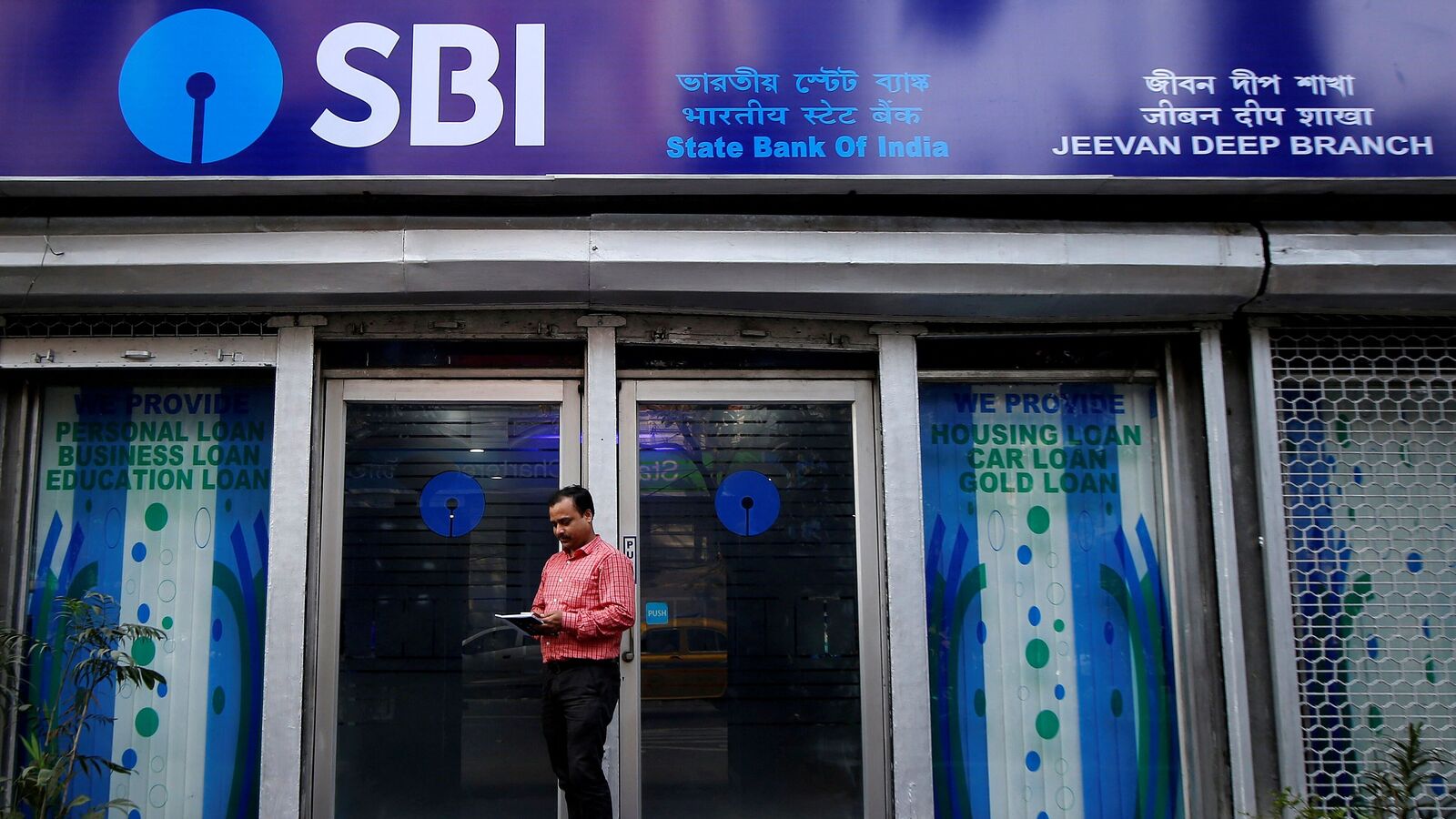
SBI Q2 preview: Yes Bank stake sale gains seen cushioning margin hit
MINT· 2025-11-03 08:00
Core Viewpoint - State Bank of India (SBI) is anticipated to experience a decline in net profit for the September quarter, despite healthy loan growth and one-off treasury gains from its stake sale in Yes Bank, which may offset margin pressures [1][2]. Financial Performance - SBI is expected to report a standalone net profit of ₹17,523 crore for the quarter, reflecting a decrease of over 4% year-on-year, compared to ₹19,160 crore in the June quarter [2]. - The bank's operating profit is projected to grow by 6% year-on-year, reaching ₹30,544 crore in the June quarter, despite a flat net interest income (NII) due to higher funding costs and recent rate cuts [2][4]. - Interest income is expected to remain flat, leading to a 6-8 basis point decline in net interest margin (NIM), attributed to rising deposit costs amid intense competition for retail term deposits [3][4]. Treasury Gains - SBI completed the divestment of approximately 13.18% of its stake in Yes Bank to Sumitomo Mitsui Banking Corp. for ₹8,888.97 crore, reducing its stake to 10.8% [5]. - The stake sale is expected to provide a significant boost to non-interest income, although analysts caution that this is a one-off event and will not mitigate the ongoing structural compression in margins [6]. Asset Quality - The bank's asset quality is expected to remain stable, with limited stress from unsecured loans and a reduction in slippages from the agricultural segment [7]. - Provisions are anticipated to decline by 7% quarter-on-quarter, with gross non-performing assets (GNPA) improving by 6 basis points and credit costs decreasing by 4 basis points [7][8]. Market Outlook - Analysts expect SBI's credit cost to remain contained at 0.5%, with marginal improvement in GNPA, and healthy loan and deposit growth [8]. - Recent measures by the Reserve Bank of India to enhance operational flexibility are expected to benefit large lenders, including SBI [8][9]. - Management's commentary on NIM outlook, deposit mobilization, and credit growth guidance will be closely monitored by analysts [10].
Pathfinder Bancorp, Inc. Announces Third Quarter 2025 Results
Globenewswire· 2025-10-30 20:05
Core Insights - Pathfinder Bancorp reported a net income of $626,000, or $0.10 per diluted share for Q3 2025, a significant increase from $31,000 in Q2 2025 and a recovery from a net loss of $4.6 million in Q3 2024 [2][20]. Financial Performance - Net interest income for Q3 2025 was $11.6 million, reflecting a 7.3% increase from Q2 2025 and a 1.1% decrease from Q3 2024 [6][8]. - The net interest margin (NIM) improved to 3.34% in Q3 2025, up from 3.11% in Q2 2025, driven by lower average interest-bearing deposit costs [7][9]. - Noninterest income totaled $1.5 million in Q3 2025, recovering from a negative $1.5 million in Q2 2025 [10][11]. Asset Quality - Nonperforming loans increased to $23.3 million, or 2.59% of total loans, as of September 30, 2025, compared to $11.7 million or 1.28% in Q2 2025 [27]. - The provision for credit losses was $3.5 million in Q3 2025, up from $1.2 million in Q2 2025, reflecting proactive measures to enhance asset quality [29][30]. Deposits and Loans - Total deposits grew to $1.23 billion as of September 30, 2025, a slight increase from $1.22 billion in Q2 2025 [23][32]. - Loans totaled $898.5 million, a decrease from $909.7 million in Q2 2025, with commercial loans making up 60.5% of total loans [22][21]. Noninterest Expense - Noninterest expense for Q3 2025 was $8.9 million, an increase from $8.1 million in Q2 2025 but a decrease from $10.3 million in Q3 2024 [14][19]. - Salaries and benefits increased to $5.0 million, driven by additional workdays and increased medical claims [15]. Shareholder Value - The Board of Directors declared a cash dividend of $0.10 per share, scheduled for disbursement on November 7, 2025 [34][35]. - The closing stock price as of September 30, 2025, was $15.68, resulting in an annualized dividend yield of 2.55% [36].