Faith

Search documents
How science and theology can help advance truth | Brenton DeBoef | TEDxURI
TEDx Talks· 2025-09-13 14:00
Main Argument - The speaker discusses the feeling of being "doubly lonely" when keeping separate aspects of one's identity, specifically faith and science [1][2][10][18] - The core message is that trust is essential for accepting truths, whether scientific or faith-based [8][17] - The speaker advocates for a personal approach in communicating science, especially to communities of faith, emphasizing respect and relationships over data and degrees [17][18] Supporting Evidence & Logic - The speaker uses the example of DNA's double helix structure, which was understood through data and equations before it could be directly observed, to illustrate belief in unseen scientific truths [3][4][5][6] - The genealogy of Jesus from the Bible is presented as an example of a faith-based truth accepted by millions, even if its accuracy cannot be verified [6][7] - The historical conflict between science and faith, exemplified by Galileo's experience, is mentioned to highlight the existing tensions [8] - The speaker shares a personal experience of creating a video explaining mRNA vaccines in a Christian context, demonstrating an attempt to bridge the gap between science and faith [11][12][13] Implications & Call to Action - The speaker suggests that skepticism towards science in communities of faith is understandable, given the reliance on trust in both domains [16][17] - The speaker encourages individuals who feel "doubly lonely" due to conflicting identities to recognize the value of their unique perspective [18]

WHAT IF FAITH AND REASON CAN CO- EXIST? | Swapnendu Acharya | TEDxDPS Siliguri Youth
TEDx Talks· 2025-09-12 16:13
Core Argument - The presentation advocates for balancing faith and reason, emphasizing the importance of questioning beliefs and fostering a scientific temper [2][4][5][12] - It suggests that blind faith can lead to negative consequences, while reason and inquiry are essential for societal progress [5][6][8] - The speaker promotes a vision of a society where faith and reason coexist, guiding both individual souls and the collective society [9][12] Historical & Societal Context - Religion originated as humanity's initial attempt to explain the unknown, providing stories, morals, structure, and hope [3] - Unquestioned belief can drive negative outcomes like terrorism, riots, hate speech, and social unrest [5] - India's disproportionate number of religious sites compared to universities highlights the need for prioritizing education and critical thinking [9] Call to Action - Individuals should question beliefs, examine them, and understand them, rather than blindly accepting them [1][12] - Society should cultivate a scientific temper, humanism, and a spirit of inquiry and reform [5][10] - Education should focus on teaching children how to think, not just what to think, fostering deeper thinking and critical analysis [5][11]
X @Joe Consorti ⚡️
Joe Consorti ⚡️· 2025-09-11 15:46
A final word: Be strong in the Lord and in his mighty power. Put on all of God’s armor so that you will be able to stand firm against all strategies of the devil. For we are not fighting against flesh-and-blood enemies, but against evil rulers and authorities of the unseen world, against mighty powers in this dark world, and against evil spirits in the heavenly places.Therefore, put on every piece of God’s armor so you will be able to resist the enemy in the time of evil. Then after the battle you will stil ...
Is Humor the Antidote to Hate? | Falah Faisal | TEDxBangalore
TEDx Talks· 2025-09-03 16:46
Themes and Identity - The comic addresses sensitive topics like identity, faith, and belonging with a direct approach, highlighting commonalities beyond surface-level differences [2][3] - The comic character Musul man represents people who feel like outsiders and fights for a multicultural India that is disappearing [4][5] - The creator views faith as fluid, celebrating multiple religious traditions and incorporating them into personal practice [3] Character Origin and Purpose - Musul man's origin story involves being born on 11/9 and being bitten by a radioactive goat [6][7] - Musul man's purpose is to fight Tanasha, with Chairman Mouse acting as a problematic figure influenced by Tanasha [9][10] - Musul man's kryptonite is lactose intolerance [11] Satire and Activism - The comic employs satire with equal opportunity offense, drawing inspiration from South Park's approach to making fun of everything [14][15] - The creator uses humor to confront fears and satire to reflect reality, incorporating elements like animals to enhance the satirical effect [16][17] - The comic is seen as a form of gonzo journalism, where the creator is immersed in the story and objectivity is secondary [17][18] Impact and Message - The comic aims to combat polarization by promoting unity and showing a way to a better place together [19][20] - Musul man's responsibility is to break stereotypes about Muslims and promote peaceful coexistence without compromising beliefs [22][23] - The next step for the character is a movie called Musul Manala, a cricket comedy [25]
Decoding Neuroscience | Dr Arunabha Bhattacharjee | TEDxHimalayan International School Youth
TEDx Talks· 2025-08-28 15:40
Core Message - The speech emphasizes the importance of rewiring one's mind to overcome negativity and achieve success [3][4][5] - It introduces the "WIRED" formula: Withstanding negativity, Interpreting emotions, Expanding experiences, and Designing action [4][9][11][12][19] - The speech highlights that evolution and rewiring of the mind are crucial for personal growth [3][8] Overcoming Challenges - The speech addresses common feelings of inadequacy and rejection, advocating for training the mind to break these barriers [7][8] - It stresses the need to withstand negative emotions and baggage that hinder progress [9][10] - The speaker shares a personal story of overcoming fear to illustrate the power of changing one's neural patterns [5][6][13] Action and Purpose - The speech underscores the importance of taking action and curtailing distractions to achieve goals [19][20][21] - It emphasizes the significance of having a purpose in life, stating that a life without aim is meaningless [13] - The speaker encourages appreciating what one has and stopping the complaining attitude to trigger success [15] Leadership and Success - The speech suggests that true leadership is defined by impact and influence, not just titles or knowledge [16] - It asserts that the ability to believe in oneself is the key difference between success and lack thereof [18] - The speaker uses the analogy of a bumblebee defying aerodynamics to illustrate the power of breaking self-imposed limitations [21][22][23]
FAITH AND LIFE | Jeyanth Venkatraman | TEDxYouth@RJM
TEDx Talks· 2025-08-25 16:51
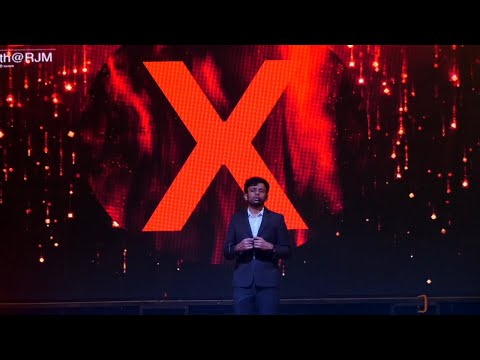
Hello. In the pursuits of our goals, we often begin from nothing or closer to nothing. But what if I tell you we could kickstart from the halfway mark.Yes, believe you can. You are halfway there. When I say belief, when I say faith, it is the light that makes our life bright even during the darkest times.We all walk through life with questions, some big and some small. Questions about meaning, purpose, and direction of our life. At times, life is clear and full of joy. At other times, it is uncertain, unpre ...
X @The Economist
The Economist· 2025-08-23 17:40
Scientific Research - Scientists conducted a study involving clergy and magic mushrooms [1] - Participants reported a deeper connection to their faith and improved prayer more than a year after the study [1]
X @Ansem
Ansem 🧸💸· 2025-08-22 00:17
Religion & Belief - Religions often rely on belief in a higher power and stories of miracles performed by figures like Jesus, Prophets, Moses, and Vishnu to spread faith [1] - These stories, packaged over time, make it easier for future generations to believe, even without firsthand experience [1] - It's now harder to convince people of miracles without scientific explanations [2] - Abrahamic religions are deeply rooted, making it difficult for new religions to emerge without an undeniable miracle [2]
What Diffrent religions taught me about life | Juwairiah Sayyed | TEDxSISJ Youth
TEDx Talks· 2025-08-18 16:13
Core Message - Understanding, rather than fear or judgment, leads to tolerance and a more human approach to life and religion [16] - Faith, regardless of religion, provides messages and stories that have guided societies towards peace [18] - In a world prone to division, choosing understanding is a bold act that fosters kindness, forgiveness, open hearts, and unity [18][19] Lessons from Different Faiths - Islam emphasizes intention and humility over mere appearance, highlighting the importance of trusting the process [5][6] - Buddhism teaches that suffering is a part of life and that trust in the process is essential even when the plan is unclear [7][8][9] - Christianity promotes forgiveness and understanding as paths to healing and growth [10][11] - Hinduism, through the concept of Karma in the Bhagwat Gita, emphasizes doing one's duty without obsessing over the outcome, focusing on effort rather than results [12][13][14][15] Personal Growth and Perspective - The speaker's upbringing in a multi-faith environment instilled a belief in understanding different perspectives [2][3][4] - The speaker advocates for reading moments, life, and people, emphasizing the importance of learning and education [4] - The speaker suggests that the question should not be "What do I get from this?" but rather focusing on the effort put into something [14]

My Blind Date with Faith, God and Mickey Mouse. | Mairead Loughran Ryan | TEDxBlack Mountain
TEDx Talks· 2025-08-06 15:25
Core Message - The core message revolves around finding faith and connection in unexpected places, particularly when stripped of superficial elements and technology [1][33] - It emphasizes the importance of human connection and community in a divided world, advocating for small, meaningful changes in perception and behavior [33][34] Personal Experience - The narrative recounts a personal experience of attending a religious pilgrimage instead of a planned trip to Disneyland Paris [1][2][3] - The initial disappointment and culture shock of the pilgrimage are highlighted, including the lack of amenities and the stark contrast to expectations [4][6][7] - The experience led to unexpected connections with strangers and a deeper appreciation for human interaction [22][23][26] Reflection and Transformation - The protagonist reflects on the superficiality of modern life and the value of genuine human connection [28][32] - The trip to Disneyland, while initially desired, ultimately felt less meaningful than the connections made during the pilgrimage [30][31][32] - The experience fostered resilience and a new perspective on appreciating the small things in life [28][29] Social Commentary - The narrative touches on themes of identity, materialism, and the impact of technology on human relationships [32] - It questions the need for external symbols of faith or dreams, suggesting that true connection lies in the "space in between" [1][33] - It advocates for slowing down, listening to oneself, and fostering community in a world that often promotes division [33][34]