
Federal funds rate

Search documents
Current personal loan statistics in 2026
Yahoo Finance· 2026-01-07 20:29
Core Insights - The article discusses the impact of federal rate changes and inflation on personal loan interest rates, emphasizing the importance for consumers to understand these factors when borrowing [1][4]. Group 1: Interest Rate Dynamics - Personal loan interest rates are influenced by the Federal Reserve's decisions regarding the federal funds rate, with increases leading to higher borrowing costs [4]. - Historical trends show that major economic events, such as recessions, typically result in the Fed lowering rates to stimulate recovery, which in turn affects personal loan rates [5][6]. Group 2: Current Statistics - The average personal loan interest rate is currently 12.21%, with rates from lenders ranging between 6.24% and 35.99% [8]. - As of September 2025, the average personal loan debt per borrower in the U.S. was $11,724, and inflation is reported at 3% month over month [8]. - The Federal Reserve has reduced the federal funds rate three times in 2025, with the current target rate set between 3.5% and 3.75% [8]. Group 3: Credit Score Influence - Credit scores play a significant role in determining personal loan interest rates, with higher scores generally leading to better rates for borrowers [7].
Best high-yield savings interest rates today, January 1, 2026 (top account pays 4% APY)
Yahoo Finance· 2026-01-01 11:00
Core Insights - High-yield savings accounts can provide above-average returns, making it essential for consumers to compare rates across different banks to maximize savings [1][2] Group 1: Current Savings Account Rates - Savings account rates have been declining since the Federal Reserve began cutting the federal funds rate, but many high-yield accounts still offer rates around 4% APY and higher, particularly from online banks [2][5] - As of January 1, 2026, the highest savings account rate available is 4% APY from SoFi, indicating competitive offerings in the market [3][10] Group 2: Factors in Choosing a Savings Account - When selecting a savings account, interest rates are crucial, but other factors such as fees, ATM locations, and the bank's reputation should also be considered for a positive banking experience [4][9] - The best savings accounts combine high rates with low fees and accessibility, enhancing overall customer satisfaction [4] Group 3: Savings Account Rate Forecast - Following a period of low interest rates, the Federal Reserve raised rates in 2022 to combat inflation, leading to a peak in savings interest rates [5] - However, after a series of rate cuts starting in late 2024, savings account rates have begun to decline, with further cuts anticipated [6][7] Group 4: Opening a Savings Account - The process of opening a savings account involves researching rates, determining personal requirements, preparing necessary documentation, and completing an application, which can often be done online [8][11]
Bitcoin, Ethereum, XRP, Dogecoin Gain As 2026 Looms: Analyst Expects 'Nice Little Surprise' On New Year's Day If BTC Does This - Grayscale Bitcoin Mini Trust (BTC) (ARCA:BTC)
Benzinga· 2025-12-31 02:10
Cryptocurrency Market Overview - Leading cryptocurrencies experienced gains on Tuesday, with Bitcoin rising by 1.78% to $88,600.81 and Ethereum increasing by 1.88% to $2,978.98 [1][2] - Despite the recent gains, Bitcoin and Ethereum are on track for their worst fourth quarter performances since 2018, with Bitcoin down 22.37% and Ethereum down 28% [3] - The global cryptocurrency market capitalization increased by 1.26% to $2.99 trillion [7] Trading Activity - Bitcoin's trading volume decreased by 24% in the last 24 hours, while Ethereum's trading volume fell by 27% [3] - Nearly $180 million was liquidated from the cryptocurrency market in the last 24 hours, with both long and short positions being affected [5] - Bitcoin's open interest dropped by 2.28% in the last 24 hours, indicating potential short covering by bearish traders [6] Stock Market Performance - Cryptocurrency-linked stocks Bitmine Immersion Technologies Inc. and Coinbase Global Inc. saw declines of 2.87% and 0.93%, respectively [4] - The stock market overall experienced losses, with the Dow Jones Industrial Average down 0.20%, the S&P 500 down 1.36%, and the Nasdaq Composite down 0.24% [8] Federal Reserve Insights - The Federal Reserve's December meeting minutes revealed divisions among officials regarding interest rate cuts, with some advocating for a 50 basis point cut, while a 25 basis point reduction was ultimately decided [8][9] - Traders are currently pricing in an 85% chance that the federal funds rate will remain unchanged at the January meeting [9] Market Predictions - Analysts are speculating on Bitcoin's potential breakout above the 21-day simple moving average around $89,000, which has historically been a significant trigger for rallies [10] - Another analyst predicts a possible dip in Bitcoin prices following the Consumer Price Index release on January 13, which could lead to a selloff followed by a bullish rally [11]


Best CD rates today, December 25, 2025 (lock in up to 4.2% APY)
Yahoo Finance· 2025-12-25 11:00
Core Insights - CD rates are currently higher than historical averages, with the highest rate at 4.2% APY offered by United Fidelity Bank for a 2-year CD [2] - The Federal Reserve has been cutting its target rate, leading to a decline in CD rates since last year [2][5] - Online banks are particularly competitive, offering rates of 4% APY and above [2] Group 1: Current CD Rates - CD rates are relatively high compared to historical averages, but have been declining since the Federal Reserve began cutting rates [2] - The highest CD rate available today is 4.2% APY from United Fidelity Bank on a 2-year CD [2] - Several financial institutions are offering competitive rates of 4% APY and up, especially among online banks [2] Group 2: Federal Reserve Actions - The Federal Reserve has cut its target rate three times in late 2024 by a total of one percentage point due to slowing inflation and an improved economic outlook [3] - The Fed announced its third rate cut of 2025, with potential additional cuts anticipated in 2026, though the timing and number of cuts remain uncertain [4] - The federal funds rate does not directly impact deposit interest rates, but they are correlated; typically, when the Fed lowers rates, financial institutions follow suit [5] Group 3: Opening a CD - The process for opening a CD account varies by institution but generally includes researching rates, choosing an account that meets financial needs, and preparing necessary documents [6] - Important factors to consider when opening a CD include competitive rates, term length, minimum deposit requirements, and potential fees [6] - The application process is typically quick, often allowing for online applications, and funding the account can be done through transfers or checks [6]
Current credit card interest rates
Yahoo Finance· 2025-12-24 19:09
Core Insights - The adjustment of credit card rates is directly tied to changes in the Prime Rate, affecting both new and existing balances without requiring special notice [1][6] - The CARD Act of 2010 has limited the flexibility of credit card issuers in changing rates, making it easier for them to adjust rates by linking them to the Prime Rate [2] - The average credit card interest rate is currently 19.73 percent, a decrease from a record-high of 20.79 percent [5] Group 1: Credit Card Rate Adjustments - Credit card agreements allow for rate adjustments based on the Prime Rate, impacting cardholders' balances without prior notice [1] - The Prime Rate is currently set at 6.75 percent, typically 3 percentage points higher than the federal funds rate [4] - Federal Reserve rate changes generally pass through to customers within one to two months, affecting both new and existing balances [6] Group 2: Credit Card Interest Rates - The average markup for credit card rates is between 12 and 13 percent above the Prime Rate [4] - Credit card interest rates are expressed as APRs, with daily interest accruing on carried balances [11] - A consumer with $5,000 in credit card debt at a 20 percent APR could end up paying approximately $7,723 in interest if only making minimum payments [12] Group 3: Types of Credit Card Interest Rates - Different types of interest rates apply to various transactions, including balance transfers, introductory rates, cash advances, and penalty APRs [14] - The average credit card rate is calculated based on the midpoint of APR ranges from various credit cards, reflecting the creditworthiness of consumers [13]
Best money market account rates today, December 24, 2025 (secure up to 4.25% APY)
Yahoo Finance· 2025-12-24 11:00
Core Insights - The article discusses the current state of money market account (MMA) rates, highlighting the importance of earning competitive rates as interest rates decline following recent Federal Reserve rate cuts [1][5]. Group 1: Current MMA Rates - The national average interest rate for money market accounts is 0.58%, while top rates can exceed 4% APY, comparable to high-yield savings accounts [2]. - Quontic Bank currently offers the highest MMA rate at 4.25%, which is over seven times the national average [8]. Group 2: Impact of Federal Reserve Actions - Money market account rates are closely tied to the federal funds rate set by the Federal Reserve, which influences deposit account rates [3]. - Between July 2023 and September 2024, the Fed maintained a target range of 5.25%–5.50%, but subsequently cut the federal funds rate by a total of 100 basis points, leading to a decline in money market rates [4]. Group 3: Future Rate Expectations - Rates are expected to continue declining following the Fed's recent cuts, suggesting that savers may have limited time to take advantage of higher rates [5]. Group 4: Considerations for Savers - Money market accounts provide a balance of safety, liquidity, and better returns than traditional savings accounts, making them an attractive option for savers [6]. - Factors to consider when choosing a money market account include liquidity needs, savings goals, and risk tolerance [7]. Group 5: Safety of Money Market Accounts - Money market accounts are considered safe as long as they are opened with federally insured banks or credit unions, protecting against market risk [10].
Best money market account rates today, December 23, 2025 (Earn up to 4.25% APY)
Yahoo Finance· 2025-12-23 11:00
Core Insights - Money market accounts (MMAs) offer higher interest rates compared to traditional savings accounts, along with liquidity and flexibility, making them suitable for long-term savings that may be accessed for purchases or bills [1] Interest Rates - The national average interest rate for MMAs is currently 0.39%, while the best rates can exceed 4% APY, similar to high-yield savings accounts [3] - By late 2023, many MMAs were offering rates of 4.00% or higher, with some accounts potentially exceeding 5% APY throughout 2024 [7] - Rates have been historically high but are trending downward following recent Federal Reserve rate cuts [8] Historical Context - MMA rates have fluctuated significantly due to changes in the Federal Reserve's target interest rate, particularly during economic events such as the 2008 financial crisis and the COVID-19 pandemic [4][5][6] - Following the 2008 crisis, MMA rates were low, typically between 0.10% and 0.50%, but increased as the economy improved and the Fed raised interest rates [5][6] Account Features - When selecting an MMA, factors beyond interest rates should be considered, including minimum balance requirements, fees, and withdrawal limits [9] - Some MMAs may require a minimum balance of $5,000 or more to earn the highest rates, and monthly maintenance fees can reduce interest earnings [10] - There are competitive MMAs available without balance requirements or fees, emphasizing the importance of comparing options [10] Insurance and Safety - It is crucial to ensure that the chosen MMA is insured by the FDIC or NCUA, which protects deposits up to $250,000 per institution, per depositor [11]
Best CD rates today, December 18, 2025 (lock in up to 4.1% APY)
Yahoo Finance· 2025-12-18 11:00
Core Insights - CD rates are currently higher than historical averages, with the best rates reaching 4.1% APY offered by several banks [2][3] - The Federal Reserve has been cutting its target rate, leading to a decline in CD rates since last year [2][4] - Financial institutions are expected to follow the Fed's rate cuts, which may present a good opportunity to lock in current CD rates [5] CD Rates Overview - The highest CD rates available today are 4.1% APY from Sallie Mae Bank (15-month CD), Synchrony Bank (9-month CD), and LendingClub Bank (8-month CD) [2] - CD rates have been declining due to the Federal Reserve's actions, which included three rate cuts in late 2024 [3][4] Federal Reserve Impact - The Federal Reserve's recent rate cuts are correlated with deposit interest rates, influencing the trend of CD rates [5] - Additional rate cuts may occur in 2026, but the timing and extent remain uncertain [4] Opening a CD - The process for opening a CD includes researching rates, choosing an account that meets financial needs, preparing necessary documents, completing the application, and funding the account [6] - It is important to consider the CD's term length and minimum deposit requirements to avoid penalties for early withdrawal [6]
The Federal Reserve Just Made Dubious History That Can Lead to a Crisis of Confidence on Wall Street in the New Year
The Motley Fool· 2025-12-13 08:06
Core Insights - Wall Street's major stock indexes have shown significant year-to-date gains, with the Dow Jones Industrial Average up 13%, S&P 500 up 17%, and Nasdaq Composite up 22% as of December 10 [1] - The rise of artificial intelligence and quantum computing, along with notable stock splits, has contributed to the current bull market [2] - The Federal Reserve has implemented three rate cuts by the end of the year, raising concerns about a potential crisis of confidence in the market [3][11] Federal Reserve's Role - The Federal Reserve's primary responsibility is to manage monetary policy, aiming to maximize employment while maintaining stable prices, ideally around a 2% inflation rate [5] - The Federal Open Market Committee (FOMC) influences monetary policy mainly through adjustments to the federal funds rate, impacting borrowing costs and economic growth [6][7] - A divided FOMC, as evidenced by the recent 9-3 vote with dissenting opinions, raises concerns about the Fed's consistency and its ability to stabilize the market [11][13] Market Valuation Concerns - The S&P 500's Shiller Price-to-Earnings Ratio (CAPE Ratio) reached 40.57, significantly above the historical average of 17.3, indicating a historically expensive stock market [21] - The CAPE Ratio has only been higher once in 155 years, suggesting potential volatility ahead, as previous instances of high ratios have led to substantial market declines [22][23] - Investors face challenges navigating a pricey market while the Fed's inconsistent messaging could exacerbate volatility in the coming year [23]
美联储观察 -12 月 FOMC 会议:立场偏向观望,静待经济走向-Federal Reserve Monitor-December FOMC Reaction Well Positioned to Wait and See How the Economy Evolves
2025-12-11 02:23
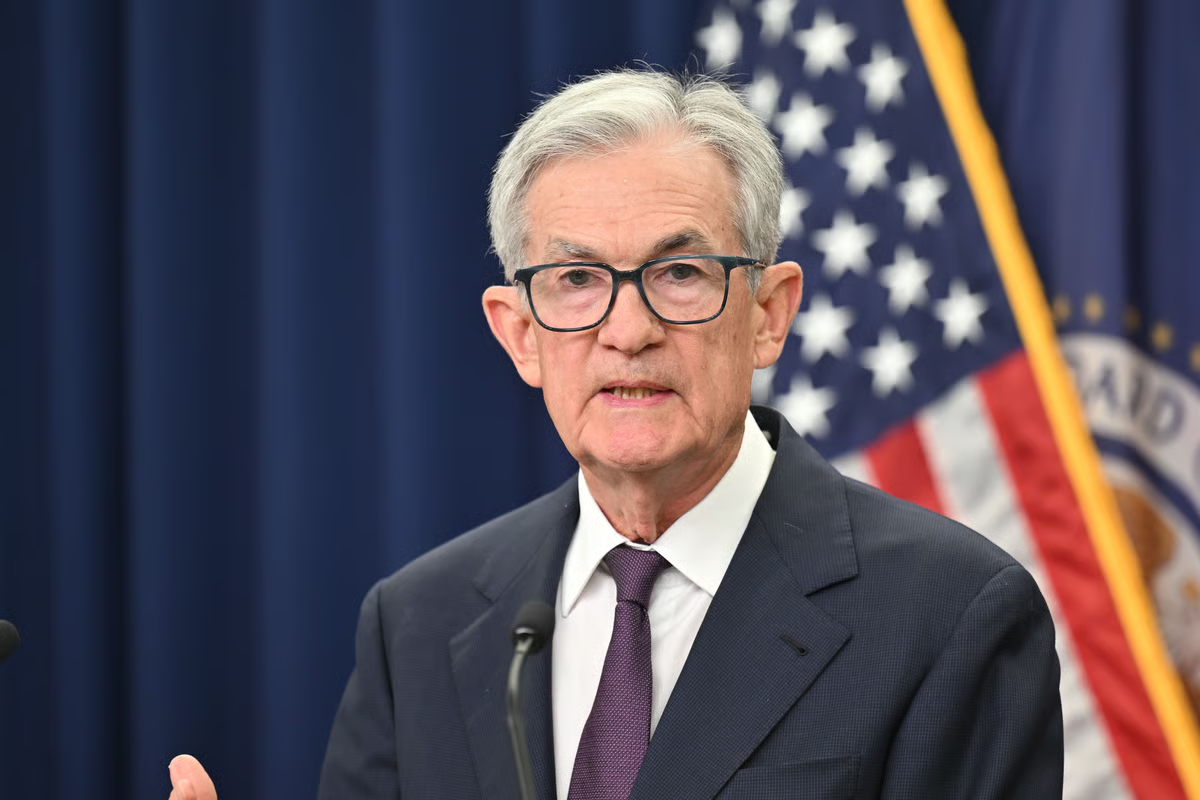
Summary of Key Points from the December FOMC Meeting Industry Overview - The document primarily discusses the Federal Reserve's monetary policy decisions and economic outlook, impacting the financial services and investment banking sectors. Core Points and Arguments 1. **Rate Cut Announcement**: The Federal Reserve reduced the target range for the federal funds rate by 25 basis points to 3.5-3.75%[6][10][11]. 2. **Dissenting Opinions**: There were three dissents during the meeting; two members favored holding rates steady, while one member advocated for a larger 50 basis point cut[6][20]. 3. **Data Dependency**: Future rate adjustments will be more data-dependent, with Chair Powell indicating that the current rate is at the upper end of the Fed's neutral rate estimates, suggesting a cautious approach moving forward[9][24][25]. 4. **Labor Market Concerns**: The Fed expressed concerns about a cooling labor market, with unemployment rising slightly and payroll job growth averaging only 40,000 per month since April[26][30]. 5. **Inflation Outlook**: Inflation pressures are expected to remain, with the Fed projecting above-target inflation into 2027, indicating a trade-off between supporting the labor market and controlling inflation[33][34]. 6. **Economic Projections**: The Fed upgraded its GDP growth projections for 2026 and 2027 to 2.3% and 2.0%, respectively, reflecting a modest improvement in economic activity[35][36]. 7. **Reserve Management Purchases**: The Fed will initiate purchases of Treasury bills at a pace of $40 billion per month to maintain ample reserves, which is distinct from quantitative easing[12][15][77]. 8. **Market Reactions**: The announcement led to a positive response in agency mortgages and a rally in Treasury yields, indicating market confidence in the Fed's approach[58][97]. Additional Important Content 1. **Future Rate Cuts**: The Fed is expected to consider further rate cuts in January and April, contingent on labor market data and inflation trends[9][30][31]. 2. **Risks to Economic Outlook**: The Fed sees a more balanced risk outlook compared to previous meetings, with fewer members indicating downside risks to GDP growth and fewer concerns about rising unemployment[37][39]. 3. **Currency Outlook**: The USD is expected to decline against AUD and CAD, supported by stronger local labor markets and central bank policies in those regions[84][85]. 4. **Housing Market Challenges**: Powell noted significant challenges in the housing market, including low supply and the impact of previously low mortgage rates on mobility[101]. This summary encapsulates the key insights from the FOMC meeting, highlighting the Fed's cautious stance on monetary policy amid evolving economic conditions.
