
Net Zero

Search documents
X @Bloomberg
Bloomberg· 2025-11-27 00:50
Australia just lost its bid to host the next COP summit and the Coalition has walked away from net zero. Bloomberg’s David Stringer joins us to unpack what this climate double-blow means for investors, politics and your power bill. https://t.co/n5ka9fROrP ...
NYC comptroller urges city pensions to drop BlackRock, other managers over climate concerns
Yahoo Finance· 2025-11-26 13:08
Core Viewpoint - The New York City Comptroller has expressed significant concerns regarding BlackRock's approach to engaging with public companies, particularly in relation to climate risk and decarbonization strategies [1][4]. Group 1: Asset Managers' Performance - BlackRock is the largest asset manager for New York City's pension funds, managing $42.3 billion across three pension plans [2]. - The Comptroller reported that 46 out of 49 public market managers are aligned with the city's decarbonization expectations, while BlackRock, Fidelity, and PanAgora are not [2]. - Lander indicated that the three asset managers failed to adequately address climate risk, which is essential for the long-term value of the pension funds [2][3]. Group 2: Recommendations for Change - Lander recommended that the city's pension funds terminate their relationships with BlackRock, Fidelity, and PanAgora due to their failure to meet climate expectations [4][7]. - The Comptroller suggested issuing a search notice for new managers to handle BlackRock's U.S. public equity index mandates to better align with climate expectations [5]. - Fidelity's restrictive engagement approach and PanAgora's limited focus on emissions disclosures were cited as reasons for their recommended termination [8]. Group 3: BlackRock's Response - BlackRock responded to the Comptroller's recommendations by stating that the accusations of abdicating financial duty are politically motivated and undermine retirement security [6]. - The firm mentioned that it has begun allowing clients to opt into its Climate and Decarbonization Stewardship strategy, although it will not proactively engage with U.S. companies [5].

Montana Technologies Corporation(AIRJ) - 2025 Q3 - Earnings Call Transcript
2025-11-14 14:32
Financial Data and Key Metrics Changes - AirJoule Technologies reported a net loss of $4 million for Q3 2025, compared to a net income of $2.5 million in Q2 2025, primarily due to non-cash losses related to earn-out liabilities and vesting shares [27][28] - The company's net operating expenses for Q3 were $3 million, which included approximately $487,000 in reimbursed expenses from a joint venture [26][27] - Cash on the balance sheet at the end of Q3 was approximately $26 million, with an additional $5 million contributed to the joint venture post-quarter [29][30] Business Line Data and Key Metrics Changes - The Hubbard, Texas deployment is operational 24/7, generating critical performance data that is essential for optimizing system design and validating performance [13][14] - AirJoule's water generation system is producing distilled quality water with zero dissolved solids, meeting EPA and FDA standards, which is a significant differentiator in the market [18][19] Market Data and Key Metrics Changes - The demand for AirJoule's solutions is driven by macro trends such as water scarcity and the increasing energy footprint of data centers, particularly in arid regions [5][9] - The company is positioned to benefit from regulatory changes mandating the phase-out of high global warming potential refrigerants, creating demand for alternative technologies [10][11] Company Strategy and Development Direction - AirJoule aims to capitalize on the convergence of water scarcity and energy efficiency demands, positioning its technology as a solution for industrial, commercial, and military applications [11][12] - The company is focusing on productization and scaling manufacturing readiness to support multiple customer deployments in 2026 [22][25] Management's Comments on Operating Environment and Future Outlook - Management highlighted the importance of water security as a fundamental constraint on AI infrastructure development, emphasizing the operational impacts on data centers [7][9] - The company is optimistic about its path to commercialization, with significant interest from diverse industries and partnerships with major players like GE Vernova and Carrier [12][19] Other Important Information - AirJoule was recognized as a winner of the Net Zero Innovation Hub for Data Centers technology competition, validating its technology for sustainable operations [8][15] - The company is exploring water purchase agreements (WPAs) as a commercial strategy, allowing customers to purchase water on a volumetric basis rather than capital equipment [20][21] Q&A Session Summary Question: Clarification on data from Hubbard accelerating commercial adoption - Management indicated that the operational data from Hubbard is catalyzing interest from hyperscalers looking to build in Texas, enhancing confidence in the technology's performance [33] Question: Progress on product integration with GE Vernova - The integration project with GE Vernova is ongoing, focusing on utilizing waste heat from gas turbines to enhance AirJoule's products [34][35] Question: Low R&D spend in Q3 - The low R&D spend was attributed to expenses being borne at the joint venture level and a reversal of previously accrued royalty expenses [37][38] Question: Runway for the AirJoule JV - The joint venture's spending for the full year is expected to be at the higher end of the $17 million-$18 million range, with sufficient cash to support operations through commercialization into 2026 [39] Question: Customer interest in the WPA model - Interest in the WPA model is strong among customers lacking access to reliable municipal water, with many discussions ongoing [42][66] Question: Water purity advantage in commercial discussions - Water quality is crucial for various customers, with AirJoule's technology providing distilled water that meets stringent standards, differentiating it from conventional systems [49][55] Question: Validation work with ASU's Dr. Westerhoff - The collaboration with ASU is expected to provide independent validation of AirJoule's performance and water quality, aiding commercial discussions [57][58] Question: Timing and scope of the Net Zero Innovation Project - The project will showcase AirJoule's technology in a testbed data center in Denmark, focusing on circularity and operational projects globally [72]
"A Leader's Guide to Scope 3 ROI" Webinar Hosted by Arbor During Canada Climate Week Xchange
Newsfile· 2025-11-13 13:01
Core Insights - Arbor, a leading carbon accounting platform, is participating in the inaugural Canada Climate Week Xchange (CCWX) and will host a virtual panel discussion titled "A Leader's Guide to Scope 3 ROI" on November 27, 2025 [1][4]. Event Details - The panel discussion will feature experts from data, finance, and sustainable apparel sectors, focusing on transforming Scope 3 emissions and supply chain challenges into competitive advantages and sustainability ROI [2][3]. - The event is part of CCWX 2025, which runs from November 24 to November 30, 2025, and aims to address climate-related challenges across Canada [4][7]. Regulatory Context - As regulatory expectations increase, particularly with frameworks like SBTi V2 and CSRD, Scope 3 emissions are becoming critical for climate leadership [3]. - The panel will discuss how companies can leverage AI to manage data complexity and navigate new regulatory risks, moving beyond mere compliance to uncover real business value [3]. Company Overview - Arbor's platform enables companies to measure, manage, and reduce carbon emissions, providing automated calculations of Product Carbon Footprints (PCF) and generating audit-grade reports for stakeholders [6]. - The company aims to help businesses utilize decarbonization as a core driver for value creation and achieving net-zero goals [4][6].


IAEA changes its outlook for #oil #energy #shorts
Bloomberg Television· 2025-11-12 21:07
Demand Forecast - IEA revises its oil demand forecast, projecting a 13% increase by 2050 instead of a plateau [1] - Global oil demand is expected to rise from 100 million barrels per day to 113 million barrels per day by 2050 [2] - Oil prices are projected to hover near $90 per barrel by 2035 [2] Market Implications - The report suggests that fossil fuels still have significant potential [2] - The revised demand scenario indicates a more challenging path to net zero emissions by mid-century [2] - The report serves as a reminder that oil remains relevant in the transition to net zero [3]

OMV to Present at the Oil & Gas Virtual Investor Conference November 13th
Globenewswire· 2025-11-11 15:02
Company Overview - OMV is an integrated energy, fuels, and chemicals company based in Vienna, focusing on transitioning to sustainable energy solutions and aiming for net zero emissions by 2050 [4] - In 2024, OMV generated revenues of 34 billion euros and employs approximately 23,600 people globally [4] Upcoming Event - OMV will present live at the Oil & Gas Virtual Investor Conference on November 13, 2025, with Oana Goje and Oliver Rosenthal representing the company [1] - The event will allow real-time questions from investors, and an archived webcast will be available for those unable to attend live [2] Investor Engagement - Virtual Investor Conferences (VIC) provides a platform for companies to engage with investors through interactive presentations and one-on-one meetings [5][6] - VIC aims to enhance investor access and communication, replicating the experience of on-site investor conferences [6]

X @Bloomberg
Bloomberg· 2025-11-10 14:58
Policy & Regulation - A European Union parliamentary committee is expected to propose a new emissions-reduction goal [1] - This is a crucial move towards achieving net zero emissions by 2050 [1]
X @Nick Szabo
Nick Szabo· 2025-11-06 20:28
RT Michael A. Arouet (@MichaelAArouet)It must be really embarrassing for European green Marxists that North Korea is much closer to achieving Net Zero targets than Europe. https://t.co/6pKOu7FZ3d ...
Dan Yergin: Narrative on oil & gas investment, energy transition is changing
Youtube· 2025-11-06 05:56
Energy and AI Nexus - The global energy system is at a tipping point, with increasing demand for compute reshaping the industry [1] - Energy ministers from both developing and developed countries are focusing more on electricity rather than oil and gas, driven by the need for electricity for basic needs and the rise of AI [2] Electricity Demand and Shortfall - There is significant pressure on the electricity system, with data centers currently accounting for about 4% of US electricity demand, projected to rise to 10-12% within five years [4] - The US has experienced no growth in electricity demand for 25 years, but this trend is changing due to new demands from various sectors [4] Energy Transition and Investment - The narrative around energy transition is shifting, with a realization that transitioning away from fossil fuels is more complex than previously thought [5][6] - The International Energy Agency has revised its investment needs, now stating that $540 billion per year in new investment in oil and gas is necessary by 2025, a significant change from earlier assessments [10] Climate and Economic Growth - Climate remains a priority, but there is a broader reassessment of energy needs and economic factors influencing the market [12] - The pace of global economic growth is crucial for determining oil prices, with stronger-than-expected growth impacting market dynamics [17] Oil Market Dynamics - Current oil prices are stable around $60, with OPEC adjusting supply based on market conditions and seasonality [13][15] - Key risks to watch include sanctions on Russia and potential measures from the Trump administration affecting India and China, which could influence oil market stability [16][17]
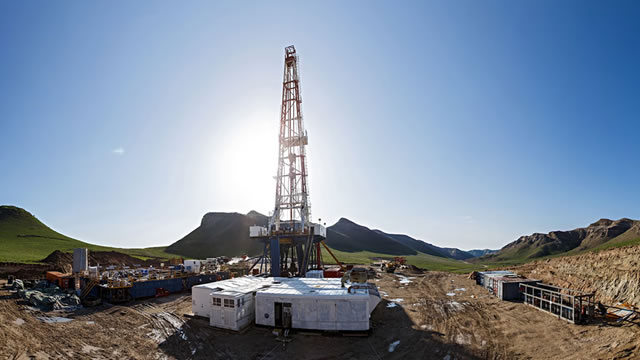
Exclusive-QatarEnergy, Exxon executives warn of Europe exit over climate law
Yahoo Finance· 2025-11-03 12:51
Core Viewpoint - Executives from ExxonMobil and QatarEnergy have indicated that they may cease operations in the European Union if the EU does not amend its sustainability law, which could impose fines of 5% of global revenue [1][2][3] Group 1: Company Responses - Exxon CEO Darren Woods expressed that the EU's Corporate Sustainability Due Diligence Directive could lead to "disastrous consequences" if implemented in its current form, as it requires companies to manage human rights and environmental risks across their supply chains [2][5] - QatarEnergy's CEO Saad al-Kaabi reiterated the possibility of halting LNG supplies to Europe if the EU does not revise or revoke the sustainability law, emphasizing that this is a serious threat and not a bluff [3][4] - Both companies highlighted the technical challenges of complying with the EU's requirements, with Woods stating that the legislation's demands are technically unfeasible [5][6] Group 2: Market Context - ExxonMobil and QatarEnergy are significant suppliers of liquefied natural gas (LNG) to Europe, with Exxon expected to contribute approximately 50% of EU imports from American producers in 2024, while Qatar has supplied between 12% and 14% of the bloc's LNG since the onset of the Ukraine conflict in 2022 [7]
