Wealth Inequality

Search documents
X @The Wall Street Journal
The Wall Street Journal· 2025-11-22 12:55
In Miami and elsewhere, the wealthy are moving in increasingly private spheres, shelling out big money to bypass the indignities of public life https://t.co/8AgpuTHYro ...
What happens when billionaires try to take over politics? 'Revolt' and 'civil war': Elson warns
MSNBC· 2025-11-21 22:14
Political Donations & Influence - The wealthiest 100 Americans spent $1 billion (十亿) in federal election donations in 2024 [1] - One out of every $13 (7.69%) spent in federal election donations comes from the wealthiest 100 Americans [2] - 80% of the money from the wealthiest 100 Americans is going to the Republican party [2] - A significant portion of the money donated by billionaires may be ineffective, as some donations are directed towards losing campaigns [9] - Donations from the elite to figures like Donald Trump could alienate popular support and benefit Democrats [11][12] Wealth Inequality & Historical Parallels - Mass wealth inequality has historically led to revolt, violence, and civil war [4][5] - The top 0.00006% (19 households) control 2% of all the wealth in America [24] - The top 1% controls half of the entire market cap of the S&P 500 [24] - The top 10% account for half of all consumer spending, a record high [24] Political System & Campaign Finance - The Citizens United decision has led to an increase in the influence of super PACs and large donors [16][17] - Current Supreme Court rulings prevent limits on political speech, hindering campaign finance reform [20]

X @The Wall Street Journal
The Wall Street Journal· 2025-11-20 00:39
In Miami and elsewhere, the wealthy are moving in increasingly private spheres, shelling out big money to bypass the indignities of public life. https://t.co/LjGQNdXp89 ...
X @The Wall Street Journal
The Wall Street Journal· 2025-11-19 03:56
In Miami and elsewhere, the wealthy are moving in increasingly private spheres, shelling out big money to bypass the indignities of public life. https://t.co/AQgR7tmTWb ...
X @The Wall Street Journal
The Wall Street Journal· 2025-11-16 19:04
In Miami and elsewhere, the wealthy are moving in increasingly private spheres, shelling out big money to bypass the indignities of public life. https://t.co/hcdDggOH1G ...
X @The Wall Street Journal
The Wall Street Journal· 2025-11-16 01:00
In Miami and elsewhere, the wealthy are moving in increasingly private spheres, shelling out big money to bypass the indignities of public life. https://t.co/259WfC3Nk6 ...
X @Bloomberg
Bloomberg· 2025-11-10 10:10
What bothers people is not so much that successful entrepreneurs have unfathomable wealth, but that too many ordinary Americans struggle to get by, says @nirkaissar (via @opinion) https://t.co/YWuw9uPOwm ...
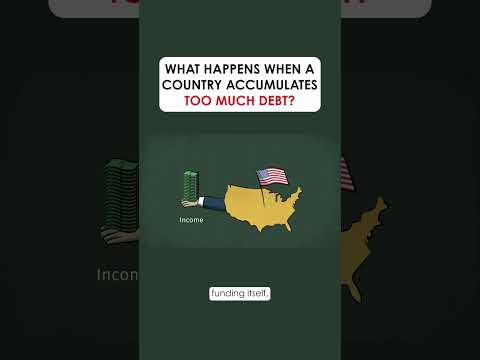
What Happens When a Country Accumulates Too Much Debt?
Principles by Ray Dalio· 2025-11-06 16:22
Economic Cycles & Debt - Excessive debt coupled with economic downturns can lead to financial bubbles bursting, forcing countries to choose between defaulting or printing money [1] - Historically, financial crises have been triggered by financial excesses and the costs of wars, as seen with the Dutch, British, and the US [2] - Governments often resort to printing money to manage debt, which devalues the currency and raises inflation [1] Internal Conflict & Political Extremism - Economic hardship, declining living standards, and wealth inequality exacerbate internal conflicts among different groups [3] - Political extremism arises as populism of the left seeks wealth redistribution, while populism of the right aims to preserve wealth [3] - Rising taxes on the wealthy during turbulent times can lead to capital flight, reducing tax revenue and hollowing out the economy [4] Societal Instability & Leadership - Capital flight and turbulent conditions undermine productivity, shrinking the economic pie and intensifying conflicts [5] - Populist leaders emerge, promising order and control, challenging democracy and potentially leading to strong, authoritarian leadership [5]
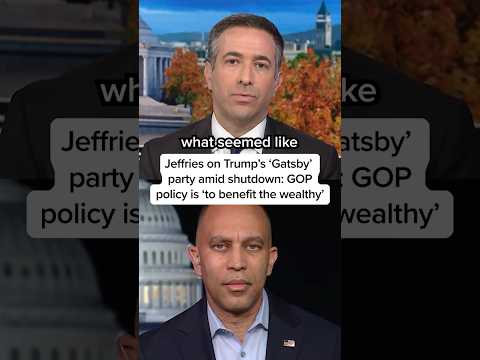
Jeffries on Trump's 'Gatsby' party amid shutdown: GOP policy is 'to benefit the wealthy'
MSNBC· 2025-11-04 02:58
Public Sentiment & Political Impact - Public backlash against perceived tone-deaf actions by Donald Trump and his aides, including lavish parties and use of government benefits, is breaking through to regular citizens [1][2][3] - The contrast between Trump's opulent lifestyle and the struggles of everyday Americans is being likened to a "Great Gatsby" scenario, resonating with public concerns about wealth inequality [1][2] Policy & Economic Implications - Republican policies, particularly during the Trump administration, are characterized as benefiting the wealthy through measures like tax breaks for billionaire donors [5][6] - These policies are linked to cuts in social programs such as Medicaid and SNAP (Supplemental Nutrition Assistance Program), with SNAP cut by $186 billion, impacting vulnerable populations [4][5] - The administration is accused of prioritizing the lifestyles of the rich while harming working-class and middle-class Americans [6]
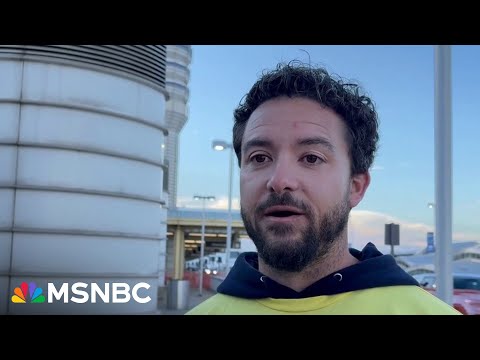
Flight delays persist as shutdown leads to air traffic controller shortage
MSNBC· 2025-11-03 11:18
Public Opinion & Political Impact - A majority of Americans (52%) blame the GOP and President Trump for the ongoing government shutdown, while 42% blame Democrats [1] - The shutdown and related events are drawing criticism, with comparisons made to wealth inequality [2][3] - The White House defends the President amidst criticism related to the shutdown's impact [4] Impact on Individuals & Families - Millions of Americans are affected by the shutdown, including 42 million people on SNAP benefits and 65,000 families impacted by Head Start [7] - Individuals are facing challenges in affording basic necessities like food and childcare due to the shutdown [4][11][12] - People are relying on past experiences and resourcefulness to cope with reduced or absent benefits [4][9][10] Impact on Federal Workers - Federal workers, including air traffic controllers, are experiencing financial stress and mental strain due to the uncertainty of paychecks [14][15][16] - Air traffic controllers are facing increased stress, potentially impacting their ability to perform their critical job [14][15] - Some federal workers are taking on second jobs to supplement their income during the shutdown [16] Systemic Issues & Concerns - The shutdown is exacerbating existing issues such as food insecurity and strained food bank resources [8][18] - There is concern about the long-term impact of the shutdown on individuals' ability to plan for the future [7][8][19] - The situation raises questions about the tipping point for lawmakers to address the shutdown and its consequences [6][20]