Growth Stocks

Search documents
MasterCard (MA) is an Incredible Growth Stock: 3 Reasons Why
ZACKS· 2025-08-07 17:46
Core Viewpoint - Investors are increasingly seeking growth stocks, particularly in the financial sector, to achieve above-average returns, but identifying such stocks involves significant risk and volatility [1] Group 1: Growth Stock Identification - The Zacks Growth Style Score system aids in identifying promising growth stocks by analyzing real growth prospects beyond traditional metrics [2] - MasterCard (MA) is currently highlighted as a recommended growth stock, possessing a favorable Growth Score and a top Zacks Rank [2] Group 2: Earnings Growth - Earnings growth is a critical factor for growth investors, with double-digit growth being particularly attractive [3] - MasterCard's historical EPS growth rate stands at 21.5%, with a projected EPS growth of 11.6% for the current year, surpassing the industry average of 11.3% [4] Group 3: Asset Utilization - The asset utilization ratio, or sales-to-total-assets (S/TA) ratio, is an important metric for assessing efficiency in generating sales [5] - MasterCard's S/TA ratio is 0.62, indicating that the company generates $0.62 in sales for every dollar in assets, compared to the industry average of 0.41 [5] Group 4: Sales Growth - Sales growth is another key indicator, with MasterCard expected to achieve a 15% sales growth this year, significantly higher than the industry average of 4.8% [6] Group 5: Earnings Estimate Revisions - Positive trends in earnings estimate revisions correlate strongly with stock price movements [7] - MasterCard's current-year earnings estimates have been revised upward, with the Zacks Consensus Estimate increasing by 1.9% over the past month [8] Group 6: Overall Positioning - MasterCard has achieved a Growth Score of B and a Zacks Rank of 2 due to positive earnings estimate revisions, positioning it well for potential outperformance [10]



Should iShares Russell Mid-Cap Value ETF (IWS) Be on Your Investing Radar?
ZACKS· 2025-08-07 11:21
Core Viewpoint - The iShares Russell Mid-Cap Value ETF (IWS) is a significant player in the Mid Cap Value segment of the US equity market, with over $13.43 billion in assets, and aims to provide broad exposure to this sector [1]. Group 1: ETF Overview - IWS was launched on July 17, 2001, and is passively managed by Blackrock [1]. - The ETF targets mid-cap companies with market capitalizations between $2 billion and $10 billion, balancing stability and growth potential [2]. Group 2: Value Stocks Characteristics - Value stocks, which IWS focuses on, typically have lower price-to-earnings and price-to-book ratios, along with lower sales and earnings growth rates [3]. - Historically, value stocks have outperformed growth stocks in long-term performance, although growth stocks may excel in strong bull markets [3]. Group 3: Costs and Performance - The annual operating expenses for IWS are 0.23%, which is competitive within its peer group, and it has a 12-month trailing dividend yield of 1.57% [4]. - IWS aims to match the performance of the Russell MidCap Value Index, with a year-to-date return of approximately 4.18% and a one-year return of about 11.37% as of August 7, 2025 [7]. Group 4: Sector Exposure and Holdings - The ETF has a significant allocation to the Industrials sector, comprising about 17.7% of the portfolio, followed by Financials and Real Estate [5]. - Coinbase Global Inc Class A (COIN) represents about 0.72% of total assets, with the top 10 holdings accounting for approximately 6.08% of total assets under management [6]. Group 5: Risk and Alternatives - IWS has a beta of 1.00 and a standard deviation of 17.35% over the trailing three-year period, indicating a medium risk profile [8]. - Alternatives to IWS include the First Trust SMID Cap Rising Dividend Achievers ETF (SDVY) and the Vanguard Mid-Cap Value ETF (VOE), with respective assets of $8.36 billion and $18.16 billion [10].

Should iShares Morningstar Mid-Cap Value ETF (IMCV) Be on Your Investing Radar?
ZACKS· 2025-08-06 11:20
Core Viewpoint - The iShares Morningstar Mid-Cap Value ETF (IMCV) is a passively managed fund that aims to provide broad exposure to the Mid Cap Value segment of the US equity market, with assets exceeding $727.04 million, making it an average-sized ETF in this category [1] Group 1: Fund Overview - Launched on June 28, 2004, IMCV is sponsored by Blackrock and focuses on mid-cap companies with market capitalizations between $2 billion and $10 billion, which are seen as having higher growth prospects compared to large-cap companies while being less risky than small-cap firms [1][2] - The ETF has an annual operating expense ratio of 0.06%, making it one of the least expensive options in its category, and it offers a 12-month trailing dividend yield of 2.5% [4] Group 2: Sector Exposure and Holdings - The ETF has a significant allocation to the Financials sector, comprising about 19.8% of the portfolio, followed by Industrials and Utilities [5] - Capital One Financial Corp (COF) is the largest individual holding at approximately 2.41% of total assets, with the top 10 holdings accounting for about 12.21% of total assets under management [6] Group 3: Performance Metrics - IMCV aims to match the performance of the Morningstar US Mid Cap Broad Value Index, with a year-to-date return of approximately 5.32% and a one-year return of about 12.7% as of August 6, 2025 [7] - The ETF has a beta of 0.95 and a standard deviation of 16.7% over the trailing three-year period, indicating effective diversification with around 286 holdings [8] Group 4: Alternatives and Market Position - IMCV carries a Zacks ETF Rank of 3 (Hold), suggesting it is a reasonable option for investors seeking exposure to the Mid Cap Value segment [10] - Other alternatives in the market include the iShares Russell Mid-Cap Value ETF (IWS) with $13.44 billion in assets and an expense ratio of 0.23%, and the Vanguard Mid-Cap Value ETF (VOE) with $18.18 billion in assets and an expense ratio of 0.07% [11]

Should ALPS (OUSA) Be on Your Investing Radar?
ZACKS· 2025-08-06 11:20
Core Viewpoint - The ALPS (OUSA) ETF offers broad exposure to the Large Cap Value segment of the US equity market, with assets exceeding $804.12 million since its launch in July 2015 [1] Group 1: Large Cap Value Characteristics - Large cap companies typically have a market capitalization above $10 billion, characterized by stability and predictable cash flows, resulting in lower volatility compared to mid and small cap companies [2] - Value stocks generally have lower price-to-earnings and price-to-book ratios, along with lower sales and earnings growth rates, but have historically outperformed growth stocks in long-term performance [3] Group 2: Costs and Performance - The ETF has an annual operating expense ratio of 0.48% and a 12-month trailing dividend yield of 1.33%, aligning with peer products [4] - OUSA aims to match the performance of the FTSE US Qual / Vol / Yield Factor 5% Capped Index, having gained approximately 2.46% year-to-date and 12.04% over the past year as of August 6, 2025 [7] Group 3: Sector Exposure and Holdings - The ETF's largest allocation is to the Financials sector at about 26.6%, followed by Information Technology and Consumer Discretionary [5] - Microsoft Corp. constitutes approximately 5.74% of total assets, with the top 10 holdings representing about 43.56% of total assets under management [6] Group 4: Risk and Alternatives - OUSA has a beta of 0.83 and a standard deviation of 13.53% over the trailing three-year period, indicating a medium risk profile with effective diversification across 101 holdings [8] - Alternatives include Schwab U.S. Dividend Equity ETF (SCHD) and Vanguard Value ETF (VTV), which have significantly larger asset bases and lower expense ratios of 0.06% and 0.04%, respectively [10] Group 5: Bottom Line - Passively managed ETFs like OUSA are favored by both institutional and retail investors for their low costs, transparency, flexibility, and tax efficiency, making them suitable for long-term investment strategies [11]

Should SPDR S&P Dividend ETF (SDY) Be on Your Investing Radar?
ZACKS· 2025-08-05 11:21
Core Viewpoint - The SPDR S&P Dividend ETF (SDY) is a large-cap value ETF that aims to provide broad exposure to the US equity market, with significant assets under management and a focus on dividend-paying stocks [1][11]. Group 1: ETF Overview - Launched on November 8, 2005, SDY has over $20.17 billion in assets, making it one of the largest ETFs in its category [1]. - The ETF is passively managed and sponsored by State Street Investment Management [1]. Group 2: Investment Characteristics - Large-cap companies typically have market capitalizations above $10 billion, offering more stability and reliable cash flows compared to mid and small-cap companies [2]. - Value stocks, which SDY focuses on, generally have lower price-to-earnings and price-to-book ratios, but they also exhibit lower sales and earnings growth rates [3]. Group 3: Costs and Performance - SDY has an expense ratio of 0.35% and a 12-month trailing dividend yield of 2.58% [4]. - The ETF has gained approximately 5.64% year-to-date and 5.23% over the past year, with a trading range between $121.58 and $144.00 in the last 52 weeks [8]. Group 4: Sector Exposure and Holdings - The ETF's largest sector allocation is to Industrials at about 21%, followed by Consumer Staples and Utilities [5]. - Microchip Technology Inc accounts for approximately 2.49% of total assets, with the top 10 holdings representing about 17.82% of total assets under management [6]. Group 5: Risk and Alternatives - SDY seeks to match the performance of the S&P High Yield Dividend Aristocrats Index, which includes companies that have consistently increased dividends for at least 20 years [7]. - The ETF has a beta of 0.78 and a standard deviation of 14.28% over the trailing three years, indicating a medium risk profile [8]. - Alternatives to SDY include the Schwab U.S. Dividend Equity ETF (SCHD) and the Vanguard Value ETF (VTV), which have lower expense ratios of 0.06% and 0.04%, respectively [10].

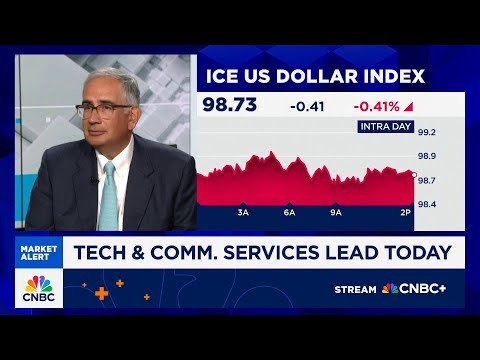
Sarat Sethi: Inflation not coming down has put Fed in quandary
CNBC Television· 2025-08-04 18:39
Okay, Mike. Thanks. Sat, how how much did the revisions in particular and the jobs data on Friday change your view of the market if at all.>> I think the lagging indicator, the the data coming in that we all expected finally hit home after Doge and all the unemployment. So, I don't think it was that much of a surprise. I think the other surprise was, hey, inflation's not coming down.So, that really puts the Fed in this quandry as to, you know, three days ago they were saying, hey, we're not going to do anyt ...
3 Reasons Growth Investors Will Love Spok (SPOK)
ZACKS· 2025-08-04 17:46
Core Viewpoint - Growth stocks are appealing due to their potential for above-average financial growth, but identifying the right ones involves significant risk and volatility [1] Group 1: Growth Stock Identification - The Zacks Growth Style Score aids in identifying promising growth stocks by analyzing real growth prospects beyond traditional metrics [2] - Spok Holdings (SPOK) is currently recommended due to its favorable Growth Score and top Zacks Rank [2] Group 2: Earnings Growth - Earnings growth is crucial for attracting investor attention, with double-digit growth being particularly favorable [3] - Spok's historical EPS growth rate is 363%, with a projected EPS growth of 17.8% this year, surpassing the industry average of 16.6% [4] Group 3: Asset Utilization - The asset utilization ratio, or sales-to-total-assets (S/TA) ratio, is an important metric for growth stocks, indicating efficiency in generating sales [5] - Spok's S/TA ratio is 0.66, significantly higher than the industry average of 0.35, indicating better asset utilization [5] Group 4: Sales Growth - Sales growth is another critical factor, with Spok expected to achieve a sales growth of 3.4% this year, compared to the industry average of 0% [6] Group 5: Earnings Estimate Revisions - Positive trends in earnings estimate revisions correlate strongly with stock price movements [7] - The current-year earnings estimates for Spok have increased by 4.9% over the past month, indicating positive momentum [8] Group 6: Overall Positioning - Spok has earned a Growth Score of B and a Zacks Rank 2 due to positive earnings estimate revisions, positioning it well for potential outperformance [10]


Best Growth Stocks to Buy for August 4th
ZACKS· 2025-08-04 14:56
Group 1: Primoris Services (PRIM) - Primoris Services operates as one of the largest specialty contractors and infrastructure companies in the United States [1] - The company carries a Zacks Rank 1 (Strong Buy) [1] - The Zacks Consensus Estimate for its current year earnings has increased by 0.9% over the last 60 days [1] - Primoris has a PEG ratio of 1.57 compared to 3.83 for the industry [2] - The company possesses a Growth Score of A [2] Group 2: Afya (AFYA) - Afya is a medical education group primarily in Brazil [2] - The company carries a Zacks Rank 1 [2] - The Zacks Consensus Estimate for its current year earnings has increased by 4.6% over the last 60 days [2] - Afya has a PEG ratio of 0.47 compared to 0.82 for the industry [2] - The company possesses a Growth Score of B [2] Group 3: Jabil (JBL) - Jabil is one of the largest global suppliers of electronic manufacturing services [3] - The company carries a Zacks Rank 1 [3] - The Zacks Consensus Estimate for its current year earnings has increased by 5.2% over the last 60 days [3] - Jabil has a PEG ratio of 1.41 compared to 1.95 for the industry [3] - The company possesses a Growth Score of B [3]


New Gold Stock: On Track For Above-Average Gains In 2025
Seeking Alpha· 2025-08-04 03:59
Core Viewpoint - The article emphasizes the importance of investing in high-quality growth and momentum stocks that are reasonably priced, with a focus on long-term performance and market outperformance [1]. Group 1: Investment Strategy - The investment strategy involves focusing on growth and momentum stocks that are expected to outperform the market over the long term [1]. - The analyst has a history of advising investors to buy at market lows, specifically mentioning a recommendation in March 2009 during the financial crisis, which led to significant market gains [1]. Group 2: Market Performance - From 2009 to 2019, the S&P 500 increased by 367%, while the Nasdaq saw an increase of 685%, highlighting the potential for substantial returns in the growth stock sector [1]. Group 3: Investment Philosophy - The analyst aims to assist investors in making money through investments in high-quality growth stocks, indicating a commitment to long-term value creation [1].

Should First Trust Rising Dividend Achievers ETF (RDVY) Be on Your Investing Radar?
ZACKS· 2025-08-01 11:21
Core Viewpoint - The First Trust Rising Dividend Achievers ETF (RDVY) is a passively managed ETF that aims to provide broad exposure to the Large Cap Value segment of the US equity market, with significant assets under management and a focus on dividend-paying companies [1][7]. Group 1: ETF Overview - RDVY was launched on January 7, 2014, and has accumulated over $15.46 billion in assets, making it one of the larger ETFs in its category [1]. - The ETF has an annual operating expense ratio of 0.48% and a 12-month trailing dividend yield of 1.44% [4]. - It seeks to match the performance of the NASDAQ US Rising Dividend Achievers Index, which includes companies with a history of paying dividends [7]. Group 2: Market Characteristics - Large cap companies, typically with market capitalizations above $10 billion, are considered more stable with predictable cash flows and lower volatility compared to mid and small cap companies [2]. - Value stocks, which RDVY focuses on, generally have lower price-to-earnings and price-to-book ratios, and while they have lower sales and earnings growth rates, they have historically outperformed growth stocks in most markets [3]. Group 3: Sector Exposure and Holdings - The ETF has a significant allocation to the Financials sector, comprising about 36.5% of the portfolio, followed by Information Technology and Industrials [5]. - Meta Platforms Inc. (META) accounts for approximately 2.3% of total assets, with the top 10 holdings representing about 22.2% of total assets under management [6]. Group 4: Performance Metrics - As of August 1, 2025, RDVY has gained approximately 7.84% year-to-date and 9.92% over the past year, with a trading range between $51.60 and $64.37 in the past 52 weeks [7]. - The ETF has a beta of 1.07 and a standard deviation of 18.88% over the trailing three-year period, indicating a medium risk profile [8]. Group 5: Alternatives and Market Position - RDVY carries a Zacks ETF Rank of 3 (Hold), suggesting it is a sufficient option for investors seeking exposure to the Large Cap Value area [9]. - Alternative ETFs in this space include the Schwab U.S. Dividend Equity ETF (SCHD) with $69.21 billion in assets and an expense ratio of 0.06%, and the Vanguard Value ETF (VTV) with $139.05 billion in assets and an expense ratio of 0.04% [10]. Group 6: Investor Appeal - Passively managed ETFs like RDVY are increasingly favored by retail and institutional investors due to their low costs, transparency, flexibility, and tax efficiency, making them suitable for long-term investment strategies [11].