
Renewable Energy

Search documents
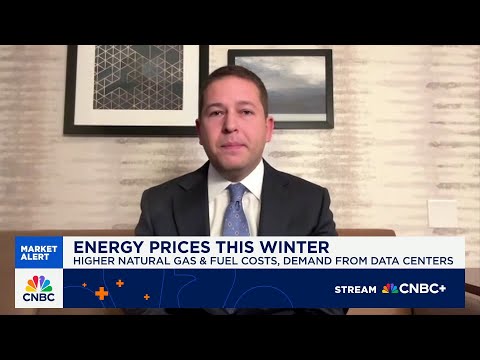
Extending the life of current energy infrastructure will bridge to new supply: Citi's Ryan Levine
CNBC Television· 2025-11-28 12:39
Electricity Market Trends & Drivers - Electricity prices have increased by approximately 23% over the past 5 years due to various factors including data center demand, overall inflation, storm costs, and renewable energy policies [2] - Data centers are a contributing factor to electricity price increases, particularly in the Northeast and Mid-Atlantic regions, but their impact is regionally focused [2][3] - Increased electricity demand from data centers is driving the need for increased electricity supply [1][5] Utility Strategies & Solutions - Utilities are negotiating long-term contracts (e g, 12-year agreements) with large hyperscalers to protect residential customers from rising electricity bills [3] - Some utilities have created mechanisms or structures outside the regulated utility model to shield residential customers from the impact of data center electricity consumption [4] - Increasing electricity supply is seen as the primary solution, with an estimated growth of over 28% annually through 20240 [5][6] Energy Supply & Resources - Short-term solutions include restarting old nuclear assets and utilizing less efficient forms of gas generation, as well as extending the life of existing coal plants [6][7] - Natural gas is considered a meaningful resource for new power plants, with potential future contributions from small modular nuclear, large-scale nuclear, and other developing technologies [7] - Renewable energy policies have faced slowdowns, and intermittent renewable resources are not considered ideal for meeting the 24/7 power needs of data centers [8][9] Investment Opportunities - DTE Electric (Midwest utility) is favored due to its data center growth story, with potential for additional hyperscaler partnerships and behind-the-meter generation [10] - First Energy (Mid-Atlantic, Ohio, Pennsylvania wires company) is also highlighted for its potential earnings growth driven by data center demand in its service area, with meaningful upside potential [10] - These companies are seen as having solutions to lower bills for residential customers while driving EPS accretion for shareholders [11][12]

Advanced Energy Storage Systems Market Size to Worth USD 41.59 Billion by 2033 | SNS Insider
Globenewswire· 2025-11-28 07:00
Market Overview - The Advanced Energy Storage Systems Market was valued at USD 19.33 Billion in 2025E and is projected to reach USD 41.59 Billion by 2033, growing at a CAGR of 10.05% from 2026 to 2033 [1] Market Drivers - The integration of renewable energy sources is driving the demand for advanced energy storage systems (BESS) to manage intermittency and maintain grid stability [1] - Rising energy demand across utility, industrial, and residential sectors, along with decarbonization goals and supportive legislation, are encouraging investments in this market [1] - Technological advancements in battery chemistries, safety, and modular designs are enhancing system longevity, cost-effectiveness, and efficiency [1] Key Market Segmentation By Technology - The batteries segment dominated the market with a share of 54.38% in 2025E, while the molten salt segment is expected to grow the fastest at a CAGR of 11.53% [7] By Application - The grid storage segment held a dominant share of 61.75% in 2025E, with the transportation segment projected to grow at a CAGR of 10.58% due to electrification trends and increasing EV adoption [8] By Material - The electrochemical segment led the market with a share of 64.38% in 2025E, while the mechanical segment is expected to witness the fastest growth at a CAGR of 11.93% [9] By End-Use - The utility segment dominated with a CAGR of 43.50% in 2025E, while the residential segment is expected to grow at a CAGR of 11.14% driven by home energy independence and solar integration [10] Regional Insights - North America leads the market with a share of 43.82% in 2025, supported by strong renewable energy adoption and government incentives [11] - Asia Pacific is the fastest-growing region with a CAGR of 10.98%, driven by rapid industrialization and supportive government policies [13] Competitive Landscape - Key players in the market include Tesla Inc., General Electric Company, ABB Ltd., Samsung SDI Co. Ltd, LG Chem Ltd., Siemens Ltd., Toshiba Corporation, and others [4]

X @Elon Musk
Elon Musk· 2025-11-27 17:03
RT Mario Nawfal (@MarioNawfal)🚨🇺🇸 ELON JUST CALLED MEMPHIS ENVIRONMENTALISTS' BLUFF WITH 550 ACRES OF SOLARxAI announced 88 acres of solar panels around the Colossus supercomputer in Memphis. Environmental groups have been screaming about grid load and gas generators for months.Now they're getting 550 acres of renewable energy.Environmental activists claimed xAI would "strain the grid" and "rely on fossil fuels."Elon's response? Deploy more solar capacity than most cities see in a decade.The local state rep ...
Norsk Hydro (OTCPK:NHYD.Y) 2025 Investor Day Transcript
2025-11-27 10:02
Norsk Hydro Investor Day 2025 Summary Company Overview - **Company**: Norsk Hydro (OTCPK:NHYD.Y) - **Event**: Investor Day 2025 - **Date**: November 27, 2025 - **Location**: London Key Industry Insights - **Strategic Focus**: The theme for the day was "Strategic Discipline: Securing Long-Term Value Creation" with a focus on Hydro's strategic direction towards 2030 [2][3] - **Market Conditions**: The company is navigating unpredictable market conditions influenced by geopolitical conflicts, climate change, and trade tensions, particularly in the aluminum sector [6][7][8] Financial Performance - **Return on Capital**: Hydro expects to exceed its target for return on capital employed for the year [9] - **Cost Savings**: The strategic workforce reduction is projected to yield annual savings of approximately NOK 1 billion starting in 2026 [9] - **CapEx Adjustment**: CapEx guidance was adjusted down by NOK 1.5 billion due to a slower market [10] Strategic Developments - **Recycling Capacity**: Hydro has achieved an installed post-consumer scrap capacity of 860,000 tons, meeting the lower end of its 2030 target ahead of schedule [10] - **Decarbonization Efforts**: The company anticipates a 15% reduction in CO2 emissions for the year, surpassing its 10% target [12] - **Long-term Agreements**: Hydro entered a long-term offtake agreement with NKT for 274,000 tons of Hydro REDUXA through 2033 [12] Market Dynamics - **Alumina Demand**: Steady growth in alumina demand is expected, primarily driven by new capacity in Asia, particularly India and Indonesia [13] - **Bauxite Supply Risks**: There is a concentration risk in bauxite supply, with 95% of African bauxite coming from Guinea, which poses a geopolitical risk [14] - **Aluminum Demand Drivers**: The energy transition and increased defense spending are expected to drive aluminum demand significantly [17][18] Regulatory Environment - **CBAM Impact**: The Carbon Border Adjustment Mechanism (CBAM) is expected to increase European premiums by around 40%, which could benefit Hydro if implemented effectively [22][23] - **Supply Constraints**: Supply constraints outside Europe are becoming clearer, with China's capacity cap and potential smelter closures affecting material flows [22] Operational Challenges - **Market Volatility**: The extrusion market has faced significant downturns, with demand softer than expected, leading to necessary operational consolidations [35][60] - **Recycling Margins**: Recycling margins have been under pressure, particularly in Europe, while the U.S. market remains healthier due to lower scrap prices [36] Future Outlook - **Growth Potential**: Hydro aims to capture market share in low-carbon aluminum solutions, with a focus on strategic partnerships and long-term commercial agreements [34][55] - **Investment in Technology**: Continued investments in sorting technology and recycling capabilities are expected to enhance operational efficiency and profitability [38] Conclusion - **Integrated Value Chain**: Hydro's integrated value chain from mining to recycling positions it favorably in a market increasingly focused on sustainability and low-carbon solutions [26][27] - **Commitment to Decarbonization**: The company remains committed to its decarbonization roadmap and aims to exceed its 2030 targets, reflecting a strong alignment with market demands for greener products [45][51]
能源电力的未来:人工智能重塑格局-Investor Presentation Future of Energy Power Changing Face with AI
2025-11-27 02:17
Summary of Key Points from the Conference Call Industry Overview - The conference call focuses on the **energy sector**, particularly the **power market** and its transformation driven by **AI** and **renewable energy** [2][19][67]. Core Insights and Arguments - **Electricity Market Transformation**: The electricity market is undergoing significant changes, with AI's demand for power expected to create an additional **US$350 billion** in value by addressing market tightness [2][19]. - **Power Demand Growth**: Global power demand is projected to reach approximately **35 trillion kWh** by **2030**, with a notable increase in demand from data centers, which are expected to account for **~5%** of total power demand by that year [17][29]. - **Regional Demand Variations**: Different regions exhibit varying growth rates in power demand, with the **US** and **India** showing the highest growth rates at **4.0%** and **4.5%** respectively [16]. - **Investment in Energy Sources**: There is a renewed investment focus on **natural gas**, **energy storage**, and **nuclear power**, which are expected to double the earnings growth of equities in the sector [2][19]. - **Valuation Changes**: Power stock valuations are adjusting to reflect the new dynamics of the market, with clean power generators experiencing a **40% de-rating** from their peaks [25][21]. Additional Important Insights - **Data Center Power Demand**: Data centers are projected to increase their power consumption significantly, with estimates suggesting an addition of **1.2 trillion kWh** to global power consumption from 2025 to 2030 [29]. - **Fossil Fuel and Renewable Mix**: The global power generation mix is expected to include more **gas** and **renewables**, with natural gas maintaining a **~22%** share of the power mix by 2030 [46][55]. - **Grid Constraints**: The rise in negative power prices and renewable curtailments is attributed to grid constraints, which are becoming a significant issue in many regions [32][33]. - **Investment Opportunities**: The report identifies **40 preferred equities** and **7 least preferred equities** in the energy sector, highlighting companies like **NextEra Energy** and **Gulf Development** as top picks due to their strong positions in the evolving market [70]. Conclusion - The energy sector is at a pivotal point, with AI and renewable energy driving substantial changes in power demand and market dynamics. Investors are encouraged to consider the implications of these trends on their investment strategies, particularly in the context of evolving valuations and regional demand growth.
Here's Why PCG Stock Deserves a Spot in Your Portfolio Right Now
ZACKS· 2025-11-26 16:21
Core Insights - PG&E Corporation (PCG) is benefiting from systematic investments in infrastructure improvements and clean energy initiatives, enhancing service reliability and positioning itself as a strong investment in the Utility-Electric Power industry [1] Growth Outlook & Surprise History - The Zacks Consensus Estimate for fourth-quarter earnings per share (EPS) has increased by 2.6% to 39 cents over the past 60 days [2] - The revenue estimate for 2025 is projected at $26.06 billion, indicating a year-over-year growth of 6.72% [2] - PCG's long-term earnings growth rate is estimated at 15.89%, with an average earnings surprise of 0.5% over the last four quarters [2] Dividend History - PCG has consistently increased shareholder value through dividends, currently paying a quarterly dividend of 2.5 cents per share, leading to an annualized dividend of 10 cents [3] - The current dividend yield stands at 0.64%, which is lower than the Zacks S&P 500 composite average of 1.10% [3] Capital Investment and Clean Energy Plan - The company plans to invest $12.9 billion in 2025 and an additional $73 billion from 2026 to 2030, targeting a 10% earnings growth for 2025 and a long-term annual growth rate of at least 9% during 2026-2030 [4] - PG&E aims to achieve 90% of retail energy sales from renewable and zero-carbon sources by 2035, supported by its investment in battery energy storage [5] Return on Equity - PCG's Return on Equity (ROE) is currently at 11.10%, surpassing the industry average of 9.64%, indicating efficient utilization of shareholders' funds [6] Solvency - The times interest earned (TIE) ratio for PCG at the end of the third quarter of 2025 was 1.8, reflecting the company's ability to meet long-term debt obligations [7] Share Price Performance - Over the past three months, PCG's shares have increased by 4.4%, although this is below the industry's growth of 7.7% [10] Other Stocks to Consider - Other top-ranked stocks in the same industry include Dominion Energy, Inc. (D), Edison International (EIX), and CenterPoint Energy, Inc. (CNP), all carrying a Zacks Rank 2 [11][12]


FSLR vs. CSIQ: U.S. Thin-Film Leader or Global Volume Player?
ZACKS· 2025-11-26 16:10
Core Insights - The rising demand for solar energy is attracting investor interest in companies within the solar value chain, particularly First Solar (FSLR) and Canadian Solar (CSIQ) [1][2] Group 1: Industry Trends - Solar power is rapidly growing as a solution for cleaner energy, with significant increases in solar photovoltaic (PV) installations across various markets [2] - Government incentives, corporate decarbonization efforts, and consumer adoption of renewable technologies are driving the surge in solar deployment [2] Group 2: First Solar (FSLR) Overview - First Solar is expanding its manufacturing capacity to meet global solar demand, producing 3.6 gigawatts (GW) and selling 5.3 GW of modules in Q3 2025, with a total nameplate capacity of 23.5 GW [3] - The company is adding a new 3.7 GW module finishing line in the U.S., expected to begin operations in late 2026, which will enhance its global presence and revenue growth [3] - A new $1.1 billion AI-enabled manufacturing facility in Louisiana will add 3.5 GW of annual capacity, improve quality control, and reduce costs while using U.S.-sourced materials [4] Group 3: Canadian Solar (CSIQ) Overview - Canadian Solar is a vertically integrated clean-energy company, known for high-quality crystalline silicon solar panels and expanding into energy infrastructure, including large-scale solar power plants and energy-storage projects [5] - The company secured a German battery energy storage system contract in November 2025, marking a strategic shift towards becoming a full-fledged energy-storage and grid-solutions provider [6] Group 4: Financial Performance and Estimates - The Zacks Consensus Estimate for First Solar's 2025 earnings per share (EPS) indicates a decrease of 3.25%, while Canadian Solar's EPS estimates show increases of 18.94% for 2025 and 61.5% for 2026 [8][10] - First Solar has a total debt to capital ratio of 5.8%, significantly lower than Canadian Solar's 60.41% [11] - In the past six months, FSLR shares have risen by 64.8%, while CSIQ shares have increased by 149.5% [12] Group 5: Valuation Comparison - FSLR shares trade at a forward Price/Sales (P/S F12M) multiple of 4.56, compared to CSIQ's P/S F12M of 0.22, indicating a significant valuation difference [13] Group 6: Strategic Positioning - Both companies operate in the solar market but with different strategies; Canadian Solar focuses on scale and a diversified clean-energy ecosystem, while First Solar emphasizes high-efficiency thin-film technology and U.S.-based production [14] - Currently, Canadian Solar is favored due to its better price performance and earnings growth compared to First Solar [15]



X @Bloomberg
Bloomberg· 2025-11-26 12:38
The UK will wipe £2.3 billion from energy bills on average for the next three years by cutting some green levies that consumers pay to support renewable electricity https://t.co/kKSTnys392 ...
Bel to invest in The Laughing Cow production in Spain
Yahoo Finance· 2025-11-26 10:25
Core Insights - Bel Group is expanding its production of The Laughing Cow cheese in Spain, investing €1.5 million ($1.7 million) to add a 600m² building with two new packaging lines, which will increase annual output by 15% to nearly 7,000 tonnes, equivalent to about 500 million portions [1] - The Ulzama plant, operational since 1968, produces cheese portions for Spain and Portugal and employs around 140 people. The facility has also implemented a biomass boiler to replace fossil fuels, reducing CO₂ emissions by 500 tonnes annually, marking a significant step in Bel's decarbonisation strategy [2] - Bel's chief operations officer emphasized the company's dual focus on sustainability and profitability, highlighting the Ulzama site's transition to renewable energy and its expansion plans [3] Financial Performance - In the first half of 2025, Bel Group reported a 5.4% decline in consolidated net profit to €45.8 million, while recurring operating income fell by 19.3% to €125 million. However, consolidated net sales increased by 3.2% organically to €1.86 billion, driven by higher volumes and price increases that countered inflation in raw materials [4][5] - The company's core brands performed well, with Kiri sales rising by 8.2%, Mini Babybel by 6.1%, and Boursin by 7.3%, despite challenges from geopolitical tensions and increased consumer price sensitivity [6] Strategic Initiatives - Bel has set a target for all Babybel products to be packaged in recyclable paper by 2027, reflecting its commitment to sustainability [4] - The company acquired a 22.5% stake in Indonesian cheese maker Mulia Boga Raya, aiming to enhance cheese consumption in Indonesia and develop tailored innovations [4]
X @The Economist
The Economist· 2025-11-26 06:00
Renewable Energy - Next-generation geothermal energy unlocks a triple green advantage [1] - The industry argues that a neglected renewable's time has finally come [1]