Congress

Search documents
'Go to Congress': Trump can't impose tariffs on his own, says attorney
MSNBC· 2025-07-31 14:24
and its taxpayers have been ripped off for more than 50 years. But it is not going to happen anymore. It's not going to happen.In a few moments, I will sign a historic executive order instituting reciprocal tariffs on countries throughout the world. That was President Trump back in April revealing his plan for reciprocal tariffs on countries around the world on what he called Liberation Day. In Washington today, lawyers will be defending a decision in May against those tariffs.Earlier this year, the US Cour ...

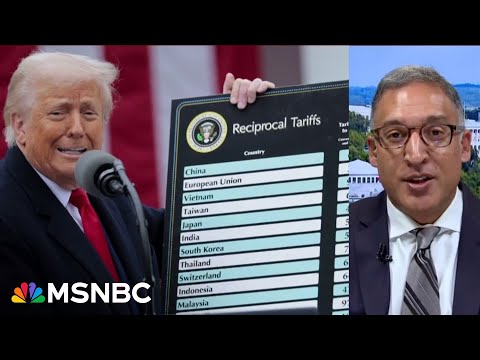
X @Bloomberg
Bloomberg· 2025-07-27 12:25
US Political System Analysis - Congress is no longer pretending to be a co-equal branch of government [1] - This has profound implications for the US system [1]
What This Latest Supreme Court Ruling Means For Every President - Chamath Palihapitiya
All-In Podcast· 2025-07-17 15:00
Executive Power & Government Efficiency - The discussion centers on the extent of the US President's authority to make personnel changes within federal agencies [1][2][4] - The argument is made that the President should have considerable leeway in managing personnel to improve government efficiency and reduce excessive regulations [2][3][4] - The inefficiency of government processes is attributed to outdated technology and excessive regulations, with regulations increasing rapidly since 1993 [2][3] - Streamlining the government workforce is seen as a way to control downstream spending and the creation of new regulations [5] - The ability to fire underperforming employees is considered crucial for effective leadership, similar to a CEO's role in a company [7][19][20] Congressional Oversight & Constitutional Considerations - The extent to which Congress can mandate specific hiring numbers or spending allocations is questioned, raising concerns about potential infringements on the President's constitutional duties [9][14][15] - The Constitution grants executive power to the President, but Congress appropriates money, leading to debates about the President's obligation to spend funds as directed [11][12] - There's a discussion on whether Congress can prescribe the number of people the President must hire, which is considered potentially unconstitutional [14] - The Supreme Court has generally supported the President's ability to fire presidential appointees, with some exceptions [19] - The Department of Education is cited as an example of a department created by congressional statute that has not improved outcomes, suggesting the need for potential repeal of such laws [21]
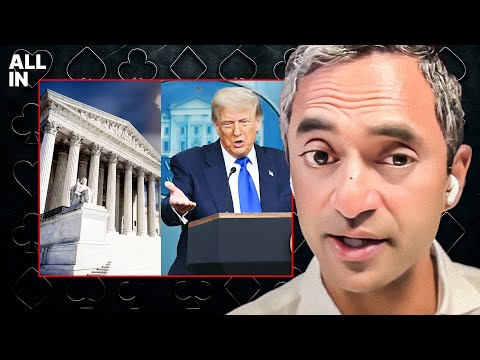
'Too early' to know how much damage was done on Iranian nuclear program: Sen. Coons
MSNBC· 2025-06-26 21:15
Iranian Nuclear Program Assessment - The assessment of the Iranian nuclear program's status post-strikes is premature, with varying opinions on the extent of the damage [5][6] - There are concerns about whether other nuclear nations (Pakistan, North Korea, Russia) might assist Iran in rebuilding or accelerating its nuclear program [7] - The consensus is that an Iranian nuclear weapon is unacceptable and a dangerous enrichment program should be prevented [7] US Government Transparency and Congressional Oversight - There are allegations that the president may have misled the public regarding the extent to which the Iranian nuclear program was "obliterated" [2][3] - The administration is urged to provide updated, detailed assessments to Congress regarding the damage to Iran's nuclear capabilities [7] - Congress seeks consultation and briefings from the administration to understand the risks involved [8] - Concerns exist that the administration might restrict information shared with Congress [10][11] Domestic Policy Concerns - The focus on the Middle East risks distracting from critical domestic issues, specifically a bill that could impact healthcare for tens of millions of Americans and cut tens of billions of dollars from healthcare programs [14][15]
'Not a bipartisan issue' but a 'Trump issue': Weissmann on Congress' ability to check power
MSNBC· 2025-06-26 21:01
Constitutional & Legal Issues - The Constitution grants Congress the power to declare war, while the President serves as commander-in-chief during a declared war [2] - Significant legal debate exists regarding what constitutes a "war" domestically, considering duration and goals [2][3] - International law considerations include assessing intelligence to determine if military action was a defensive maneuver, involved an imminent threat, and was a proportional response [3] - The White House is limiting intelligence sharing with Congress, raising concerns about transparency and oversight [4] Checks and Balances & Congressional Oversight - Concerns are raised that the current administration believes Congress has no role in reviewing executive actions, mirroring arguments made in courts [6] - Traditionally, presidents from both parties have briefed Congress on intelligence matters, highlighting the current administration's deviation from this practice [7][8] - Congress has been abdicating its responsibility regarding war powers since World War II, the last time a formal declaration of war occurred [13] - The lack of accountability after military action, specifically regarding providing information to assess the legality under international law, is a key concern [23] International Law Considerations - Under international law, a country can act in self-defense or collective self-defense if there is imminent harm, the action is necessary, and the response is proportional [21][22] - Determining whether a military strike violates international law requires access to pre-strike intelligence [23]