
Oil price surge

Search documents
U.S. crude oil touches highest level since June 2025 after Iran says it attacked a tanker
CNBC· 2026-03-05 14:20
Core Insights - U.S. crude oil prices reached their highest level since June 2025, driven by geopolitical tensions following Iran's claim of attacking a tanker [1] - Oil prices have surged approximately 15% within the week, with U.S. crude rising by 3.8% to $77.52 per barrel and Brent crude increasing by 2.9% to $83.75 per barrel [1] Group 1: Geopolitical Events - Iran's Revolutionary Guard has threatened to attack tankers in the Strait of Hormuz and ordered its closure, escalating tensions in the region [2] - A missile strike on an oil tanker was reported by Iranian state media, coinciding with the heightened security concerns in the area [2] Group 2: Market Impact - Tanker traffic through the Strait of Hormuz has significantly decreased due to the ongoing U.S.-Israeli conflict with Iran, affecting global oil supply [3] - The Strait of Hormuz is a critical passage for approximately 20% of global oil consumption, making the current situation particularly impactful for the oil market [3]


Oil, Fuel Contracts Break Records on Surging Prices
Yahoo Finance· 2026-03-04 07:29
Oil and fuel futures and options contracts traded on Monday hit an all-time high as traders rushed to lock in surging benchmark prices, Reuters has reported, citing ICE data. The total number of futures and options in crude and fuels reached 12.7 million, with the number of contracts for ICE’s Low Sulphur Gasoil hitting 1.3 million—the highest ever. The ICE contract is the global benchmark for all refined oil products. Brent crude and West Texas Intermediate futures and options traded on March 1, meanw ...
Oil surges for second day, Brent tops $83 after Iran orders Strait of Hormuz closure
CNBC· 2026-03-03 13:31
Group 1 - Crude oil and natural gas futures have surged significantly due to geopolitical tensions, particularly after Iran's order to close the Strait of Hormuz and threats against tankers [1][2] - U.S. crude oil prices increased by approximately 7%, reaching $76.31 per barrel, while Brent crude rose by 7.3% to $83.39 per barrel [1] - Oil prices have risen over 14% this week as tanker traffic through the Strait has halted, impacting global oil supply [2] Group 2 - European natural gas prices have skyrocketed by more than 70% this week following Qatar's cessation of liquefied natural gas production due to Iranian drone attacks [2] - The British futures contract for natural gas increased by about 30%, while the Dutch contract rose by approximately 27% [3] - Wall Street commodities strategists have indicated that oil prices could exceed $100 per barrel if the closure of the Strait persists for an extended period [3]
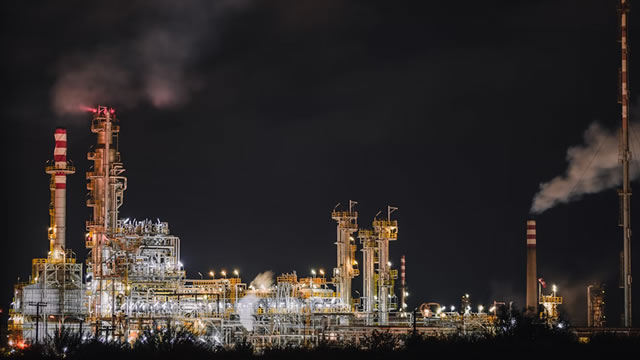
Oil prices continue to surge as Middle East tensions intensify
Yahoo Finance· 2026-03-03 12:28
Core Insights - Oil prices are rising due to escalating tensions in the Middle East, particularly involving the US, Israel, and Iran, raising concerns about supply disruptions [1][2] - The Strait of Hormuz, a crucial shipping route for global oil and gas, is significantly impacted, with Brent crude futures reaching $80.89 per barrel, a 4.1% increase [2][3] - The conflict has led to increased shipping rates and volatility in oil markets, with major insurers withdrawing coverage for vessels in the region [4][7] Oil Price Movements - Brent crude futures increased by $3.15 to $80.89 per barrel, with a peak of $82.37, marking the highest level since January 2025 [2] - US West Texas Intermediate (WTI) crude rose by $4.26 to $75.49 per barrel, briefly reaching its highest level since June 2025 [3] Impact on Refined Products - US ultra-low-sulphur diesel futures surged by 8.3% to $3.14 per gallon, while gasoline futures rose by 3.8% to $2.46 per gallon [4] - In Europe, gasoil futures increased by 9.2%, settling at $967.75 per tonne [5] Regional Supply Concerns - Saudi Arabia's shutdown of its largest oil refinery, Ras Tanura, due to a drone strike has heightened concerns over regional supply security [5] - The US Secretary of State acknowledged the anticipated rise in energy prices and indicated that a strategy is in place to address the situation [6] Geopolitical Context - The ongoing conflict has led to violent retaliations and military actions, including strikes on energy infrastructure and shipping in the Gulf region [3][4] - The US Secretary of State described the situation as involving a "terroristic regime" that threatens 20% of global energy supplies [6]
Ford, GM, Stellantis Slip Amid Oil Price Surge As US-Iran War Escalates - General Motors (NYSE:GM)
Benzinga· 2026-03-03 09:54
Group 1: Company Performance - Ford reported a decline of 4.97% at market close, dropping to $13.39 per share [1] - GM experienced a decrease of 1.21%, closing at $77.76 per share [1] - Stellantis saw a significant drop of 5.69%, ending at $7.63 per share [1] - In pre-market trading on Tuesday, Ford further declined by 1.79% to $13.15 [1] - GM fell by 1.81% to $76.35 in pre-market trading [1] - Stellantis also dropped 5.64% further to $7.20 [1] Group 2: Industry Context - The decline in auto stocks is attributed to rising oil prices amid tensions between the U.S. and Iran [1] - Global supply disruptions have been exacerbated by QatarEnergy suspending LNG production due to military strikes on its facilities [2]


Surging Oil Prices Could Derail Pakistan’s Fragile Economic Recovery
Yahoo Finance· 2026-03-02 23:00
Oil prices jumped nearly 10% in Monday's early session after Iran launched a barrage of retaliatory missiles and drone strikes targeting Israel and U.S. bases in the Persian Gulf following the killing of Iran’s Supreme Leader Ayatollah Ali Khamenei on Saturday. And, it could get worse: JPMorgan Chase has warned that Brent crude oil prices could spike to $120 per barrel if the conflict leads to sustained disruption of oil flows through the Strait of Hormuz. Whereas the Strait of Hormuz has not officially ...
Dow Drops 550 Points at the Open
Barrons· 2026-03-02 14:32
Market Overview - The stock market experienced a significant decline, with the Dow dropping 554 points or 1.1% at the open, the S&P 500 falling 1.2%, and the Nasdaq decreasing by 1.5% [1][1][1] Oil Market Impact - Brent crude oil prices surged, briefly reaching $80 a barrel, marking the 38th largest jump in oil prices since 1990 according to Deutsche Bank [1][1][1] - The increase in oil prices is attributed to disruptions in tanker passage through the Strait of Hormuz due to U.S. and Israeli strikes on Iran, which is critical as approximately 25% of global oil flows through this strait [1][1][1]
Oil soars amid Strait of Hormuz shipping fears as Iran war drives prices to nearly $80
CNBC· 2026-03-02 08:06
Core Insights - Oil prices have surged significantly due to ongoing military actions by the U.S. and Israel against Iran, with Brent crude reaching a 52-week high of $79.40 and U.S. West Texas Intermediate at $73.10, both increasing by over 9% [1][2] Group 1: Military Actions and Oil Prices - The U.S. military operation, termed Operation Epic Fury, aims to achieve specific objectives against Iranian targets, contributing to the rise in oil prices [2] - As the U.S. targets Iranian military capabilities, global oil supply dynamics are under scrutiny, with expectations that oil prices may stabilize around the $80 mark for a period [3] Group 2: Risks to Oil Supply - The Strait of Hormuz, a critical passage for 13-15 million barrels of oil daily (20% of global supply), is unlikely to be completely closed, although risks from targeted attacks on vessels are significant [4] - The U.S. and Israel possess the military strength to mitigate the threat of Iran fully blocking the Strait, which is vital for oil producers like Saudi Arabia and Iraq [4] - However, single attacks on shipping are harder to prevent, raising concerns about how Asian refiners will secure oil volumes from the Middle East following recent tanker incidents [5] Group 3: Alternative Supply Routes - Some oil can be rerouted through Oman and certain UAE grids, while Saudi Arabia has plans to utilize the East-West pipeline via the Red Sea as a contingency [6] - Despite alternative routes, a significant volume of oil remains at risk, with potential price spikes to $100 if energy infrastructure is targeted [8]
Oil prices surge after strikes kill Iran's supreme leader, tankers hit near Strait of Hormuz
Fox Business· 2026-03-02 03:26
Core Viewpoint - Oil prices have surged due to escalating tensions in the Iran conflict, impacting global energy markets significantly Group 1: Oil Price Movements - Global benchmark Brent crude reached $82.37 a barrel, the highest since January 2025, before settling at $78.24, up more than 7% [1] - U.S. West Texas Intermediate crude climbed nearly 7% to $71.68 after hitting $75.33, the highest since June of the previous year [2] Group 2: Market Reactions and Predictions - Analysts at Citi predict that Brent prices could rise further, estimating a range of $80 to $90 a barrel if the conflict continues [5] - The conflict has led to missile strikes on oil tankers near the Strait of Hormuz, raising alarms in global markets [8] Group 3: Strategic Importance of the Strait of Hormuz - Iran has moved to restrict navigation along the Strait of Hormuz, a critical route for oil exports, affecting major exporters like Saudi Arabia, Iraq, and the UAE [11] - The Strait of Hormuz carries approximately 20% of the world's oil supply, with over 200 vessels currently anchored near the passage [8]

Oil Prices Surge on Risk of U.S.-Iran Escalation
Barrons· 2026-01-29 09:14
Core Viewpoint - Oil prices have surged to their highest levels since late September due to escalating concerns over potential U.S. military action against Iran [1] Group 1: Oil Price Movements - Brent crude increased by 1.3% to $68.28 per barrel [1] - WTI (West Texas Intermediate) rose by 1.1% to $63 per barrel [1] Group 2: Iran's Oil Production and Exports - Iran produces approximately 3.3 million barrels of oil per day [1] - Iran exports around 1.5 million barrels of oil per day [1]