
Climate Change

Search documents
X @The Economist
The Economist· 2025-09-02 21:20
Environmental Concerns - Solving air pollution issues may lead to increased temperatures [1]
X @Bloomberg
Bloomberg· 2025-09-02 17:42
France is pushing to elevate discussions on the European Union’s next climate goal to the leaders’ level, setting the stage for a clash over the speed and direction of the transition https://t.co/axhWof9tSq ...
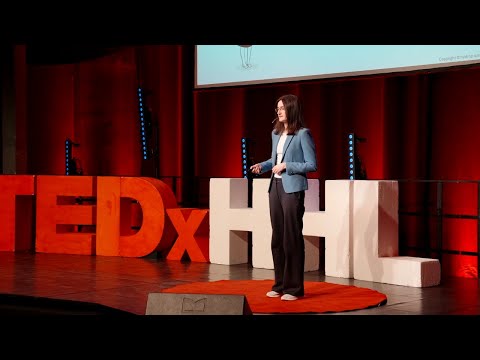
Let‘s Open The Black Box of Water Consumption | Katrin Kreidel | TEDxHHL
TEDx Talks· 2025-09-02 16:54
Water Scarcity and Consumption Awareness - The presentation highlights the reality of water scarcity, citing examples like Cape Town's near "Day Zero" event where 4 million people faced severe water shortages [2] - It emphasizes that water scarcity is not just a distant problem, but also affects European countries like Spain, Greece, and Italy, which experience droughts and fires every summer [3] - The presentation points out that even in Germany, water resources are under pressure, referencing the debate around water usage by the Tesla factory in Brandenburg and instances where water had to be delivered by firemen in Eastern Germany [4][5] Water Consumption as a "Black Box" - The presentation argues that water consumption is a "black box" because people are largely unaware of how much water they use [6][7] - It mentions that since 2000, Germany has lost over 48 billion metric tons of water, equivalent to the volume of Lake Constance, due to factors like glacial melt, heavy rainfall runoff, and groundwater depletion [7][8] - A survey revealed that 80% of people underestimate their daily water consumption, with 40% underestimating it so drastically that their estimates are impossibly low [14] - The actual average water consumption is 129 liters per person per day, significantly higher than the 25 liters that would have been rationed during Cape Town's "Day Zero" [15] The Need for Transparency and Technology - The presentation criticizes the lack of accessible information on water consumption, contrasting it with the availability of smart energy meters and gas monitoring [17] - It notes that while water meters exist, they often provide limited information, even digital ones, which primarily offer digital readings without detailed consumption insights [18][19][20] - The presentation advocates for technologies that allow users to monitor their water consumption on their smartphones, similar to energy consumption tracking [21] - It suggests that increased awareness of water consumption can lead to a reduction of up to 23% [27] Water Leaks and Infrastructure Issues - The presentation highlights the issue of undetected water leaks, sharing a personal anecdote about a hidden water leak in the speaker's apartment that caused significant damage [22][23][24][25] - It implies that monitoring water consumption could help detect leaks earlier, preventing extensive damage and waste [26] Call to Action - The presentation urges the audience to take action by examining their water meters, discussing water consumption with others, and adopting water-saving strategies [31][32] - It emphasizes the importance of valuing water as a precious resource and using available data to preserve natural resources for future generations [33]

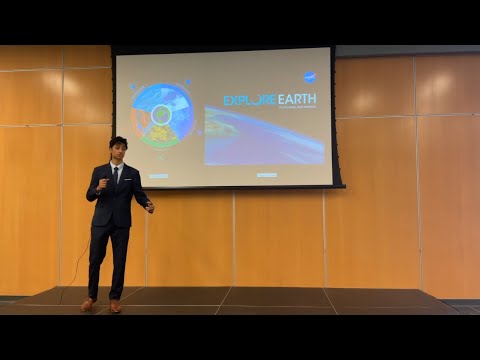
The Need for Earth and Space Science Literacy | Varyan Jain | TEDxSouth Delaware Street Youth
TEDx Talks· 2025-09-02 16:25
Earth Science Education Status - Earth science is underrepresented in education, with only 2 states offering it as a year-long standalone course based on 2018 data [5] - Only 7% of high school students take an earth science course, leading to a decline in geoscience majors [6] - Earth science concepts often disappear after middle school [6] Importance of Earth Science - Earth science is essential for addressing modern societal problems like global warming, climate change, pollution, and resource management [6][7] - Earth science education equips individuals with the tools to recognize problems, think critically, and contribute to solutions [10] - Earth science's interdisciplinary nature connects various fields, fostering problem-solving skills applicable to material science, astronomy, and resource management [11][12][13] Solutions for Improvement - Increasing Earth and Space Science (ESS) concepts in graduation requirements is crucial [15] - Requiring earth science as a standalone course or elective option can prevent it from being overlooked [16] - Increasing teacher training is necessary, as only 42% and 64% of high school and middle school teachers, respectively, have taken an introductory geoscience course [18] - Building a culture that supports earth science through competitions, clubs, and field trips is essential [19]
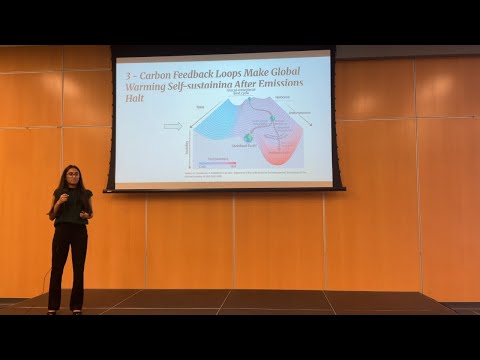
End-Permian Extinction Teaches us About Climate Action | Tara Nair | TEDxSouth Delaware Street Youth
TEDx Talks· 2025-09-02 16:24
Climate Change History and Urgency - The industry recognizes that human activities have fundamentally altered the planet, akin to the volcanic eruptions that caused the end-Permian extinction [1][4] - Research suggests that in the next 70 years, the world will reach 20% of the end-Permian extinction level, highlighting the urgency of addressing human-induced greenhouse gas emissions [4] - The industry emphasizes the importance of understanding climate tipping points, such as the dieback of tropical rainforests and the melting of the Arctic ice sheet, which are approaching critical thresholds [5][6][7] Potential Risks and Mitigation Strategies - Studies indicate that marine collapse may be exponential, with ocean acidification being an early sign, suggesting the need for greater urgency in treating ocean ecosystems [8][9] - Climate models suggest that even cutting emissions may not be enough to fully reverse warming past a certain point, implying a need to redefine climate risk in terms of feedback activation zones [11] - Research highlights the potential of certain reef microbes for pollutant degradation, suggesting the possibility of selectively inoculating reef zones with optimized microbial communities to improve ecosystem resilience [13][14] Geoengineering and Future Actions - The industry acknowledges the controversy surrounding geoengineering but emphasizes its importance in understanding technological intervention to inform current and future climate solutions [14][15][16][17] - The industry stresses that national climate pullback is a dangerous step in the wrong direction, and the time to act is now, including cutting emissions, funding science, and guarding public support for climate solutions [18]
X @The Economist
The Economist· 2025-09-02 14:00
Abrupt changes to the climate caused mass extinctions and changes to weather patterns in the past. Can understanding them help predict the future? Listen to “Babbage” https://t.co/eS5YXFb14A ...
X @Bloomberg
Bloomberg· 2025-09-02 09:05
Glaciers in Central Asia have long managed to withstand rising temperatures and changing weather patterns. But now, that isn't the case https://t.co/Fuw2UO5GrH ...
$152 Billion and Rising: New Report Shows Insurance Industry Facing Growing Average Annual Losses from Natural Catastrophes
Globenewswire· 2025-09-02 09:00
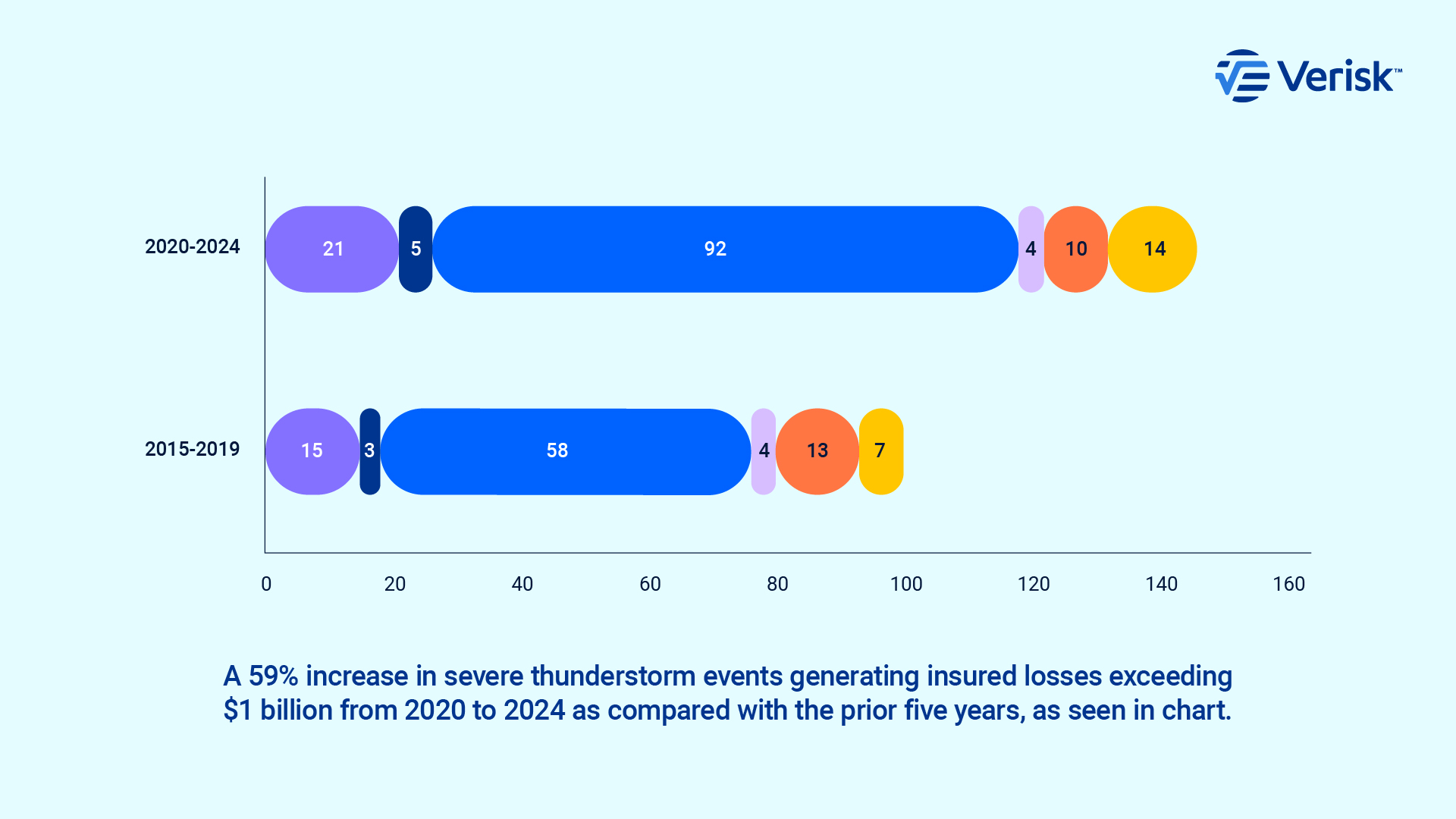
Core Insights - The global modeled insured average annual property loss (AAL) from natural catastrophes has increased to $152 billion, indicating a significant rise in expected annual insured property losses [1][3] - Non-crop property and casualty losses rose by 25 percent compared to 2024, with severe thunderstorms and other frequency perils accounting for two-thirds of total potential losses [1][4] - The report highlights a $32 billion increase in non-crop global modeled insured AAL over 2024, reflecting an upward trend in catastrophe losses globally [3] Industry Trends - Over the past five years, insured losses have averaged $132 billion per year, compared to $104 billion in the preceding five-year period, indicating a growing trend in catastrophe-related losses [3] - Frequency perils, such as severe thunderstorms, winter storms, wildfires, and inland floods, now account for two-thirds ($98 billion) of the total modeled AAL, outpacing risks from larger events by a ratio of 2 to 1 [4][5] - The report emphasizes the need for insurers to adapt their strategies to address the increasing frequency and impact of these perils [5] Regional Insights - Property exposure in Verisk-modeled countries grew by 7 percent annually from 2020 to 2024, driven by inflation and construction in high-hazard areas [11] - In Asia and Latin America, insured losses account for only 12 percent and 32 percent of economic losses, respectively, compared to 48 percent in North America, highlighting significant protection gaps [11] - The 2025 Palisades and Eaton fires in North America caused up to $65 billion in economic losses, with 60-70 percent insured, indicating high insurance penetration but escalating wildfire risk [11] Modeling Innovations - Verisk introduced new inland flood models for Malaysia, Indonesia, and Ireland, and updated models for Australia, Mexico, the UK, the U.S., and South Korea [10] - The report underscores the importance of adopting forward-looking risk models that reflect current environmental and climate realities [10]

X @The Economist
The Economist· 2025-09-01 21:20
Today on “The Intelligence”: Indonesia’s cities blaze, a climate tipping-point in the Atlantic and facekinis in China. Listen now https://t.co/UVFPTOkeZq ...
X @The Economist
The Economist· 2025-09-01 16:20
We are seeing dynamics that we did not expect. Jonathan Nash of @OregonState’s work in Greenland could help improve climate predictions. Listen to “Babbage” https://t.co/m93ZtyKLWQ ...