伊核问题

Search documents
伊朗强硬回应特朗普威胁
Huan Qiu Shi Bao· 2025-12-31 03:41
Group 1 - The core viewpoint of the articles revolves around the escalating tensions between the U.S., Israel, and Iran, particularly regarding Iran's missile and nuclear capabilities, and the ongoing situation in Gaza [1][3]. - President Trump expressed a strong stance against Iran's potential missile program, stating that the U.S. would support Israel in destroying it if necessary [1][3]. - Trump emphasized the urgency of implementing the second phase of the Gaza peace plan, which includes the establishment of a transitional governing body and the formation of an international stabilization force for Gaza [2][4]. Group 2 - Iran's senior political advisor, Ali Shamkhani, responded to Trump's threats by asserting that any aggression towards Iran would be met with a swift and strong counterattack [2][4]. - The articles mention recent military actions, including U.S. airstrikes on Iranian nuclear facilities and Israel's large-scale airstrikes on various Iranian targets, indicating a cycle of retaliation between the nations [2][4]. - The Gaza reconstruction efforts are described as being complicated, with Trump noting improvements in sanitary conditions and the need for disarmament of Hamas as a prerequisite for further progress [2][4].
伊朗强硬回应特朗普威胁:任何侵略行为都将遭到反击
Huan Qiu Shi Bao· 2025-12-30 22:22
Group 1 - The core viewpoint of the article highlights President Trump's meeting with Israeli Prime Minister Netanyahu, focusing on the urgency of implementing the second phase of the Gaza peace plan and the warning against Hamas regarding disarmament [1][3][4] - Trump emphasized that if Iran attempts to rebuild its ballistic missile program, the U.S. will support Israel in striking Iran again, stating, "We will completely destroy" Iran's ballistic missile project [3] - The discussion included the situation in Gaza, with Trump expressing the need for a quick transition to the second phase of the peace plan, contingent on Hamas's disarmament [4] Group 2 - The Gaza peace plan is set to officially take effect in October, with the second phase involving the establishment of a transitional governing body in Gaza and the authorization of an international stabilization force [4] - Trump mentioned that reconstruction efforts in Gaza would begin "very soon," indicating improvements in local sanitary conditions [4] - Iran's response to Trump's threats included a statement from a senior political advisor warning that any aggression against Iran would be met with a "swift and strong" counterattack [3]


特朗普再发动武威胁 伊朗:将坚决回击
Xin Hua She· 2025-12-30 05:47
Group 1 - The core message of the articles revolves around the escalating tensions between the United States, Israel, and Iran, particularly regarding Iran's ballistic missile program and nuclear capabilities [1][2][3] - President Trump threatened to "totally destroy" Iran's ballistic missile project and indicated support for immediate strikes if Iran attempts to develop nuclear capabilities [2] - The meeting between Trump and Israeli Prime Minister Netanyahu also focused on the situation in Gaza, with Trump emphasizing the need for a ceasefire contingent on disarming Hamas [2] Group 2 - Iranian officials, including political advisor Ali Shamkhani, responded strongly, stating that any aggression against Iran would be met with a fierce retaliation beyond the aggressor's expectations [3] - Iranian military leaders characterized Israeli threats as a sign of Israel's instability and weakness, asserting that Israel's previous military actions against Iran had failed to achieve their objectives [3] - The context includes a history of military engagements, with references to a significant Israeli airstrike on Iran in June and subsequent Iranian missile and drone attacks in response [3]
特朗普会晤内塔尼亚胡 对伊朗发出威胁
Xin Hua She· 2025-12-29 22:49
Group 1 - The core message of the articles highlights President Trump's strong stance against Iran's ballistic missile program and nuclear capabilities, indicating potential military support for Israel if Iran attempts to rebuild its missile project [1][2] - Trump emphasized the urgency of reaching an agreement with Iran regarding the nuclear issue, while also expressing a desire not to discuss regime change in Iran [2] - The discussions between Trump and Israeli Prime Minister Netanyahu included the situation in Gaza, with Trump stating the need for disarming Hamas to prevent future issues and indicating that reconstruction efforts in Gaza would begin soon [2] Group 2 - The articles reference a recent escalation in military actions, including a large-scale airstrike by Israel on Iranian targets and subsequent missile attacks by Iran on Israel, highlighting the ongoing tensions in the region [2] - Trump announced U.S. military airstrikes on Iranian nuclear facilities, indicating a direct involvement of the U.S. in the conflict and a commitment to countering Iranian nuclear ambitions [2]
伊朗感谢中俄在伊核问题上持原则性立场
Xin Hua She· 2025-12-24 04:05
Core Viewpoint - The Iranian representative at the UN, Iravani, expressed gratitude towards China and Russia for their principled stance on the Iran nuclear issue and their commitment throughout the execution of the nuclear agreement [1] Group 1: UN Security Council Meeting - A controversial open meeting regarding the Iran nuclear issue was held by the UN Security Council, which was not part of the initially agreed agenda for the month [1] - The meeting was called at the request of the UK, France, and the US, while representatives from China and Russia opposed it, stating that the topic of discussion—the execution of Security Council Resolution 2231 regarding the Iran nuclear agreement—was no longer relevant as it expired on October 18 [1] - The Security Council has ceased its review of the Iran nuclear issue, and the UN Secretary-General should stop submitting reports on the execution of this resolution [1] Group 2: Iran's Position - Iravani stated that Iran agrees with the positions of Russia and China and firmly opposes the convening of the meeting [1] - He attributed the Iran nuclear crisis to the US's unilateral withdrawal from the nuclear agreement in 2018 and the failure of the UK, France, and Germany to fulfill their commitments under the agreement [1] - Iravani emphasized that Iran has always been a party to the Treaty on the Non-Proliferation of Nuclear Weapons and has never diverted its nuclear program towards military purposes, advocating for diplomatic solutions to the issue [1]
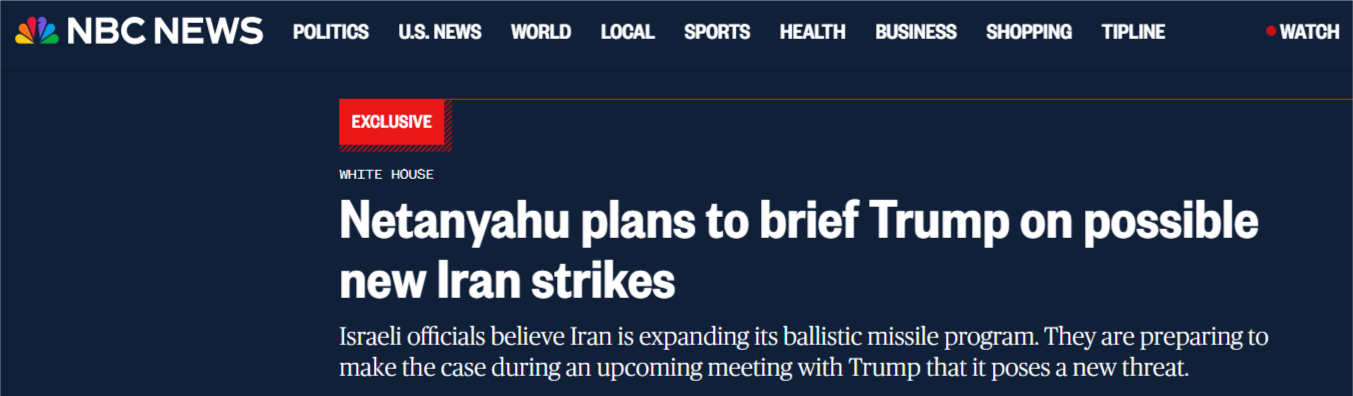
以色列策划对伊朗的新一轮打击?伊核问题再添变数?
Xin Lang Cai Jing· 2025-12-21 12:29
Group 1 - Israel is planning a new round of strikes against Iran, inviting the U.S. to join due to concerns over Iran's expanding ballistic missile production [1][3] - The Israeli government aims to maintain an "absolute" security advantage over Iran, seizing what it perceives as Iran's weakest moment since the 1979 Islamic Revolution [3][4] - Israel's previous military actions in June were aimed at eliminating threats from Iran's nuclear weapons and ballistic missiles, but there is uncertainty about the effectiveness of these strikes [4][5] Group 2 - The upcoming meeting between Trump and Netanyahu may involve discussions on U.S. military involvement in Israel's proposed actions against Iran, citing regional security concerns [5][6] - The U.S. prefers diplomatic solutions and sanctions over military intervention, indicating a reluctance to engage in further Middle Eastern conflicts [5][6] - Israel's military threats could complicate potential U.S.-Iran nuclear negotiations, as they may lower mutual trust and hinder compromise [7][8]
中国、俄罗斯投反对票
证券时报· 2025-11-21 04:00
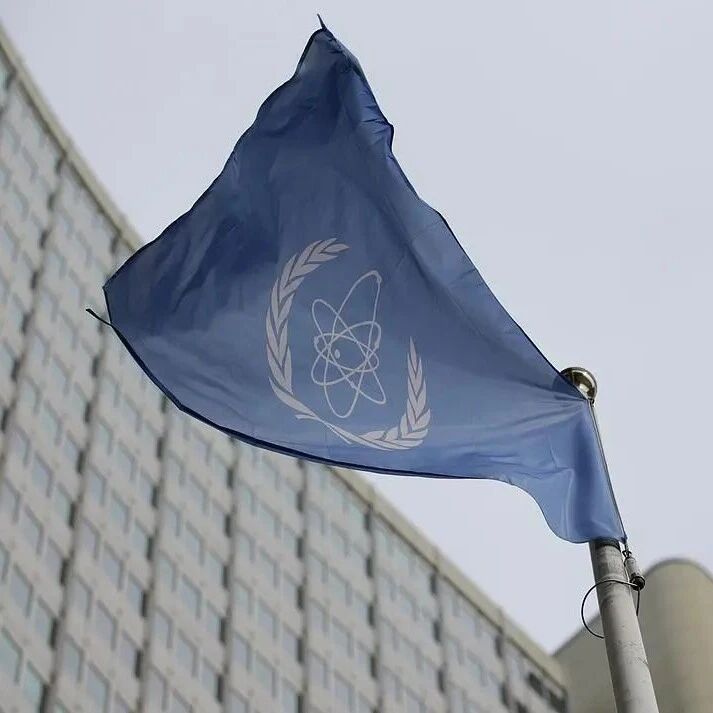
Core Viewpoint - The article discusses the recent resolution passed by the International Atomic Energy Agency (IAEA) regarding the Iran nuclear issue, emphasizing that military force and confrontation will not resolve the situation [1][3]. Group 1: IAEA Resolution and Reactions - The IAEA Board of Governors approved a resolution pushed by the US, UK, France, and Germany concerning Iran's nuclear program [1]. - China, Russia, and Niger voted against the resolution, while 12 developing countries, including Brazil, South Africa, India, Egypt, and Thailand, abstained from voting [4]. Group 2: China's Position - China's representative at the IAEA, Li Song, stated that military actions, such as the Israeli and US attacks on Iranian nuclear facilities under IAEA supervision, have worsened the situation [3]. - Li emphasized that the resolution of the Iran nuclear issue requires respect for Iran's rights under the Treaty on the Non-Proliferation of Nuclear Weapons and should be approached through diplomatic efforts and cooperation within the IAEA framework [3].
中国、俄罗斯、尼日尔投反对票
Zhong Guo Ji Jin Bao· 2025-11-21 02:25
Core Points - The article emphasizes that military force and confrontation cannot resolve the Iranian nuclear issue, advocating for political and diplomatic efforts within the framework of the International Atomic Energy Agency (IAEA) [1][2] - China, Russia, and Niger voted against the resolution pushed by the US, UK, France, and Germany regarding the Iranian nuclear issue, while several developing countries abstained from voting [2] Group 1 - The Chinese representative, Li Song, stated that the use of military force has led to a significant reversal in the situation regarding Iran's nuclear program, particularly referencing the attacks on Iranian facilities by Israel and the US [1] - The IAEA and Iran reached an agreement in September to restore cooperation on the nuclear issue, which was undermined by the actions of the UK, France, and Germany [1][2] - The article highlights the need for the IAEA to create favorable conditions for dialogue and cooperation between Iran and the agency, rather than escalating tensions [2]
中国、俄罗斯、尼日尔投反对票
券商中国· 2025-11-21 01:36
Core Viewpoint - The article emphasizes that military force and confrontation cannot resolve the Iranian nuclear issue, advocating for political and diplomatic efforts within the framework of the International Atomic Energy Agency (IAEA) to ensure the peaceful nature of Iran's nuclear program [1][2]. Group 1: IAEA Resolution and International Response - The IAEA Board of Governors passed a resolution on the Iranian nuclear issue, driven by the US, UK, France, and Germany [1]. - China, represented by Li Song, condemned the military actions taken by Israel and the US against Iran's nuclear facilities, which have significantly worsened the situation [1]. - The resolution's push by Western countries is seen as undermining the cooperation between Iran and the IAEA, which had recently made progress in restoring dialogue [1][2]. Group 2: Call for Diplomatic Solutions - Li Song stressed that the Iranian nuclear issue should be resolved through respect for Iran's rights under the Treaty on the Non-Proliferation of Nuclear Weapons and through diplomatic dialogue [2]. - The article highlights that confrontational resolutions only exacerbate the situation, urging the IAEA to create favorable conditions for dialogue and cooperation [2]. - Among the 34 member countries voting in the IAEA, China, Russia, and Niger opposed the resolution, while several developing countries abstained [2].

中国、俄罗斯、尼日尔投反对票
中国基金报· 2025-11-21 01:29
李松强调, 武力和对抗解决不了问题。 伊核问题只能在充分尊重伊朗作为《不扩散核武器条约》缔约 国和平利用核能正当权利、确保伊核计划和平性质的前提下,通过政治外交努力和在国际原子能机构框 架内的保障监督合作,才能得到妥善解决。历史已经反复证明,在理事会强行推动对抗性的涉伊决议, 只能火上浇油、雪上加霜。当前形势下,理事会应努力推动伊核问题相关讨论平稳进行,为伊朗与国际 原子能机构开展合作对话创造有利条件、为伊核问题新一轮政治外交努力营造良好氛围,避免将伊核问 题进一步推向对抗轨道。 国际原子能机构理事会参与投票的34个成员国中, 中国、俄罗斯、尼日尔对决议投反对票, 巴西、南 非、印度、埃及、泰国等12个发展中国家投弃权票。 les & FR 点击下载中国基金报客户端 ■ 中国基金报内容矩阵 ■ 来源:新华社 中国代表:武力和对抗解决不了伊朗核问题 国际原子能机构理事会20日表决通过美国与英国、法国、德国共同推动的伊朗核问题决议。中国常驻国 际原子能机构代表李松发言阐述中方立场,强调武力和对抗解决不了伊核问题。 李松指出,今年6月, 以色列、美国悍然袭击伊朗受国际原子能机构保障监督的核设施,导致伊核问题 形势出 ...