Accessibility

Search documents
Ben Bu Işıltının İçine Doğdum! | Şule Arapoğlu Yılmaz | TEDxYildizTechnicalUniversity
TEDx Talks· 2025-07-30 15:48
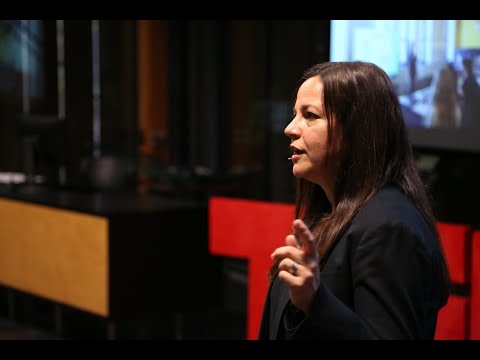
Merhaba ya. Şu ışıkları biraz kısabilir misiniz. gözümü alıyor da neyse ben alışkınım aslında.Ben bu ışıltının içine doğdum. Küçükken annem hep anlatıyor. Bebek arabasıyla sokağa çıktığımızda her duraksadığımız noktada insanlar arabanın etrafına toplanıp bir sürü soru sorarlarmış.Yani daha 2 yaşındayken bile saçımın, kaşımın rengi soruluyordu. Bayağı popülerdim aslında. Tabii ta ki okul başlayana dek.Okul başlayınca fark ettim ki ben popüler değil farklıydım. farklı, kötü bir şey gibi. Hatta o kadar farklıy ...

Redefining Equity in the Age of AI | Victoria Rakhtopol | TEDxGEMSWellingtonAcademyAlKhail
TEDx Talks· 2025-07-25 16:46
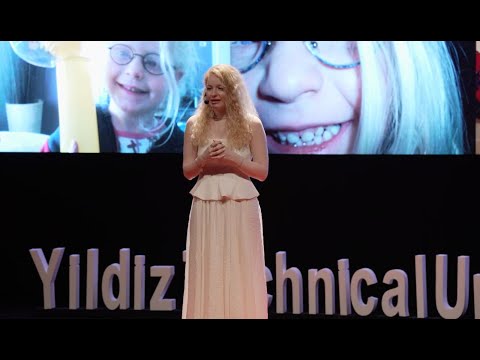
[Music] [Music] Legal systems are founded by the principles of equity and justice. Meticulously crafted by the sharpest minds to ensure that everyone is treated fairly and ideally leaves in a better position than where they began. They are grounded by the belief that no one is above the law, that we are all equal and should be treated as such.Often when immigrants move move to an um new country, they don't speak the language fluently, but they believe in this promise of fairness. But for so many, this promi ...
Welcome to life with short arms - moving towards accessibility | Christen Roos | TEDxWinnipeg
TEDx Talks· 2025-07-21 16:15
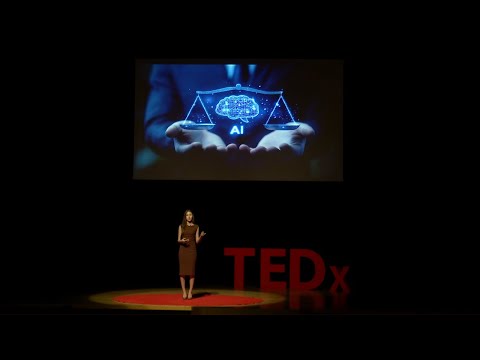
Accessibility & Inclusion - The speaker emphasizes the importance of understanding and embracing disability, highlighting that a significant portion of the population (27% of Canadians over 15, or 8 million people) lives with a disability [18] - The speech advocates for prioritizing accessibility in everyday life to enable people with disabilities to fully participate in society [21] - The speaker challenges the audience to consider the accessibility of their surroundings and actions for individuals with disabilities [22] Personal Experience & Advocacy - The speaker shares personal anecdotes about navigating life with short arms, including challenges with dressing, societal expectations, and discrimination [1][4][7][8][17] - The speaker discusses the emotional impact of disability, including feelings of frustration, sadness, and the need for self-acceptance [5][11][13][17] - The speaker aims to change perceptions of disability and inspire action towards a more inclusive world [23][24] Societal Impact & Awareness - The speech highlights the commonality of disability, noting that many people will be personally affected by disability at some point in their lives [14][15] - The speaker points out the societal tendency to have low expectations of people with disabilities while simultaneously expecting them to keep up with able-bodied individuals [16][17] - The speech encourages empathy and understanding towards individuals with both visible and invisible disabilities, urging the audience to recognize their shared desires and aspirations [19][20]
Beyond the Mold: Why Space Belongs to Everyone | Tomáš Dučai | TEDxDonauinsel
TEDx Talks· 2025-07-16 15:54
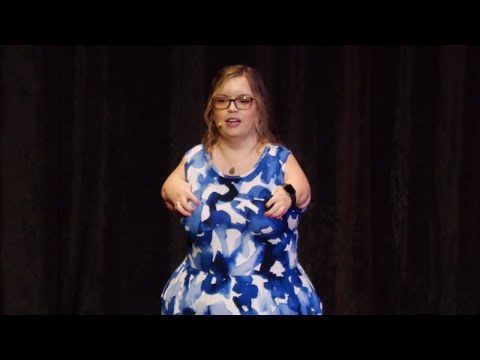
Inclusion in Space Exploration - The space industry has historically selected astronauts primarily from fighter pilots, scientists, and sportsmen [1] - Analog missions on Earth simulate space conditions to train astronauts for scenarios like isolation, delayed communication, and lack of immediate medical support [3][4] - Including individuals with disabilities in analog missions strengthens crew dynamics and preparedness for unforeseen circumstances [8][9] - Inclusion is not merely a matter of capacity or charity, but a necessity for realistic space exploration training [10] Health and Accessibility - Common medical issues encountered by astronauts in space include bone loss, muscle atrophy, and vision impairments [6] - Lunaris research station, an analog space habitat, was created to be accessible for people with disabilities to study the impact of diverse abilities on space mission operations [7] - The participation of a wheelchair user in a simulated moon habitat demonstrates that space is for everyone [2] Future of Space Exploration - Opening space exploration to individuals with diverse abilities, minds, and talents makes space exploration more inclusive and better prepared for real-world challenges [9] - The industry should aim for a future where space exploration includes everyone, regardless of physical appearance, focusing on the persistence of mind and spirit and team trust [11][10]
What’s New in Google Accessibility | Episode 9 | American Sign Language
Google· 2025-07-16 14:03
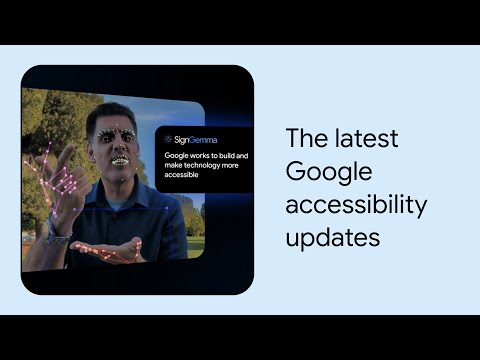
Accessibility Innovations - Google is releasing SignGemma, an open model for sign language understanding, focusing on American Sign Language (ASL) and English, with plans to translate other sign languages into spoken language text [1][2] - Android expands Gemini integration into TalkBack screen reader, providing AI-generated descriptions for images and the entire screen, enabling conversational questions and responses [4] - Expressive Captions on Android now capture the intensity and nuance of speech, including emphasis and sounds like whispering or yawning [5][6] - Pixel's Magnifier app introduces live search, highlighting matches on the screen and vibrating when something is found, aiding blind and low vision users [6][7] - Project Astra Visual interpreter, in collaboration with Aira, is being tested to provide real-time descriptions of surroundings for blind and low-vision users, supervised by live Aira agents [8][9][10] Chrome and Chromebook Updates - Chrome now supports Optical Character Recognition (OCR) for scanned PDFs, allowing screen readers to interact with them [11][12] - Chromebooks now offer the ability to turn off the touchpad and flash the screen for new notifications [12] - New Chromebook features cater to users with limited dexterity and/or tremors, including Bounce Keys, Slow Keys, and Mouse Keys [13] Workspace Enhancements - Workspace allows users to embed interactive Google Calendars into websites, with screen-reader compatibility, improved spacing, and responsive layout [14]
What’s New in Google Accessibility | Episode 9
Google· 2025-07-16 14:02
Accessibility Innovations - Google is releasing SignGemma, an open model for sign language understanding, initially focusing on American Sign Language (ASL) and English, with the potential for community-driven adaptation to other sign languages [1][2] - Android's TalkBack screen reader now integrates Gemini to provide AI-generated descriptions of the entire screen, enabling conversational follow-up questions [4] - Expressive Captions on Android now capture the intensity and nuance of speech, including drawn-out sounds and subtle vocalizations like whispering and yawning [5][6] - The Pixel's Magnifier app introduces live search, allowing blind and low-vision users to type what they're looking for and receive real-time highlights and vibrations when matches are found [6][7] - Project Astra Visual Interpreter, in collaboration with Aira, is being tested to provide real-time descriptions of surroundings for blind and low-vision users, supervised by live Aira agents [8][9][10] Chrome and Chromebook Updates - Chrome now supports Optical Character Recognition (OCR) for scanned PDFs, enabling screen readers to interact with the text [11][12] - Chromebooks now offer the ability to turn off the touchpad, flash notifications for new alerts, and features like Bounce Keys, Slow Keys, and Mouse Keys to assist users with limited dexterity and/or tremors [12][13] Workspace Enhancements - Google Workspace allows users to embed interactive, screen-reader compatible Google Calendars into websites, featuring improved spacing, responsive layouts, and keyboard shortcut navigation [14]
Designing beyond sight | Nilou Vakil | TEDxKU
TEDx Talks· 2025-07-08 16:38
Core Argument - The design industry predominantly focuses on visual aspects, neglecting other senses, leading to an impoverished environment [5][6][7] - The industry should shift from sight-centered design to sense-centered design, incorporating touch, hearing, scent, and memory to create richer, more responsive, and human-centered spaces [23][24] - The industry needs to involve all users in the design process, not just experts, to create spaces that belong to everyone [21][22][23] Sensory Design & Empathy - The industry can learn from visually impaired individuals to understand how to navigate spaces through all senses [3][4][5] - Experiential exercises, such as using low vision simulators and blindfolds, can foster empathy and inform design thinking [10][11] - Integrating sensory experiences and empathy into the design process can lead to more inclusive and user-friendly spaces [13][24] Design Tools & Communication - The industry can utilize tools like sensory design cards to facilitate communication between educators, students, stakeholders, and architects [14][15][20] - These cards can bridge the gap between technical expertise and user experience, enabling mutual understanding and collaborative decision-making [15][16][20] - The design cards categorize sensory considerations like clarity, acoustics, environmental sensory, pathfinding, materials, textures, and lighting [18]