Housing Affordability

Search documents
The housing market is at a turning point: the 3% mortgage era is fading
Fox Business· 2026-01-15 01:02
Core Insights - The number of homeowners with mortgages above 6% has surpassed those with rates under 3% for the first time, indicating a significant shift in the housing market dynamics [1][4]. Group 1: Mortgage Rate Trends - The last period when mortgage rates were below 3% was from July 2020 to September 2021, and rates have not fallen below this threshold since 1971 [2]. - As of the third quarter of 2025, 20% of outstanding mortgages had an interest rate below 3%, while 21.2% had rates above 6% [3][4]. - Approximately 31.5% of outstanding mortgages carry interest rates between 3% and 4%, 17.1% fall in the 4% to 5% range, and 10.2% are between 5% and 6% [6]. Group 2: Market Dynamics and Home Prices - The prolonged lock-in effect is diminishing as fewer homeowners retain low borrowing rates, which is expected to gradually change market dynamics [6][8]. - Despite some improvements in housing supply, about 80% of outstanding loans still carry below-market rates, making homeowners reluctant to sell and buy again due to significantly higher potential monthly payments [8]. - The market is moving towards a more balanced state, with additional supply easing affordability challenges and some local markets classified as a "buyer's market" [10][11].

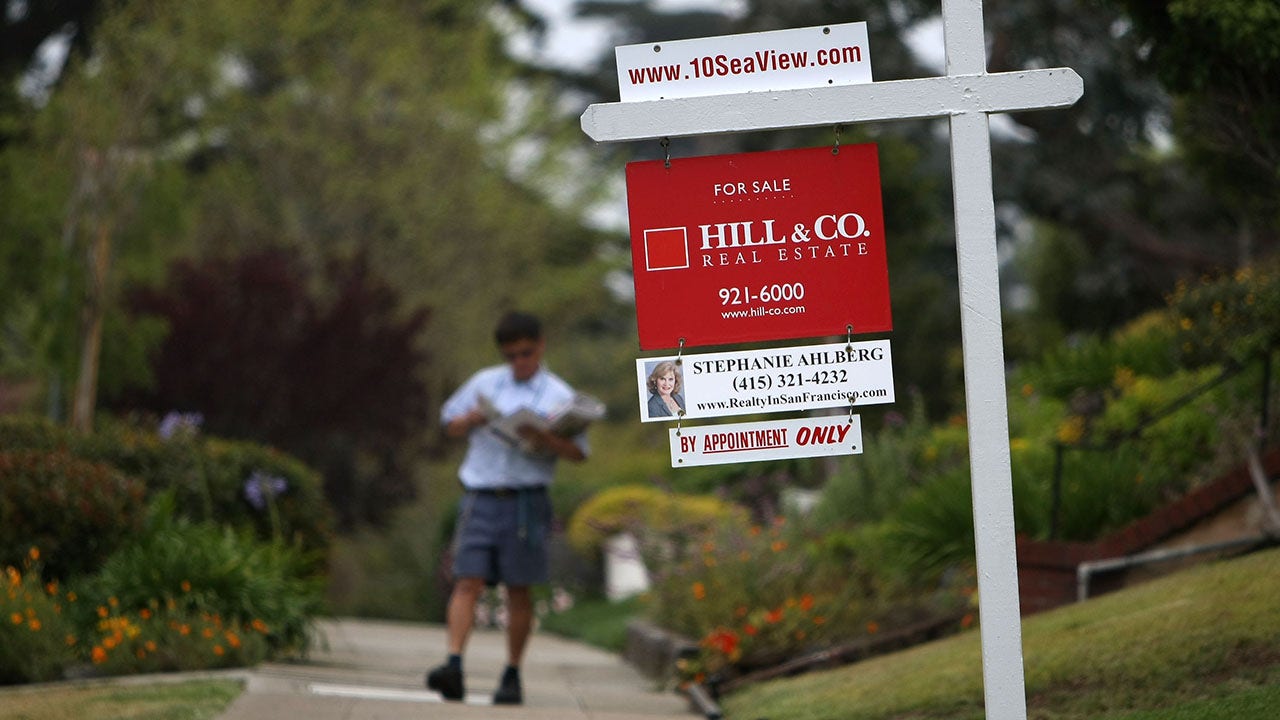
US mortgage rates sink to 3-year low after Trump’s astonishing $200B order. Capitalize fast even if you’re a homeowner
Yahoo Finance· 2026-01-14 22:33
Core Viewpoint - President Trump's initiative to purchase $200 billion in mortgage bonds aims to lower borrowing costs and improve home affordability for Americans, coinciding with his proposal to ban large institutional investors from buying single-family homes [1][5]. Mortgage Market Impact - Following the announcement, the average interest rate for a 30-year fixed mortgage dropped to 5.99%, down from 6.21%, marking a significant 22-basis-point decrease [3][5]. - The bond-buying plan is expected to create a favorable environment for the housing market, as rising mortgage bond prices typically lead to lower interest rates [2][5]. Market Size and Limitations - The $200 billion in mortgage bonds represents only about 1.4% of the total U.S. mortgage market, which is approximately $14.5 trillion, suggesting limited impact on the overall housing market [6]. - The affordability gap remains significant, with a typical U.S. household needing an annual income of about $118,530 to afford a median-priced home of $402,500, which is over 50% higher than the current median household income of roughly $77,700 [6].
US Mortgage Rates Slide to One of Lowest Levels Since 2022
Yahoo Finance· 2026-01-14 12:34
Core Insights - US mortgage rates have decreased significantly, with the 30-year mortgage rate dropping to 6.18%, the lowest since September 2024 and one of the lowest since 2022 [1] - The five-year adjustable mortgage rate fell to 5.42%, marking the second-lowest level since May 2023 [2] - The Mortgage Bankers Association (MBA) reported a nearly 16% increase in the purchase index, reaching the second-highest level since February 2023, while the refinancing gauge surged over 40%, the highest since September [2] Housing Market Dynamics - The decline in mortgage rates is providing relief to a housing market that has struggled with affordability issues in recent years [3] - Government data indicated that the annualized pace of new-home sales in October was among the strongest since 2023, supported by builder incentives and price reductions [3] Policy Initiatives - President Donald Trump has proposed measures to enhance housing affordability, including a ban on institutional investors purchasing single-family homes and directing Fannie Mae and Freddie Mac to buy $200 billion in mortgage bonds to lower financing costs [4] - The MBA survey, which has been conducted weekly since 1990, reflects responses from a wide range of mortgage lenders, covering over 75% of all retail residential mortgage applications in the US [4]
Housing expert warns pre-pandemic affordability levels may never return in America
Fox Business· 2026-01-14 11:00
Core Insights - The U.S. housing market may not return to pre-pandemic affordability levels, as significant changes in mortgage rates, household incomes, or home prices are deemed unlikely [1][5][12] Group 1: Housing Affordability Challenges - The housing affordability issue in America is identified as a structural problem rather than a cyclical one, indicating long-term challenges [2][6] - To achieve affordability, mortgage rates would need to drop to approximately 2.65%, median household incomes would need to increase by about 56%, or home prices would need to decrease by around 35% [5][12] - Current affordability is defined as a mortgage payment that constitutes about 21% of median household income, compared to over 30% currently [5] Group 2: Policy and Market Dynamics - The Trump administration's proposed policies include directing Fannie Mae and Freddie Mac to purchase up to $200 billion in mortgage bonds and limiting large institutional investors from buying single-family homes, which could positively impact the market [12][13] - Increasing housing supply is emphasized as a critical step to address the affordability crisis, with suggestions for incentives to encourage developers to build affordable housing [8][14] - The long-term outlook suggests that if current trends continue, a return to pre-pandemic affordability could be delayed until around 2047 [13]

Trump Unveils New Strategy to Slash Mortgage Rates. What It Could Mean for Homebuyers.
Investopedia· 2026-01-10 01:00
Core Insights - President Trump has ordered Fannie Mae and Freddie Mac to purchase $200 billion in mortgage bonds to lower mortgage rates and make homeownership more affordable [1][8] - The Federal Housing Finance Agency confirmed that Fannie Mae and Freddie Mac will proceed with the bond purchases, leading to a drop in the 30-year mortgage rate to near 6%, the lowest since early 2023 [2][6] Group 1: Impact on Mortgage Rates - Lower mortgage rates are expected to enhance affordability for homebuyers and influence housing prices, consumer spending, and overall economic growth [3] - The mortgage-backed securities market is valued at approximately $11 trillion, making the $200 billion purchase significant but unlikely to cause a major shift in the market on its own [5][8] - Fannie Mae and Freddie Mac have already increased their mortgage-backed securities holdings by over 25% since June, reaching nearly $234 billion by October [5] Group 2: Market Reactions and Skepticism - Analysts express skepticism regarding the long-term impact of Trump's directive, with some suggesting that any relief from lower rates may be short-lived due to potential increases in home prices as more buyers enter the market [7] - The administration is also considering ending government control of Fannie Mae and Freddie Mac, which could lead to higher mortgage rates due to the loss of government backing [9] Group 3: Additional Housing Initiatives - Trump's directive is part of a broader strategy to improve housing affordability, which includes a recent announcement to ban large investors from purchasing single-family homes [10]

How Trump’s $200 billion mortgage bond-buying move could reshape housing market and what it means for mortgage rates
The Economic Times· 2026-01-09 20:15
Core Viewpoint - The U.S. President Donald Trump has directed Fannie Mae and Freddie Mac to purchase $200 billion in mortgage bonds to lower mortgage rates and make homeownership more affordable [1][15]. Group 1: Impact on Mortgage Rates - The bond purchases are expected to lower mortgage rates and monthly payments, thereby enhancing home affordability [2][15]. - The strategy aims to narrow the mortgage spreads, which have been wider than normal due to various factors, including market volatility and economic conditions [3][15]. - Mortgage rates typically run about 1.8 percentage points above Treasury yields, but recent spreads have been wider, prompting the need for increased bond purchases [3][15]. Group 2: Current Market Conditions - The U.S. is facing a significant housing supply shortage, estimated between 1.5 million and 5.5 million homes, with JPMorgan estimating a shortfall of 2.8 million homes [6][15]. - Fannie Mae and Freddie Mac hold a combined $247 billion in mortgage bonds, which is relatively small compared to the $9 trillion mortgage-backed securities market [7][15]. - Over the past year, mortgage rates have decreased from the high-6% range to just under 6.2%, with spreads narrowing from about 2.65 percentage points to just under 2 percentage points [8][15]. Group 3: Market Reactions and Predictions - Following Trump's announcement, the average 30-year mortgage rate dropped 22 basis points to 5.99% [8][15]. - Analysts suggest that if the market tightens by 50-70 basis points, primary mortgage rates could fall into the mid-5% range, potentially increasing refinancing and purchase activity [10][15]. - There are concerns that lower mortgage rates could lead to higher home prices if housing supply remains constrained, as increased demand may allow borrowers to bid up prices [11][15].

Trump turns to mortgage bonds in fresh drive to ease housing affordability
The Economic Times· 2026-01-09 04:55
Core Viewpoint - The U.S. government, through Fannie Mae and Freddie Mac, plans to purchase $200 billion in mortgage-backed securities to lower mortgage rates and improve housing affordability amid rising economic concerns [10][9]. Group 1: Financial Position of Fannie Mae and Freddie Mac - As of the end of September, Fannie Mae and Freddie Mac reported less than $17 billion in cash and cash equivalents, but have access to nearly $100 billion in available funds when considering broader balance sheet assets [10][11]. - Fannie Mae reported approximately $101 billion in combined cash, restricted cash, and securities purchased under agreements to resell in the third quarter, while Freddie Mac held nearly $91 billion in similar assets [2][10]. Group 2: Economic Context and Impact - Housing affordability is a significant political and economic issue in the U.S., with high mortgage rates and elevated home prices deterring many potential buyers [3][10]. - The planned intervention is reminiscent of the Federal Reserve's actions during the pandemic, which involved purchasing large volumes of mortgage-backed securities to stabilize markets [6][11]. - Economists suggest that the $200 billion purchase will have a modest impact on mortgage rates, potentially lowering borrowing costs by approximately 10 to 15 basis points [6][11]. Group 3: Government and Regulatory Actions - The current bond purchases will not involve newly created central bank money, and will be funded entirely through the balance sheets of Fannie Mae and Freddie Mac, without the involvement of the Federal Reserve or U.S. Treasury [8][11]. - The announcement follows President Trump's recent efforts to restrict institutional investors from purchasing single-family homes, indicating a broader strategy to address housing costs [9][10].
Trump orders $200 billion mortgage bond buy to cut home loan rates
The Economic Times· 2026-01-09 00:12
Core Viewpoint - The U.S. President Donald Trump has ordered representatives to purchase $200 billion in mortgage bonds to lower interest rates and monthly home payments, leveraging the increased value of Fannie Mae and Freddie Mac, which are government-owned mortgage companies [1][2]. Group 1: Mortgage Bonds Purchase - The objective of purchasing $200 billion in mortgage bonds is to reduce housing costs for Americans, aiming to drive mortgage rates and monthly payments down [3][12]. - Trump claims that the value of Fannie Mae and Freddie Mac has significantly increased because he did not sell them during his first term, now stating they have $200 billion in cash available for this initiative [2][10]. Group 2: Market Context - Historically, the Federal Reserve has been the largest buyer of mortgage-backed securities, which has previously led to lower mortgage rates, particularly during the COVID-19 pandemic when substantial purchases were made [3][11]. - Despite recent interest rate cuts by the Federal Reserve, mortgage rates have remained high due to a lack of housing inventory, as many homeowners with low rates are not selling their homes [4][5]. Group 3: Housing Supply Issues - The U.S. is currently facing a shortage of approximately 4 million homes, which is necessary to address the housing supply problem and make homes more affordable [7]. - Home inventory and sales have remained near their lowest levels since the financial crisis of 2010, except for a brief period in spring 2020 [7]. Group 4: Future Plans and Uncertainties - Trump has been considering an IPO for Fannie Mae and Freddie Mac for several years, indicating potential future changes in their structure [7][8]. - It remains unclear whether Trump can authorize the purchase of mortgage bonds without Congressional support, and the specifics of how the $200 billion will be utilized have not been disclosed [9][8].
Rocket Companies (RKT) Stock Jumps After Hours On Trump Housing Market Pledge
Benzinga· 2026-01-08 22:05
Core Viewpoint - Rocket Companies Inc's stock surged in after-hours trading following former President Donald Trump's announcement of a plan to lower U.S. mortgage rates, which is expected to positively impact the company's business model tied to mortgage volumes [1]. Group 1: Trump's Mortgage Plan - Trump proposed a $200 billion purchase of mortgage bonds, leveraging the cash held by Fannie Mae and Freddie Mac, to lower mortgage rates and make homeownership more affordable [2]. - The initiative aims to restore housing affordability and is part of a broader strategy to enhance the housing market [2]. Group 2: Impact on Rocket Companies - Rocket's business is closely linked to mortgage volumes; lower rates typically lead to increased refinancing and loan qualifications, boosting application and origination activities [3]. - The anticipated bond purchases could lead to lower mortgage-bond yields and rates, potentially increasing loan demand and fee income for Rocket after a period of weakness due to high rates [4]. - The stock's momentum is reflected in its high score of 94.04 in Benzinga Edge rankings, indicating strong price performance [4].


Trump Administration Plans to Prohibit Institutional Investors from Owning Single-Family Real Estate Properties
Crowdfund Insider· 2026-01-08 18:57
Core Viewpoint - The proposal by President Trump to restrict large institutional investors from purchasing single-family homes aims to improve housing affordability for individual Americans, particularly younger families [1][2]. Group 1: Proposal Details - The initiative seeks to bar major institutional investors, such as private equity firms, from acquiring additional single-family homes, which have been linked to rising property prices and rents [2][3]. - Trump plans to push for immediate action on this proposal and will discuss it further at the World Economic Forum in Davos [2]. Group 2: Market Reaction - The announcement led to a significant backlash in the stock market, with shares of firms involved in single-family rentals experiencing sharp declines [3]. - Blackstone's stock fell by as much as 9.3% intraday, closing down around 5-6%, while Invitation Homes saw a drop of up to 10%, ending approximately 6% lower [4]. Group 3: Industry Impact - Other related stocks, including American Homes 4 Rent and various homebuilders, also faced steep declines, indicating investor concerns over potential disruptions in the rental housing sector [5]. - Although institutional investors own only about 3-4% of single-family rental properties nationwide, their impact is more significant in certain markets, particularly in the Sun Belt [5]. Group 4: Expert Opinions - Some experts suggest that the overall impact on housing prices may be limited, as smaller investors might fill the gap left by institutional buyers, and broader issues like low housing supply remain unaddressed [6]. - The proposal aligns with criticisms from housing advocates and some bipartisan lawmakers who have previously suggested similar restrictions [6].