Financial Crisis

Search documents
X @Cointelegraph
Cointelegraph· 2025-09-12 17:15
Macroeconomic Concerns - The U.S faces a potential financial collapse due to its $37 trillion debt [1] Proposed Solution - Elon Musk suggests using AI and robotics to address the $37 trillion debt crisis [1]
Cracking Job Market: Will It Trigger a Crypto Rally or Crash?
Coin Bureau· 2025-09-12 14:01
Labor Market Overview - US unemployment rate rose to 43% in August, the highest since October 2021, with employers adding only 22,000 jobs [4] - Job openings decreased to 718 million in July, falling below the number of unemployed people (roughly 724 million) for the first time since 2021 [5] - China's unemployment rate increased to 52% in July, while youth unemployment spiked to 178% [8][9] - Global job markets are showing signs of weakness, with shrinking openings and shaky labor markets worldwide [10] Economic Analysis and Forecast - The labor market softening confirms previous suspicions, but trends can accelerate quickly, potentially leading to a cliff drop rather than a gradual decline [6] - Markets are interpreting the labor data as a signal for a likely 025% September rate cut, with a 12% chance of a 05% cut [7][8] - Historically, unemployment lags behind financial crises, with equities bottoming out before jobless rates stop climbing [13] - Current conditions resemble early 2001, with slower hiring and softer openings, but stocks are near all-time highs, an unusual sequence [15][16] Factors Influencing Labor Data - Immigration policy changes can significantly impact job growth, with potential job growth dropping to 60,000 per month if migrant flows are curtailed [19] - The gig economy distorts unemployment data, as many independent contractors don't qualify for unemployment benefits [20] - The Labor Department's 2024 rule tightening on employee vs independent contractor classification makes official employment data less reliable [21] Monetary Policy and Market Implications - Weaker labor data increases expectations for rate cuts, which could cushion demand but requires careful balancing to avoid a hard landing or reignited inflation [26] - Rate cuts support risk assets like stocks and Bitcoin, while safe havens like gold benefit from uncertainty and a softer dollar [29][30][32] - The main worry signal is more unemployment than job openings, but this also flashed in 2021 without major consequences [28]

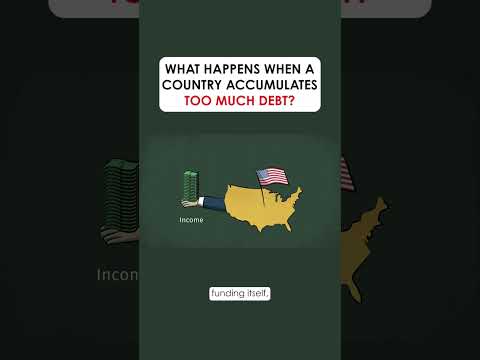
What Happens When a Country Accumulates Too Much Debt?
Principles by Ray Dalio· 2025-07-11 15:18
Economic Cycles & Debt - Excessive debt coupled with economic downturns can lead to financial bubbles bursting, forcing countries to choose between defaulting or printing money, which devalues currency and raises inflation [1] - History shows cycles of debt-financed booms and busts, with central banks intervening [2] Internal Conflicts & Political Extremism - Economic hardship, declining living standards, and wealth inequality exacerbate internal conflicts among different groups, leading to political extremism [3] - Left-wing populism seeks wealth redistribution, while right-wing populism aims to maintain wealth concentration [3] Wealth Flight & Government Response - Rising taxes on the wealthy during turbulent times can trigger capital flight to safer assets and locations, reducing tax revenue and leading to economic decline [4] - Governments may eventually outlaw wealth flight as conditions worsen [4] Societal Impact & Leadership - Turbulent conditions undermine productivity, shrinking the economic pie and intensifying conflicts over resource allocation [5] - Democracy faces challenges as populist leaders emerge, promising order and control, potentially leading to a shift towards strong, centralized leadership [5]
The Wolf-Krugman Exchange: Testing economic guardrails | FT Podcasts
Financial Times· 2025-07-02 21:06
US Political & Economic Landscape - The US political system is perceived to be transforming, with concerns about slavish devotion to a leader and Washington potentially turning into Pyongyang [1] - There's a sense that the US is politically not the same country it was a few years ago, impacting the entire international system [1] - Public opinion is largely negative towards current legislation, even with deliberate obfuscation of its impact [25] - The US stock market may be detached from the economic reality, potentially driven by corporate profit expectations in a favorable regime [15] International Order & Global Economy - The traditional global order is being tested, with the US potentially abdicating its leadership role [1][3] - The world may be moving towards a "world order minus one," where the US is excluded due to its current political climate [3] - There's an opportunity for other countries, like China and the EU, to take on leading roles in trade, climate action, and global governance [5][6][7] - The US dollar has fallen about 10% since the start of the year, a phenomenon typically seen in emerging markets [17] Risks & Uncertainties - There are concerns about the stability of the US system, with potential for unfair elections and the creation of a massive secret police force [2] - The US is potentially setting itself up for a financial crisis due to deregulation, irresponsible fiscal policy, and pressure on the Federal Reserve [31][33] - There's a risk of runaway inflation if the Federal Reserve becomes too politicized and attempts to goose up the economy for political gain [34]