Tariff Uncertainty

Search documents
Acme United Reports Record Net Income for Second Quarter of 2025
Globenewswire· 2025-07-23 10:30
Core Insights - Acme United Corporation reported a net sales decrease of 3% for Q2 2025 compared to Q2 2024, totaling $54.0 million [1] - The company achieved a net income of $4.8 million for Q2 2025, reflecting a 7% increase from $4.5 million in Q2 2024 [2] - The CEO highlighted the company's successful navigation through tariff uncertainties and the completion of the most profitable quarter in its history [3] Financial Performance - Net sales for the six months ended June 30, 2025, were $100.0 million, a slight decrease from $100.4 million in the same period in 2024 [1] - Gross margin improved to 41.0% in Q2 2025 from 40.8% in Q2 2024, and for the six-month period, it was 40.1% compared to 39.9% in 2024 [6] - The company generated approximately $12.0 million in free cash flow and distributed about $2.2 million in dividends during the twelve months ended June 30, 2025 [7] Segment Performance - U.S. segment net sales decreased by 5% in Q2 2025, primarily due to cancellations of back-to-school orders linked to high tariffs [3] - European net sales for Q2 2025 decreased by 3% in U.S. dollars and 6% in local currency, attributed to shipment delays [4] - Canadian net sales increased significantly by 28% in Q2 2025, driven by strong sales of first-aid products [5] Strategic Initiatives - The company has diversified its supply base through acquisitions in the U.S. and Canada and is actively shifting production to optimize costs and service [3] - Acme United's sourcing team maintains a presence in multiple countries, including China, India, and Vietnam, to enhance supply chain resilience [3]



瑞银:模拟芯片更新_近期需求强劲,但提前采购现象明显
瑞银· 2025-07-14 00:36
Investment Rating - The report maintains a "Buy" rating for Analog Devices (ADI), Allegro MicroSystems (ALGM), Microchip Technology (MCHP), and Texas Instruments (TXN), while Onsemi (ON) is rated as "Neutral" [10][11]. Core Insights - The semiconductor industry is experiencing strong near-term demand, but there are signs of demand pull-ins due to tariff-related concerns, which is a key investor worry [2][3]. - Distributor inventory levels have normalized, particularly for Microchip Technology, which has seen a significant reduction in inventory [4][8]. - Pricing across the sector remains generally stable, with ON experiencing notable pricing pressure as it attempts to defend market share [2][4]. Semiconductor Purchaser Survey - The quarterly B2B survey indicates a net increase in demand of +75%, with expectations for future demand remaining strong at +73% [15][17]. - Nearly half of the respondents are exploring alternative supply sources outside the US or China, which is seen as a positive for European analog suppliers [3][18]. - The percentage of respondents indicating their analog semiconductor inventory is above target has significantly decreased, suggesting a healthier demand environment [3][15]. Inventory Financial Reporting Deep Dive - The report highlights that Analog Devices and Microchip Technology have lean inventory levels, positioning them well for an upcycle, while ON continues to face headwinds with high inventory levels [7][8]. - MCHP has successfully executed a turnaround plan, reducing inventory and production significantly [8][10]. - The overall inventory days for major companies like ADI, MCHP, and TXN are being closely monitored, with MCHP showing the largest decline in inventory [4][15]. Pricing Trends - Pricing for true analog semiconductors has remained flat, while power analog pricing has slightly declined, particularly for ON [4][10]. - The report notes that 68% of respondents have reported price increases, with expectations for further increases strengthening to 62% [17][18]. Market Outlook - The semiconductor market is expected to see a recovery, with TXN maintaining elevated inventory levels in anticipation of a sharp upcycle [8][10]. - The report suggests that the channel will likely begin rebuilding inventory, flipping the delta between sell-in and sell-through [8][10]. - Overall, the demand picture is improving, with significant increases in net demand expectations across various sectors, particularly in data centers [32][46].


大摩闭门会:全球贸易紧张局势下的亚洲关税
2025-07-11 01:05
Summary of Conference Call Industry Overview - The conference call primarily discusses the impact of tariff changes on the Asian economy, with a focus on Japan and South Korea, as well as the broader implications for trade and capital expenditure (CapEx) in the region [1][2][5]. Key Points and Arguments Tariff Rates and Impacts - The weighted average tariff for the Asia region has increased from 4.8% in January 2025 to 23% currently, with projections suggesting it could rise to 27% if new tariffs are implemented on August 1 [1][2]. - Three categories of economies are identified regarding potential trade deals: 1. India is likely to finalize a deal before August 1. 2. Other economies may secure deals with tariffs above 10%, particularly in Korea and Japan. 3. ASEAN economies may receive a flat rate with minimal negotiations [2]. Trade Uncertainty and Economic Outlook - The uncertainty surrounding tariffs is affecting corporate CapEx decisions in the region, with investors indicating that the tariff issue is largely priced in [2][3]. - Historical context is provided, referencing the 2018 tariff situation where initial growth numbers remained stable despite tariff imposition, suggesting a potential lag in the impact of current tariffs [3][5]. - Key indicators to watch include monthly capital goods imports and U.S. import prices, which will help assess the burden of tariffs on Asian producers [4][5]. Japan's Economic Situation - Japan faces a 25% tariff rate, slightly higher than previous expectations, which poses downside risks to exports and CapEx if maintained [5][6]. - The upcoming upper house election on July 20 is a critical factor, with potential implications for trade negotiations and agricultural imports from the U.S. [6][8]. - The Japanese government is expected to maintain a cautious stance on agricultural imports, particularly rice, due to political pressures [6][8]. South Korea's Market Dynamics - South Korea is also affected by a 25% reciprocal tariff, with potential impacts on pharmaceuticals and semiconductors being more significant than the general tariff [9][10]. - The government is focused on market reforms and reducing real estate speculation, which could positively influence the equity market [9][10]. - Discussions around inheritance tax reforms and dividend tax changes are ongoing, with potential implications for corporate behavior and market dynamics [10][11]. Inflation and Monetary Policy - The region is expected to experience deflationary pressures due to tariff-induced slowdowns, contrasting with inflationary trends in the U.S. [16][17]. - Central banks in Asia, excluding China, are anticipated to implement rate cuts to support growth amid these challenges [16][17]. - Japan's Bank of Japan (BOJ) is unlikely to raise interest rates soon due to trade uncertainties impacting wage momentum and CapEx [8][18]. Conclusion - Overall, the conference highlights significant concerns regarding trade uncertainties and their potential impact on economic growth in Asia, particularly in Japan and South Korea. The focus remains on monitoring tariff developments, economic indicators, and policy responses from central banks [5][16][18].
X @Bloomberg
Bloomberg· 2025-07-07 04:08
Currency Market Analysis - The dollar's strength is uncertain due to tariff uncertainty [1] - The end of tariff uncertainty is needed to assess the dollar's viability [1]
摩根士丹利:美国消费者调查_关税不确定性下消费者情绪趋稳
摩根· 2025-07-04 01:35
Investment Rating - The report does not explicitly provide an investment rating for the industry Core Insights - Consumer sentiment toward the economy and household finances has stabilized amid ongoing tariff concerns, with inflation remaining the primary concern for consumers [1][7] - The report indicates a slight decline in consumer confidence regarding the economic outlook, with 37% expecting improvement and 47% anticipating deterioration, resulting in a NET score of -10% [7][61] - Concerns over tariffs remain elevated but stable, with 39% of consumers very concerned, down from 43% in April [7][14] - The spending outlook remains stable, with 32% of consumers planning to spend more in the next month, yielding a NET of +15% [19][84] - Travel intentions are strong, with approximately 60% of consumers planning to travel in the next six months, reflecting optimism in leisure travel [117] Consumer Sentiment - Inflation is the top concern for consumers at 57%, down from 59% last month, while political concerns have risen to 43% [8][37] - Geopolitical conflict concerns increased to 31% this month from 21% last month [7][8] - Low-income consumers are more worried about paying rent/mortgage and debts, while upper-income consumers focus on investment concerns [9][42] Macro Outlook - Consumer confidence in the U.S. economy is slightly down, with 37% expecting improvement and 47% expecting deterioration, leading to a NET score of -10% [61][71] - The outlook for household finances remains positive, with 43% expecting improvement and a NET score of +16% [64][70] Tariff Impact - 39% of consumers report being very concerned about tariffs, with 33% planning to cut back on spending in response [14][19] - The level of concern about tariffs varies significantly by political affiliation, with 63% of liberals very concerned compared to 23% of conservatives [14][50] Spending Intentions - The short-term spending outlook is stable, with 32% of consumers expecting to spend more next month, yielding a NET of +15% [84][88] - 30% of consumers reported making a major purchase in the past three months, with 58% planning a major purchase in the next three months [97][98] Travel Intentions - Approximately 60% of consumers plan to travel in the next six months, with visiting friends and family being the most common reason [117][119]
独家洞察 | 贸易战强势洗牌!押注另类投资是豪赌还是唯一生路?
慧甚FactSet· 2025-07-03 03:45
Core Viewpoint - The article discusses the impact of tariff uncertainties on alternative investments, particularly in emerging markets, and suggests a potential shift in investor focus towards developed markets in Asia and the MENA region due to these uncertainties [1][6]. Group 1: Investment Trends - Emerging markets can be categorized into two groups based on annual returns: one group with approximately 3% returns (Latin America, Central and Eastern Europe, CIS countries, and broader emerging markets) and another group with superior performance (developed markets in Asia and the MENA region) [6]. - Recent transactions highlight the operational environment and future investment potential in developed markets in Asia and the MENA region, such as the privatization of Skechers by 3G, which reflects concerns over potential new tax burdens on Chinese products [6]. - The acquisition of IO by OpenAI and the launch of the Stargate UAE project in the UAE indicate a growing trend in the AI sector, positioning the UAE as a leader in emerging industries and attracting investor interest [6]. Group 2: Future Outlook - Despite some stabilization in public markets since the introduction of initial tariff policies, investors continue to face significant uncertainties this year, necessitating agility and flexibility [7]. - The trend of production shifting from China to developed markets in Asia is expected to reshape the private equity landscape in the coming years, creating new investment opportunities in other emerging markets [7]. - The MENA region is poised to gain a more competitive position in the global investment landscape as a preferred area for AI companies [7].

Looking Ahead to Bank Earnings
ZACKS· 2025-07-03 01:11
Core Viewpoint - The earnings outlook for major banks such as JPMorgan, Wells Fargo, and Citigroup is subdued despite passing stress tests, with growth hindered by weak demand in conventional and investment banking [2][3]. Group 1: Earnings Expectations - JPMorgan's Q2 earnings are expected to decline by -5.6% with revenues down -13.4% [3] - Citigroup and Wells Fargo are projected to see Q2 earnings decrease by -3.2% and -6.8% respectively [3] - The Zacks Investment Brokers & Managers industry, including these banks, anticipates a total Q2 earnings drop of -2.8% on -0.6% lower revenues [3] Group 2: Sector Performance - The overall Finance sector is expected to see Q2 earnings increase by +8.2% on +3.9% higher revenues [3] - Total S&P 500 earnings for the June quarter are projected to rise by +5.0% with +4.0% higher revenues [5] - Three sectors are expected to achieve double-digit earnings growth in Q2: Aerospace (+15.2%), Tech (+12.1%), and Consumer Discretionary (+106.1%) [5] Group 3: Market Performance - Despite weak earnings growth expectations, stocks of JPMorgan, Citigroup, and Wells Fargo have performed well in the market, likely due to anticipated capital returns and hopes for improved earnings growth [6] - The market's recovery from April lows suggests that participants may not view tariff uncertainties as a significant threat, although there is skepticism regarding this outlook [23]



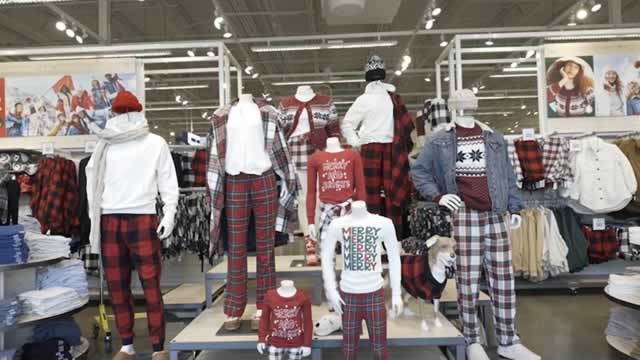
Gap revived its brand identity. Here's what investors are keeping an eye on next
CNBC· 2025-06-14 12:00
Core Viewpoint - Gap is experiencing a resurgence with a reported 5% same-store sales growth for its fiscal first quarter of 2025, marking the sixth consecutive quarter of growth [1] Group 1: Company Performance - Gap closed approximately 2,000 stores and saw annual sales decline by about $3.5 billion from fiscal 2001 to 2021 [1] - In fiscal 2024, Gap's overall sales grew by 1%, primarily driven by Old Navy, which accounts for over half of Gap's revenue [4] - The company has improved its profitability, achieving growth on the highest gross margins in the past 20 years [4] Group 2: Leadership and Strategy - CEO Richard Dickson, who previously revived the Barbie brand at Mattel, took over in 2023 and hired fashion designer Zac Posen as creative director [2] - Posen has contributed to Gap's cultural relevance by dressing celebrities for high-profile events, although his main focus is on Old Navy [3] - Gap has undertaken significant restructuring, including store closures and layoffs, to clean up its balance sheet and set a foundation for future growth [5][6] Group 3: Challenges and Market Conditions - Despite beating Wall Street's earnings expectations, Gap's stock fell 15% due to concerns over U.S. tariff policies, which could cost the company between $100 million and $150 million [7] - Banana Republic and Athleta are not experiencing the same level of same-store sales growth as Gap and Old Navy, indicating ongoing challenges for these brands [6]

Trump and the future of CFTC and crypto, investing in trash could pay off, Fed rate cut outlook
Yahoo Finance· 2025-06-13 03:32
Market Overview & Regulation - The report highlights the latest financial news as of June 12, 2025 [1] - CFTC Acting Chairman Caroline Pham discussed digital asset regulation under the Trump administration, investor protection from fraud, and the legitimacy of prediction markets at Coinbase's State of Crypto Summit [1] Company Specific Insights - WM CFO Davina Rankin believes trash is a resilient growth business [1] Economic Outlook - Former Cleveland Fed President Loretta Mester discussed the outlook for Fed rate cuts [1] - Uncertainty regarding tariffs in the second half of the year may cause the Fed to hold rates despite positive economic data [1]

Lakeland(LAKE) - 2026 Q1 - Earnings Call Transcript
2025-06-09 21:30
Financial Data and Key Metrics Changes - The company achieved record net sales of $46.7 million, representing a 29% year-over-year increase, driven by a 100% increase in fire services products [4][15] - Consolidated gross margin decreased to 33.5% from 44.6% for the comparable period [15][19] - Net loss was $3.9 million or $0.41 per share, compared to net income of $1.7 million or $0.22 per share for the same period last year [16][21] - Adjusted EBITDA excluding FX was $600,000, a decrease of $3.2 million or 84% compared to the prior year [21][24] Business Line Data and Key Metrics Changes - Fire services segment grew by 100% year-over-year, contributing $10.5 million to the revenue increase [17][27] - Organic revenue increased by $600,000 or 2% to $36.9 million, with strong growth in the U.S. and Europe, partially offset by declines in Latin America and Canada [18][26] - U.S. net sales increased 42% year-over-year to $22.5 million, with organic growth of $2.1 million or 15% [5][27] - European net sales increased 102% year-over-year to $12.1 million [5][26] Market Data and Key Metrics Changes - Latin American operations saw a 12% decrease in sales year-over-year, primarily due to shipment timing and tariff impacts [26][64] - Sales in Asia increased by 15% year-over-year, indicating positive growth in that region [26] - The company experienced lower sales in Canada and delays in Latin America due to tariff uncertainties [7][12] Company Strategy and Development Direction - The company is focused on accelerating growth within the fragmented $2 billion fire protection sector and enhancing customer relationships [4][8] - A new company-wide SAP ERP system is being implemented to modernize and consolidate operations [6][7] - The company aims to navigate tariff uncertainties while pursuing strategic acquisitions to consolidate the fragmented fire market [13][32] - Long-term strategies include growing both fire services and industrial PPE verticals while maintaining operational efficiencies [32][33] Management's Comments on Operating Environment and Future Outlook - Management expressed confidence in navigating tariff uncertainties and expects sequential growth in gross margins and adjusted EBITDA in the second quarter [9][13] - The company anticipates revenue between $210 million to $220 million for the fiscal year, trending towards the lower end of adjusted EBITDA guidance due to near-term order delays [30][33] - Management remains optimistic about the recovery of sales in higher-margin regions once tariff uncertainties subside [12][64] Other Important Information - Capital expenditures for the quarter were $1.2 million, primarily related to the new ERP system [6][29] - The company ended the quarter with cash and cash equivalents of approximately $18.6 million and long-term debt of $24.7 million [29] Q&A Session Summary Question: Can you elaborate on the impact of purchase variance and amortization on gross margins? - The total increase to manufacturing costs was close to $3 million, significantly impacting adjusted EBITDA, with about a 1% impact on gross margins from purchase accounting [36][38][41] Question: What are the expectations for operating expenses moving forward? - Travel expenses were notably high in Q1 due to various events, but are expected to decrease. Increased SG&A was also attributed to higher labor costs and freight related to inventory movements [43][46][47] Question: How is the head-to-toe strategy progressing? - The company is seeing greater engagement and opportunities in the market, particularly with the glove strategy from the Meridian acquisition, and is focused on bundling products for comprehensive offerings [50][52][56] Question: What are the expectations for organic growth for the full year? - The company expects organic growth to remain in the high single digits, with strong growth in the U.S. offset by declines in Latin America and Canada [63][64] Question: Will the Jolly order be crucial for achieving revenue goals? - The Jolly order is important but not the sole determinant for revenue goals, with ongoing positive engagement with the Italian government regarding procurement [66][67] Question: What is the expected cadence for EBITDA improvement throughout the year? - Improvement is expected in the second quarter, with a gradual increase in EBITDA as inventory issues and cost containment efforts normalize [68][69]