
ROI

Search documents
S&P 500: Year-To-Date Returns
Benjamin Cowen· 2025-06-19 20:42
Hey everyone, and thanks for jumping back into the Equityverse. Today we're going to talk about the year-to- date ROI of the S&P 500. If you guys like the content, make sure you subscribe to the channel, give the video a thumbs up, and also check out the sale on into the cryptoverse premium at into the cryptoverse.com. Making a lot of short videos. As I said, I'll be traveling uh for the next week or so.Uh so, by the time you see these videos, you know, who knows how old they're going to be, but I just want ...


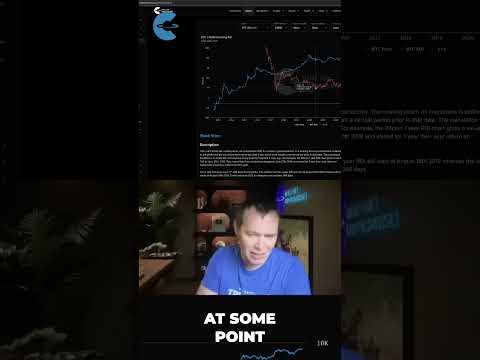
Bitcoin's 4 Year ROI: Sticking Around For 4 Years
Benjamin Cowen· 2025-06-18 23:13
What's really interesting, if you look at a 4-year ROI, there's never been a time in Bitcoin's history where it wasn't up four years later. Now, eventually that probably won't be true. You can see it has put in lower highs and lower lows, but all in all, I mean, Bitcoin over a four-year time horizon has been a pretty good investment over the last, you know, more than decade.At some point it might not always be above one, but it does go to show you, you know, why a lot of people say if you're in crypto, just ...
Rockwell Automation (ROK) 2025 Conference Transcript
2025-06-12 14:00
Rockwell Automation (ROK) 2025 Conference Summary Industry Overview - The conference focused on the automation industry, specifically Rockwell Automation's performance and outlook in the context of current market conditions and customer spending patterns [6][7][8]. Key Points and Arguments Demand Patterns - Customer spending shows resilience despite elevated uncertainty, with an uptick in demand for product offerings, indicating early-cycle fundamentals [7][10]. - Capital equipment demand remains weak, particularly for larger projects, due to ongoing uncertainty, impacting lifecycle services and configured orders [7][10][11]. - Project delays are primarily seen in the automotive and energy sectors, affecting capital-intensive projects [13]. Revenue Mix - Historically, about two-thirds of Rockwell's business is driven by capital expenditures (CapEx), with the remainder from maintenance, repair, and operations (MRO) [15]. - There is a shift towards more greenfield projects, but brownfield upgrades still dominate the revenue mix [15][16]. - Demand for productivity and efficiency remains strong, with customers investing in autonomous mobile robots, software, and cybersecurity services [18]. Industry Segments - E-commerce and warehouse automation are strong verticals, with increased outlook for new fulfillment centers and upgrades to existing warehouses [22][23]. - Life sciences and process industries also show good performance, with a mix of greenfield and brownfield investments [25][26]. Tariff and Cost Impacts - The company faced a $70 million headwind from tariffs, with ongoing efforts to recover costs through pricing strategies [32][34]. - Price changes related to tariffs have generally been in the low to mid-single-digit range, with some higher impacts on specific product families [36][37]. Software Investments - Rockwell is investing in its software portfolio, focusing on scalable and flexible solutions for production design and automation [66][67]. - The company aims to enhance its competitive positioning through strategic acquisitions and development of cloud-native offerings [68][69]. Margin and Cost Management - The company is targeting a segment operating margin of 22-24% for Intelligent Devices, with ongoing cost reduction initiatives [55][57]. - Recent acquisitions, such as ClearPath and Cubic, are expected to improve margins over time, with ClearPath projected to break even in fiscal 2026 [71][73]. Asset-Light Model Shift - Rockwell is considering a shift towards a more asset-intensive model, potentially increasing CapEx spending from 2% to 3% of sales, driven by ROI considerations [81][84]. - The strategy includes bringing more production in-house to enhance margins and reduce reliance on external suppliers [84][85]. Additional Important Insights - The company is currently in a pause regarding new acquisitions to focus on integrating recent purchases and optimizing their contributions to the overall business [75][78]. - There is a recognition of the importance of rare earth elements in the supply chain, with potential risks if supply from China is disrupted [38][40]. This summary encapsulates the key discussions and insights from the Rockwell Automation conference, highlighting the company's strategic focus areas and market dynamics.
