
乒乓球运动发展

Search documents
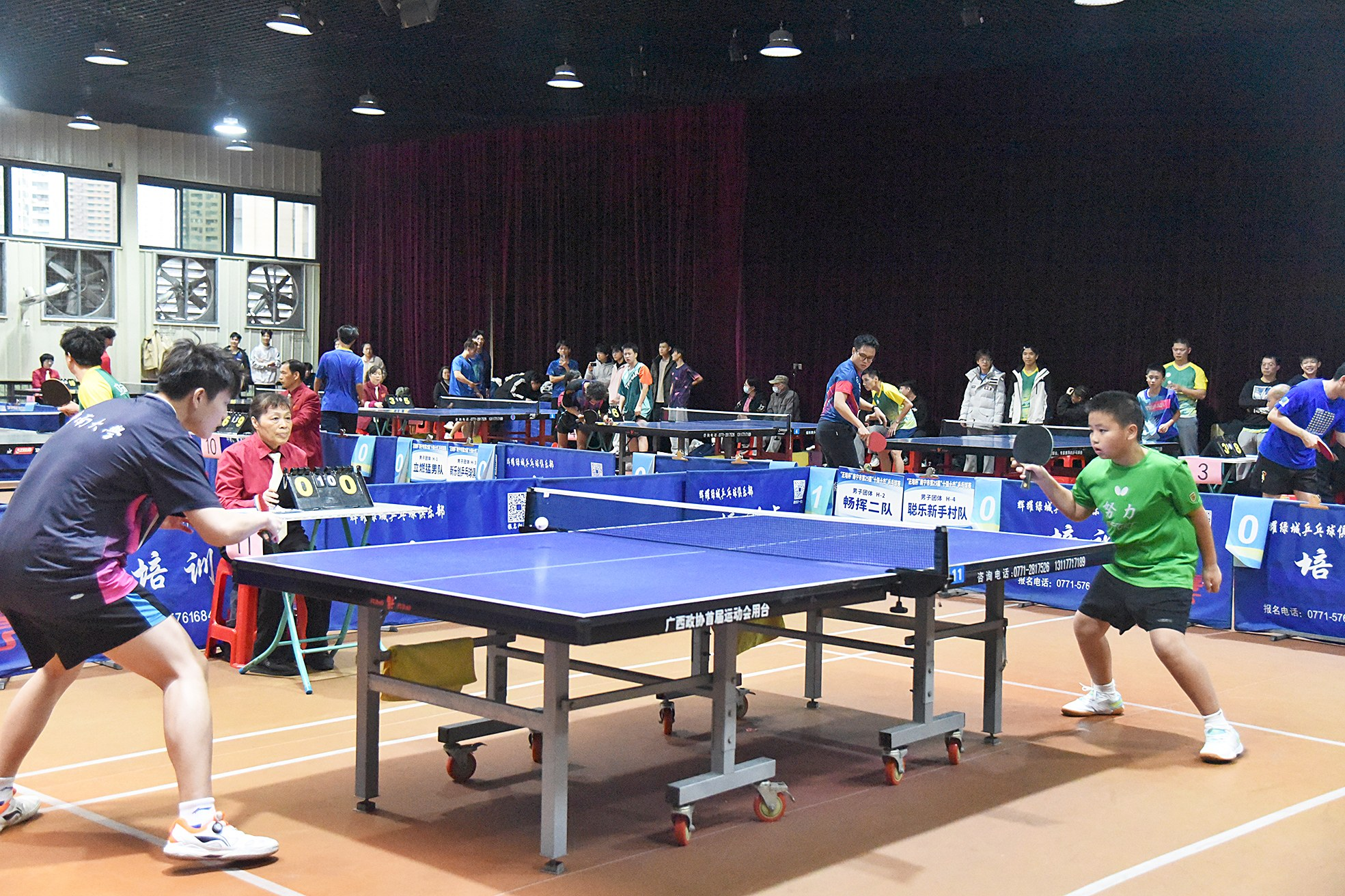
近300名选手角逐十佳荣誉
Xin Lang Cai Jing· 2026-01-03 02:47
Group 1 - The 25th Nanning "Top Ten" Table Tennis Competition has commenced, featuring 64 teams and nearly 300 participants competing for annual honors in both individual and team categories [3][4] - The event, established in the 1980s, is one of the most influential amateur table tennis competitions in Nanning, with awards for the top ten teams and players in various categories [3][4] - The competition has attracted not only local players but also participants from outside the region, enhancing the event's appeal and promoting tourism in Nanning [3][4] Group 2 - The matches are held without age divisions, focusing solely on skill levels, leading to exciting matchups where younger players often compete against more experienced adults [4] - A notable performance was highlighted where a young player impressed the audience with quick scoring against a university-level opponent, showcasing the high level of training among Nanning's youth [4] - The growing influence of the event has led to increased participation from players across the region, indicating a thriving table tennis community and effective youth training programs in Nanning [4]

全运会乒乓球上演“地表最强内战”,乒乓球相关企业多分布在华东
Qi Cha Cha· 2025-11-12 09:05
Core Insights - The 15th National Games table tennis event is considered a highly competitive "internal battle" among top players, showcasing the strength of Chinese table tennis and its impact on the sport's popularity in the country [1] Group 1: Industry Overview - As of November 12, there are 16,500 existing table tennis-related enterprises in China, showing a steady increase over the past decade [2] - The East China region accounts for 35.8% of these enterprises, followed by North China at 16.4% and South China at 15.9%, while the Northwest region has the least at 6.9% [3] Group 2: New Registrations - Since 2025, a total of 1,165 new table tennis-related enterprises have been registered, marking a 6.4% increase compared to the same period in 2024 [4] - The majority of new registrations are concentrated in East China, which represents 37.9% of the total, followed by North China at 17.2% and Central China at 3.9% [4]