人类演化研究

Search documents
河南淅川西沟遗址发现东亚已知最早的工具装柄技术
Xin Lang Cai Jing· 2026-02-05 06:54
Core Insights - The discovery at the Xigou site in Nanyang, Henan Province, reveals that systematic stone tool production and the earliest known tool hafting technology in East Asia date back approximately 160,000 to 72,000 years, underscoring the region's critical role in global human evolution research [1][3]. Group 1: Archaeological Findings - The Xigou site, located in the southern foothills of the Qinling Mountains, was discovered during archaeological investigations for the South-to-North Water Diversion Project in 2017, with excavations led by Professor Song Guoding from 2019 to 2021 [1][3]. - The excavation area covered 243 square meters, yielding 2,601 stone artifacts that exhibit specialization and diversity, including various types such as scrapers, drills, notched tools, serrated blades, pointed tools, and carving tools [3][5]. Group 2: Tool Functionality and Complexity - Functional analysis of the stone tools indicates a rich variety of uses, with drilling tools capable of piercing, sawing, cutting, and boring, and some tools showing evidence of plant processing [3][5]. - The research identified 22 hafting tools, with micro-wear analysis confirming distinct hafting traces, indicating at least two types of hafting methods, which significantly advances the timeline for the emergence of hafting technology in East Asia [5]. Group 3: Broader Implications - The findings at the Xigou site are part of a broader trend, as multiple Paleolithic sites in China dating from 300,000 to 50,000 years ago have revealed evidence of complex behaviors, suggesting that ancient humans in East Asia developed cultural behaviors comparable to their counterparts in Africa and Western Eurasia during the same period [5]. - The collaborative research involved experts from various institutions, including the Chinese Academy of Sciences, Beijing Union University, and international scholars from Australia, Spain, and the United States, leading to significant breakthroughs in understanding human evolution [5].


平陆运河风物志 | 文明星火照运河
Guang Xi Ri Bao· 2025-11-16 02:40
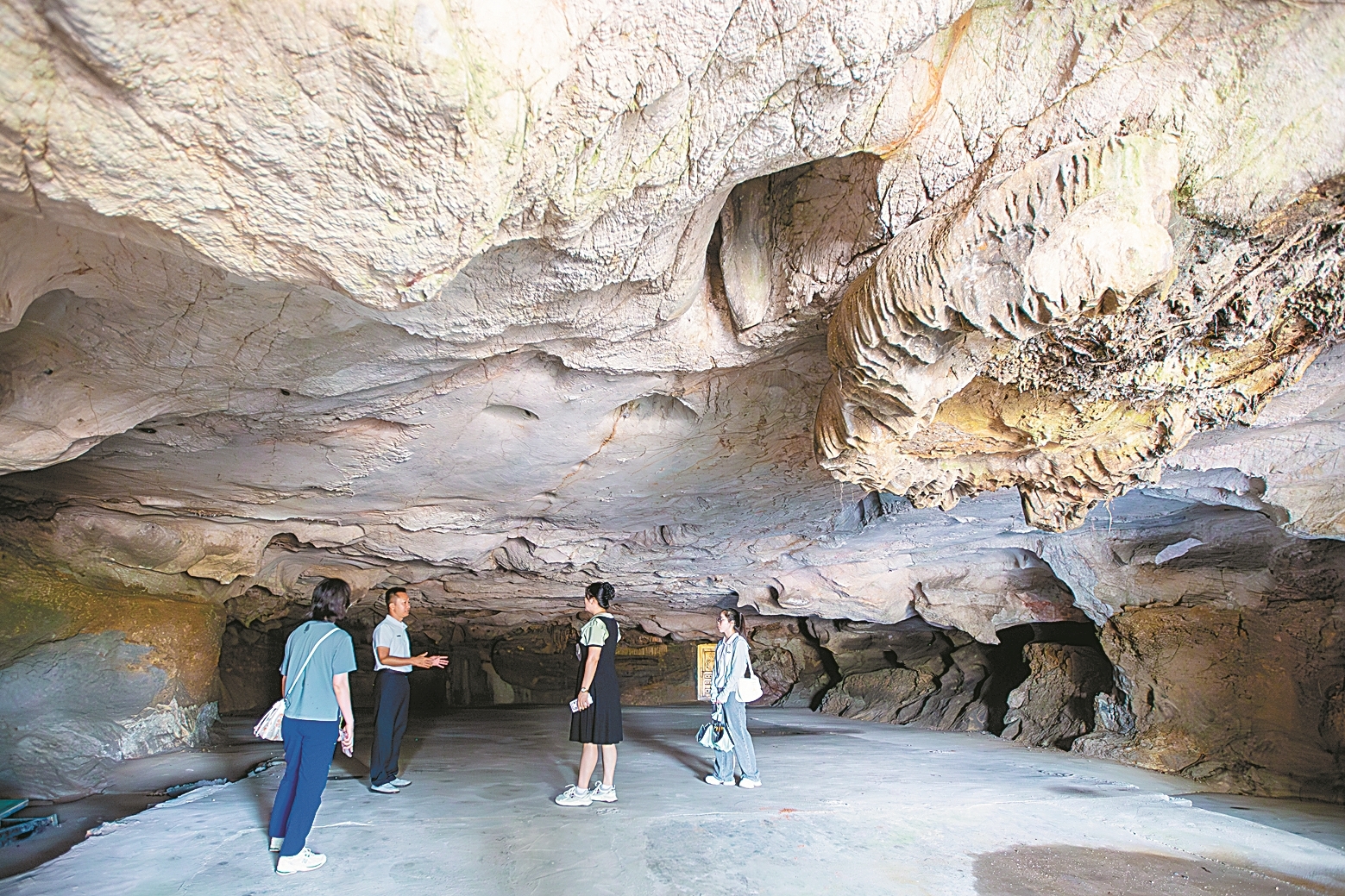
Core Insights - The article discusses the historical significance of the Ma'anshan area, highlighting the discovery of ancient human fossils known as "Ling Shan Ren" dating back approximately 20,000 years, which provides important clues for the study of human evolution in South China [2][3][7]. Group 1: Historical Significance - The Ma'anshan area has been a site of human activity for over 20,000 years, with evidence of prehistoric civilization emerging from the region [1]. - The discovery of human fossils and artifacts in the 1960s, including skulls and bones from multiple individuals, indicates that "Ling Shan Ren" lived during the late Paleolithic era and had developed the use of fire [2][3][6]. Group 2: Archaeological Findings - Numerous artifacts from the Neolithic era, such as stone tools and pottery, have been unearthed in the Ma'anshan area, further establishing its importance as an archaeological site [3][8]. - The East Victory Cave, where the "Ling Shan Ren" fossils were first discovered, remains a site of archaeological value, although it is currently not open to the public [3][4]. Group 3: Cultural Heritage - The Ma'anshan area has transformed into a heritage park, featuring walking trails and sculptures commemorating "Ling Shan Ren," reflecting the ongoing interest in the region's ancient history [7]. - The article emphasizes the continuity of human exploration and adaptation from prehistoric times to the present, symbolized by the cultural sites along the Pinglu Canal [8].