以案释法

Search documents
时光案卷·高质效办案的那些事儿|办案要守住法律底线,更要传递司法温度
Xin Lang Cai Jing· 2026-01-10 00:53
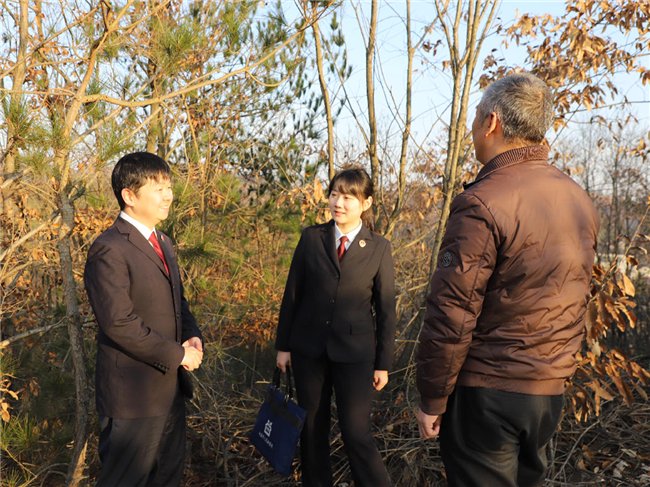
Core Viewpoint - The article emphasizes the importance of maintaining legal boundaries while also conveying the warmth of justice, highlighting a case where a local resident's illegal logging was addressed through education and community engagement rather than punitive measures [1][5]. Group 1: Case Overview - The case involves a local resident, Li, who illegally logged 1,297 trees without a permit, resulting in a total timber volume of 34.7143 cubic meters, which met the criteria for criminal prosecution [2][4]. - Li, a poverty-stricken household's sole labor force, showed remorse and took steps for ecological restoration after the incident, leading to a decision for non-prosecution [2][5]. Group 2: Community Engagement - The local prosecutor's office organized a hearing in the village to educate residents about legal boundaries regarding logging, transforming complex legal concepts into understandable terms for the community [4][5]. - The hearing was well-attended, with villagers actively engaging and asking questions about legal requirements for logging, indicating a growing awareness of legal issues in the community [4][5]. Group 3: Impact and Reflection - The prosecutor's office received positive feedback for their approach, which not only resolved the specific case but also enhanced legal awareness among villagers, demonstrating the effectiveness of practical legal education [5]. - The community's increased understanding of legal requirements is reflected in their discussions about logging practices, showing a shift towards compliance and responsibility [5].

体味敦煌壁画上的司法意蕴
Xin Lang Cai Jing· 2026-01-09 00:11
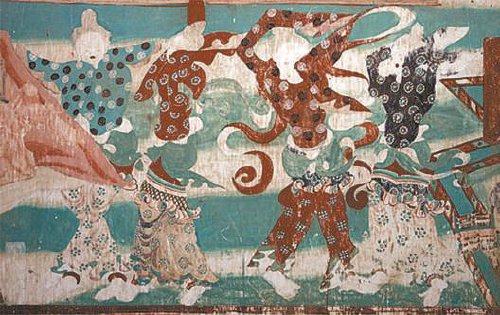
Core Viewpoint - The article discusses the significance of the Dunhuang mural "Lao Duocha Dou Sheng Bian," highlighting its representation of Buddhist themes and its reflection of Tang Dynasty legal and social governance practices [4][5][12]. Group 1: Mural Significance - "Lao Duocha Dou Sheng Bian" is a major theme in Dunhuang murals, depicting the contest between the Buddhist disciple Shariputra and the non-Buddhist leader Lao Duocha, ultimately showcasing the victory of Buddhism [4][5]. - The mural serves as a classic example of the integration of "Bianwen" art and mural art during the late Tang period, with the most complete examples found in caves 9 and 196 of the Mogao Caves [5][6]. Group 2: Legal and Social Governance - The mural illustrates the judicial and social governance of the Tang Dynasty, depicting a scene that reflects the legal system's details and the intertwining of legal norms and religious beliefs in ancient Dunhuang [5][8]. - The central figure in the mural, a king-like character, symbolizes the authority of law and governance, embodying the political logic of the ruler as the central figure in maintaining order [6][7]. Group 3: Judicial Principles - The symmetrical layout of the mural represents the principle of equality in judicial proceedings, where both parties in a dispute are depicted with equal status, reflecting the Tang Dynasty's legal principle of equal representation [9][10]. - The absence of barriers in the mural's composition signifies the transparency of judicial processes in the Tang Dynasty, allowing public observation of trials, which served to prevent corruption and educate the populace about legal principles [11][12]. Group 4: Conflict Resolution - The resolution of the conflict in the mural, where Lao Duocha submits and converts to Buddhism, symbolizes the dual approach to dispute resolution in ancient Dunhuang, combining official judicial decisions with religious mediation [12][14]. - The mural emphasizes that the goal of judicial outcomes was not merely punishment but the restoration of harmony, aligning with the ancient Chinese value of conflict resolution through reconciliation [14][15].