公园+

Search documents
“十四五”上海森林覆盖率上升至19.5% “公园+”“花展+”焕发活力
Xin Lang Cai Jing· 2026-01-07 12:05
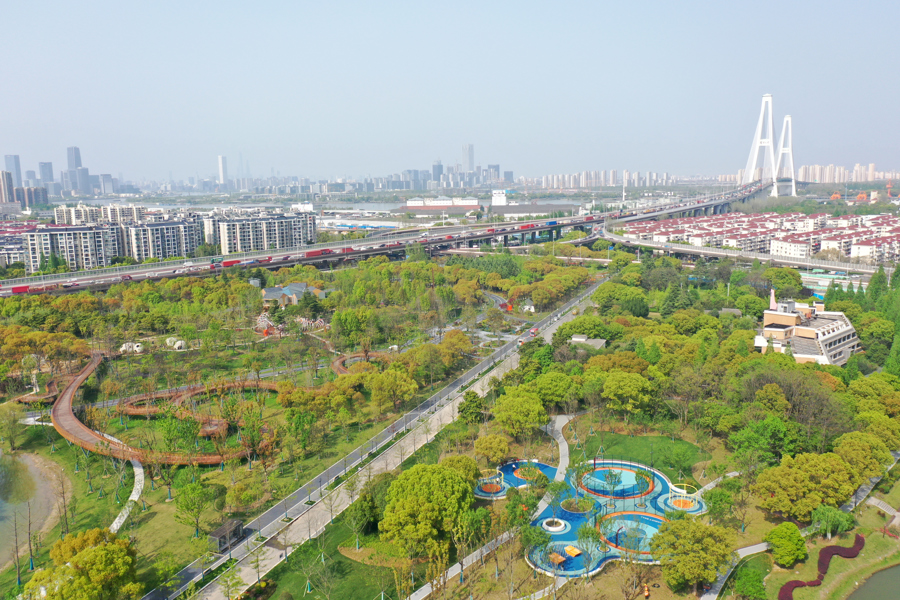
Group 1: Achievements in Urban Greenery and Ecology - Shanghai's forest coverage increased from 18.49% to 19.5% by the end of the 14th Five-Year Plan, with per capita park green space rising from 8.5 square meters to 9.5 square meters [1] - The total number of parks in Shanghai surpassed 1,000, with 2,573 hectares of new park green space and 1,040 kilometers of new greenways established [1] - During the 14th Five-Year Plan, Shanghai added 240,000 acres of forest area and opened 250 recreational forest lands, enhancing the ecosystem service value [1] Group 2: Waste Management and Recycling Improvements - Shanghai achieved 100% harmless treatment of municipal solid waste, with recycling rates increasing from 38% to 45% [2] - The volume of dry waste collection decreased by 13.5% compared to before the implementation of the 2019 waste management regulations, while the separation of recyclable, hazardous, and wet waste increased significantly [2] - The resource utilization rate of municipal solid waste reached 86.8%, maintaining zero landfill for original waste [2] Group 3: Future Goals for Urban Development - The 15th Five-Year Plan aims to create a modern, resilient, and beautiful city with high-quality development in green spaces and urban environments by 2030 [3] - Goals include establishing a "park city" characterized by natural coexistence and urban-park integration, as well as a "clean city" that is aesthetically pleasing and vibrant [3] - The plan emphasizes a comprehensive urban park system and an environmentally friendly waste management system that is resource-efficient, low-carbon, and smart [3]
保定“公园+”打造全龄友好“幸福空间”
Xin Lang Cai Jing· 2026-01-04 23:12
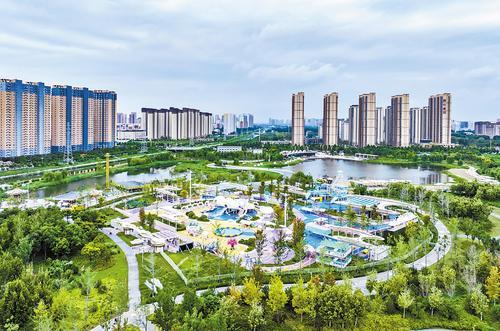
Core Insights - Baoding City is implementing the "Park+" concept to enhance urban public spaces, creating a multi-functional environment that caters to diverse age groups and activities [3][4][5] Group 1: Park Development - The transformation of idle grasslands into an ice and snow amusement park has significantly improved visitor experiences, with the special slide area attracting over 800 visitors daily since its opening [3] - Baoding has built 470 parks, achieving a park green space service radius coverage of 86.42% [3] Group 2: Integration of Activities - The "Park+Sports" initiative includes the establishment of sports facilities such as tennis and football fields, promoting community fitness through organized sports events [4] - "Park+Science" features five "Nature Classrooms" in parks, offering courses on plant identification and gardening, ensuring science education is accessible to all age groups [4] - "Park+Culture" leverages park resources to host various cultural events, including flower exhibitions and traditional festivals, enriching community life [4] Group 3: Community Services - The "Park+Service" approach includes health lectures and free consultations, enhancing public health awareness and accessibility [5] - Parks near schools are being modified to be more family-friendly, with added amenities such as waiting areas for parents and bike parking [5]

拓展“公园+”城市更宜居
Jing Ji Ri Bao· 2025-09-23 22:13
Core Viewpoint - The increasing urbanization and lifestyle changes have led to a growing demand for diverse and experiential activities in urban parks, which are becoming essential for enhancing urban livability and ecological quality [1][2]. Group 1: Urban Park Development - Urban parks are crucial for improving ecology, beautifying environments, and providing recreational spaces, with the upcoming "Urban Park Management Measures" in 2024 setting specific guidelines for planning, construction, protection, and management [1][3]. - Cities are removing barriers and extending service hours, exploring underutilized spaces, and integrating sports and cultural activities into parks, transforming them into multifunctional public spaces [2][4]. Group 2: Challenges and Solutions - The expansion of parks raises maintenance costs and financial pressures, while the introduction of large structures may compromise ecological functions, leading to concerns about parks becoming commercialized [2][3]. - A comprehensive governance mechanism is needed to enhance coordination in park management, ensuring that social, economic, and ecological benefits are achieved simultaneously [3][4]. Group 3: Community Engagement and Differentiation - It is essential to avoid a one-size-fits-all approach in park construction, encouraging the integration of local characteristics and public participation in park development [4]. - Implementing a "citizen park manager" system and utilizing technology to gather community needs can foster a sense of ownership and enhance the vibrancy of urban parks [4].
千座公园筑起上海“绿色家底” “千园之城”的基础是数量 但关键是品质 让公园也成为一种全新的城市多功能空间载体
Jie Fang Ri Bao· 2025-08-28 01:42
Core Points - Shanghai has achieved the milestone of becoming a "City of a Thousand Parks," marking a new phase in urban development [5][6] - The long-term goal is to reach 2,000 parks by 2035, with a focus on enhancing ecological benefits for residents [6][8] - The development of parks is seen as a crucial element in improving urban resilience and quality of life [9][10] Urban Planning and Development - The Xu Hui West Coast Natural Art Park, covering approximately 300,000 square meters, is part of the city's initiative to enhance green spaces [4] - The city aims for a 500-meter service radius for park green spaces within urban development boundaries, targeting an average of over 13 square meters of park area per person [8] - The transformation of urban spaces into parks is a response to the need for ecological solutions to urban challenges [8][10] Community Engagement and Quality - The design and development of parks increasingly involve community input, as seen in the Xu Hui West Coast Natural Art Park, where local children's ideas influenced the design [22][23] - The concept of "Park +" is being promoted, integrating parks with commercial, community, and cultural activities to enhance their functionality [18][19] - The removal of barriers around parks is intended to foster better connections between public spaces and the community [19][20] Environmental Impact - Parks play a vital role in urban ecology by providing cooling effects, improving air quality, and managing stormwater [10] - The transformation of previously neglected areas into parks demonstrates a commitment to enhancing urban biodiversity and community well-being [16][21] - The focus on high-quality park spaces aims to stimulate public engagement and participation in urban life [21][22]