半相合异基因造血干细胞移植

Search documents
为极重型再生障碍性贫血患儿点亮生命之光
Xin Lang Cai Jing· 2026-01-02 21:37
Core Viewpoint - The successful implementation of haploidentical stem cell transplantation for a child with severe aplastic anemia at Tianjin Children's Hospital marks a significant breakthrough in the treatment capabilities for critical blood disorders in children [1][2]. Group 1: Medical Achievement - The child underwent haploidentical stem cell transplantation under the guidance of experts from Peking University People's Hospital, with the new hematopoietic system showing orderly reconstruction post-transplant [1]. - Severe aplastic anemia is characterized by rapid onset and progression, leading to near-total failure of the child's hematopoietic function, making the condition life-threatening [1]. Group 2: Technological Advancement - The haploidentical transplantation technique used is recognized internationally as a high-difficulty frontier technology, overcoming the traditional requirement for complete HLA compatibility between donor and recipient [1]. - This advancement allows relatives, such as parents, to serve as potential donors, addressing the global challenge of donor shortages [1]. Group 3: Implementation of the "Beijing Plan" - The "Beijing Plan," developed by Peking University Blood Disease Research Institute, accounts for over 95% of haploidentical transplants in China and was deemed the most suitable option for the child due to severely low bone marrow function [2]. - The collaboration between Tianjin Children's Hospital and leading experts, including Professor Cheng Yifei, ensured a personalized and precise approach to the transplantation process, enhancing the likelihood of success [2]. Group 4: Future Implications - The successful application of this technology is seen as a critical step towards not only benefiting more children with leukemia and aplastic anemia but also expanding treatment options for congenital immunodeficiencies and rare genetic metabolic diseases [2].
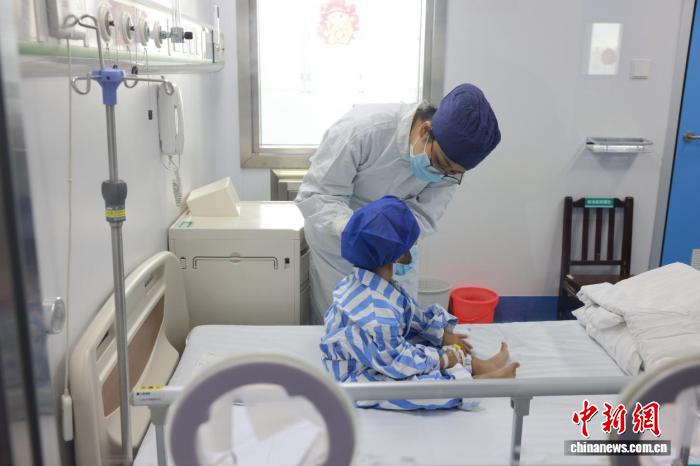
越南地贫患儿广西接受造血干细胞移植 顺利出仓
Zhong Guo Xin Wen Wang· 2025-11-24 23:36
Core Viewpoint - The successful stem cell transplant of a 7-year-old Vietnamese thalassemia patient marks a significant achievement in cross-border healthcare collaboration between Guangxi, China, and four provinces in Vietnam [1][3]. Group 1: Project Overview - The "Severe Thalassemia Treatment Project" initiated on May 20, 2023, is a collaboration between the Guangxi Health Commission, the Guangxi Red Cross, and the health departments of four Vietnamese border provinces [3]. - Guangxi Medical University First Affiliated Hospital is the core medical unit for this project, leveraging its expertise in thalassemia prevention and treatment [3][4]. Group 2: Patient Treatment Details - The patient, referred to as "Little Candy," underwent a half-matched unrelated donor stem cell transplant, which is more challenging than a fully matched transplant due to higher risks of complications [3][4]. - Little Candy was admitted to the China-ASEAN Medical Cooperation Center on September 14, 2023, and successfully navigated critical phases of treatment, including bone marrow suppression and infection peaks [4]. Group 3: Treatment Outcomes - After 67 days of treatment, Little Candy's hematopoietic function has largely recovered, she no longer requires blood transfusions, and has not experienced any rejection or complications [1][4].