单调栈

Search documents
实习生摸鱼被大厂开了。。
猿大侠· 2025-12-22 04:11
Group 1 - The article discusses a recent incident where an intern was fired from a major tech company for being caught using his phone during work hours, highlighting the intense competition and lack of respect for employees in such firms [2]. - It mentions that only one out of four interns is likely to be retained, indicating a highly competitive environment where performance is scrutinized [2]. - The article suggests that working in a company that treats employees disrespectfully may lead to a poor work experience, even if one manages to secure a full-time position [2]. Group 2 - The article includes an algorithm problem from LeetCode, specifically problem number 496, which involves finding the next greater element for each number in a subset array [3][4]. - It provides examples of input and output for the algorithm, demonstrating how to determine the next greater element for given arrays [6][10]. - The problem can be solved using a monotonic stack approach, which efficiently tracks the next greater elements while iterating through the array [7][11].

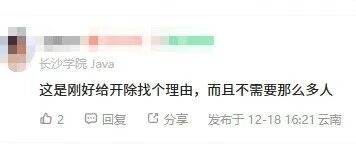
为了不让实习生下班走,故意每晚9:30开会
猿大侠· 2025-10-01 04:11
Core Viewpoint - The article discusses a specific algorithm problem from LeetCode, focusing on the "132 pattern" in an integer array, and provides a detailed explanation of how to solve it using a monotonic stack approach [4][9]. Summary by Sections Algorithm Problem Description - The problem is to determine if there exists a subsequence in the array that follows the "132 pattern," where for three integers nums[i], nums[j], and nums[k], the conditions i < j < k and nums[i] < nums[k] < nums[j] must hold true [5][9]. Examples - Example 1: For the input nums = [1,2,3,4], the output is false, indicating no "132 pattern" exists [6]. - Example 2: For the input nums = [3,1,4,2], the output is true, as the subsequence [1, 4, 2] satisfies the "132 pattern" [8]. Problem Analysis - The solution involves using a monotonic stack to efficiently find the "132 pattern." An auxiliary array, leftMin, is used to track the minimum values to the left of each element [9][10]. Implementation Details - The algorithm iterates from the end of the array to the beginning, checking for the "3" in the "132 pattern" and using the stack to find the corresponding "2" and "1" [10][12]. - The Java and C++ implementations of the algorithm are provided, demonstrating how to set up the leftMin array and the stack operations [10][13].