
南海主权维护

Search documents
解放军轰炸机在黄岩岛战备警巡
Xin Lang Cai Jing· 2026-02-01 06:55
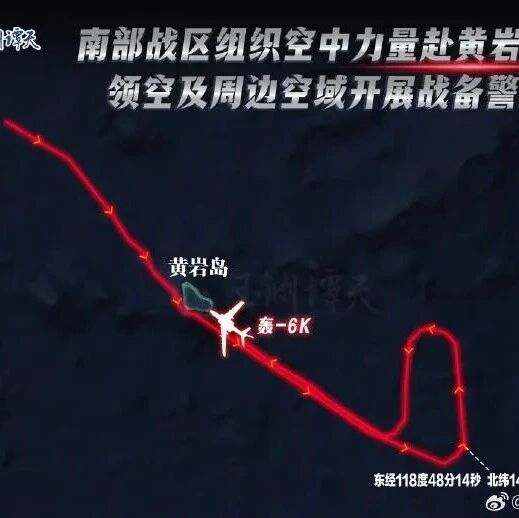
而对于菲方长期搅动地区局势,拉拢域外国家在这里搞演习、搞破坏性行动、搞南海军事化挑衅。中方 有足够的实力来反制菲方的任何挑衅,但为了维护地区的和平稳定保持了非常好的克制。 南部战区此次巡航活动,尤其是轰炸机航线,反映出我国对黄岩岛领海领空的实际管辖。同时也对菲方 形成了实质的批驳,菲方所谓演习区域实际上是无效的,它提出在演习区域禁空等这些要求完全没有效 果,完全是纸上谈兵,一纸空文。中方用实际行动批驳了菲方的险恶用心和图谋。 同时,中国在南海的海上力量,数次对菲律宾人员及船只进行人道主义救援,发挥了非常好的国际主义 精神和专业素养,受到国际社会的广泛关注。中方一直致力于把南海打造成为和平之海、合作之海、友 谊之海。 昨天,中国人民解放军南部战区组织海空兵力位中国黄岩岛领海领空及周边海空域开展战备警巡。 1月份,中国人民解放军南部战区持续组织海空兵力位中国黄岩岛领海领空及周边海空域开展战备警 巡。已公开的航线示意图显示,南部战区轰-6K轰炸机、歼击机组成编队飞抵黄岩岛空域后,沿东南方 向空域巡航。 中国现代国际关系研究院海洋战略研究所杨霄表示,近期,菲律宾非法划设演习区,不仅侵入到我国南 海海域,还覆盖了我国领 ...
解放军战备警巡,轰炸机航线公布!
证券时报· 2026-01-31 08:35
Core Viewpoint - The article discusses the recent military activities of the People's Liberation Army (PLA) Southern Theater Command in the South China Sea, particularly around Huangyan Island, emphasizing China's assertion of sovereignty and response to perceived provocations from the Philippines [2][4]. Summary by Sections Military Activities - In January, the PLA Southern Theater Command organized air and naval forces for combat readiness patrols in the waters and airspace surrounding Huangyan Island, showcasing military presence and operational capability [1][2]. - The patrols included formations of H-6K bombers and fighter jets, which conducted flights in the southeastern airspace of Huangyan Island [1]. Response to Provocations - The article highlights that the Philippines has illegally designated a military exercise area that encroaches upon China's territorial waters, particularly affecting Huangyan Island, which China views as a serious infringement of its sovereignty [2]. - The Southern Theater Command's patrols serve as a practical rebuttal to the Philippines' claims, indicating that the Philippines' proposed no-fly zone is ineffective and merely theoretical [2]. Humanitarian Efforts and Regional Stability - China has engaged in humanitarian rescue operations for Filipino personnel and vessels, demonstrating a commitment to international cooperation and peace in the South China Sea [4]. - Despite having the capability to counter any provocations from the Philippines, China has exercised restraint to maintain regional stability, while the patrols serve as a warning against further Filipino provocations [4].

国防部新闻发言人就近期涉军消息答记者问
Xin Hua She· 2026-01-16 09:37
Group 1 - The core viewpoint emphasizes the strengthening of defense and security cooperation between China and Laos, highlighting high-level exchanges and joint military exercises [2] - China aims to deepen military relations with Laos through various collaborative activities, including training programs and educational exchanges [2] - The Chinese military's commitment to enhancing the security capabilities of Laos is underscored, reflecting a strategic partnership aimed at regional stability [2] Group 2 - Concerns are raised regarding Japan's militarization and the potential dangers it poses, with warnings that unchecked militarism could lead to catastrophic consequences for Japan and its neighbors [3] - The statement reflects a broader sentiment against the resurgence of militarism in Japan, emphasizing the need for collective action to prevent such developments [3] Group 3 - China's assertion of sovereignty over the South China Sea is reiterated, with a strong defense of its actions as legitimate and necessary for protecting its rights [4] - The response criticizes the Philippines for misrepresenting China's actions and urges them to cease provocations that threaten regional peace [4] Group 4 - The Taiwan issue is framed as an internal matter for China, with a clear stance against external interference and a commitment to countering separatist movements [5] - The sentiment reflects a strong resolve to take measures against "Taiwan independence" forces, indicating a readiness to act decisively [5] Group 5 - Public opinion in Taiwan shows a significant majority favoring peace and stability over conflict, indicating a disconnect between the current administration's actions and the desires of the populace [6] - The statement suggests that the "Taiwan independence" movement is increasingly viewed negatively, with a prediction that such forces will ultimately fail [6]