压岁钱

Search documents
1700年贵霜铜币当压岁钱,古币里的年味
Xin Lang Cai Jing· 2026-02-23 12:30
Group 1 - The article discusses the cultural significance and evolution of "lucky money" or "压岁钱" in Chinese tradition, highlighting its historical roots and modern interpretations [5][7][8] - It mentions the practice of giving lucky money during the New Year celebrations, which has transformed over time from physical currency to symbolic gestures [6][7] - The narrative includes anecdotes about the author's experiences with lucky money, illustrating its emotional and cultural value beyond mere monetary worth [5][6][9] Group 2 - The article references historical customs related to lucky money, such as the practice of attaching auspicious messages or poems to the money given to children, emphasizing the educational and moral aspects of the tradition [8][9] - It contrasts the traditional forms of lucky money with contemporary practices, noting a decline in cash usage and the rise of alternative forms of gifting, such as creative or artistic expressions [7][8] - The discussion includes examples of how artists and writers have incorporated the theme of lucky money into their works, reflecting its ongoing relevance in cultural narratives [9][10]

王子今:压岁钱的来历
Xin Lang Cai Jing· 2026-02-17 02:18
Core Viewpoint - The article discusses the cultural significance and historical evolution of "压岁钱" (lucky money) in Chinese New Year traditions, highlighting its role in family interactions and the customs surrounding it [1][3][12]. Summary by Sections Historical Context - "压岁钱" is a widespread folk custom in China, traditionally given by elders to children during the New Year celebrations [3][4]. - The origins of "压岁钱" are not clearly defined, but it has been referenced in various historical texts, indicating its long-standing presence in Chinese culture [3][4][12]. Cultural Practices - The practice involves children receiving money from their elders, often placed under their pillows or in special red envelopes, symbolizing good luck and prosperity for the coming year [8][9][12]. - Different regions have variations in the customs associated with "压岁钱," including the use of colorful strings to tie the money and specific rituals performed during the New Year [4][12][19]. Literary References - Numerous literary works and historical documents mention "压岁钱," illustrating its significance in Chinese literature and culture [11][12][19]. - The term has appeared in various forms, such as "押岁钱," "岁钱," and "守岁钱," reflecting regional dialects and customs [12][19][20]. Modern Interpretations - In contemporary society, "压岁钱" continues to be a cherished tradition, with children eagerly anticipating the money as part of the New Year festivities [9][12]. - The practice has evolved, with some families incorporating modern elements while maintaining the core cultural significance of "压岁钱" [12][19].
突然火了,压岁钱给多少合适?网友:这做法可全国推广
Xin Lang Cai Jing· 2026-02-16 11:53
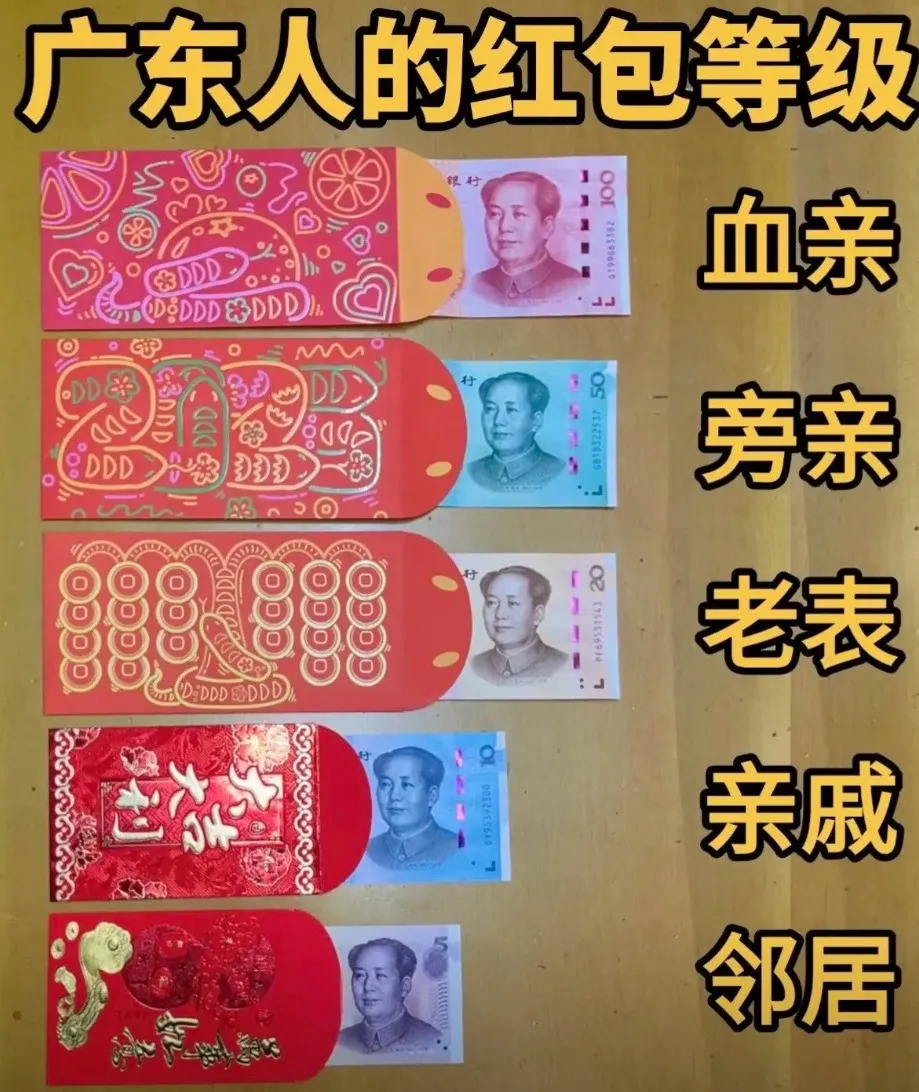
Group 1 - The article discusses the cultural significance of "lucky money" (压岁钱) during the Chinese New Year, highlighting a viral graphic that outlines appropriate amounts to give based on familial relationships, such as 100 yuan for close relatives and 5 yuan for neighbors [1][3] - It mentions that the amounts of lucky money have been increasing over the years, with children receiving anywhere from hundreds to thousands of yuan [3][7] - The article emphasizes the importance of teaching children how to manage their lucky money according to their age, suggesting different approaches for preschoolers, elementary school students, and teenagers [7][8][10] Group 2 - For preschoolers (ages 3-6), parents are advised to allow a small portion of the lucky money for free spending while guiding them on the remaining amount for savings or educational funds [7] - For elementary school children (ages 6-12), parents should involve them in counting their lucky money and discussing potential purchases, encouraging a "dream list" while promoting reasonable spending [8] - For teenagers (ages 13-18), it is recommended that parents allow them more independence in managing their lucky money, guiding them on saving, investing, and spending wisely [10]