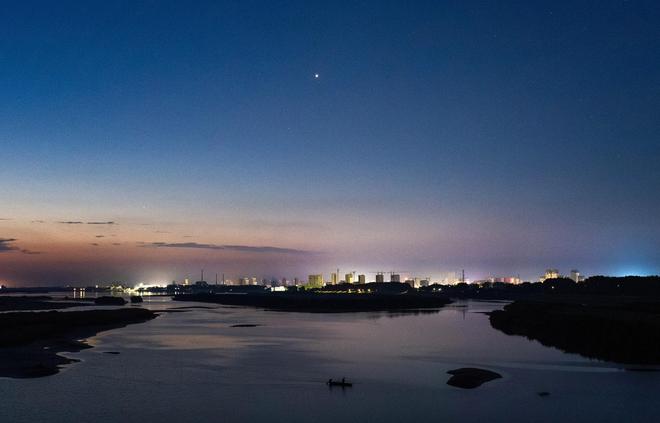
启明星

Search documents
这两天早起后,记得抬头看!
Qi Lu Wan Bao· 2025-10-18 00:59
Core Viewpoint - The article highlights the upcoming celestial event where Venus, known as the "Morning Star," will appear alongside a crescent moon on October 19 and 20, providing a unique opportunity for public observation in clear weather conditions [1][6]. Group 1: Celestial Event Details - The event will occur in the early morning before dawn, with Venus and the crescent moon visible in the eastern sky [1][6]. - On October 19, the moon will be slightly farther from Venus, while on October 20, they will be closer together, making the latter day more challenging to observe due to the moon's slender appearance [6][8]. - The observation window for this event will last approximately one hour before sunrise, allowing enthusiasts to witness the conjunction of Venus and the moon [10]. Group 2: Observational Insights - Venus is one of the brightest celestial bodies and is often easily observable, especially when paired with the moon, which is also one of the brightest objects in the night sky [3][5]. - The phenomenon of Venus accompanying the moon is particularly favorable for photography and visual observation due to the contrasting brightness of both celestial bodies [3][8]. - The event is described as a romantic and poetic occurrence in the sky, despite the actual vast distances between Venus, the moon, and Earth [8][10].

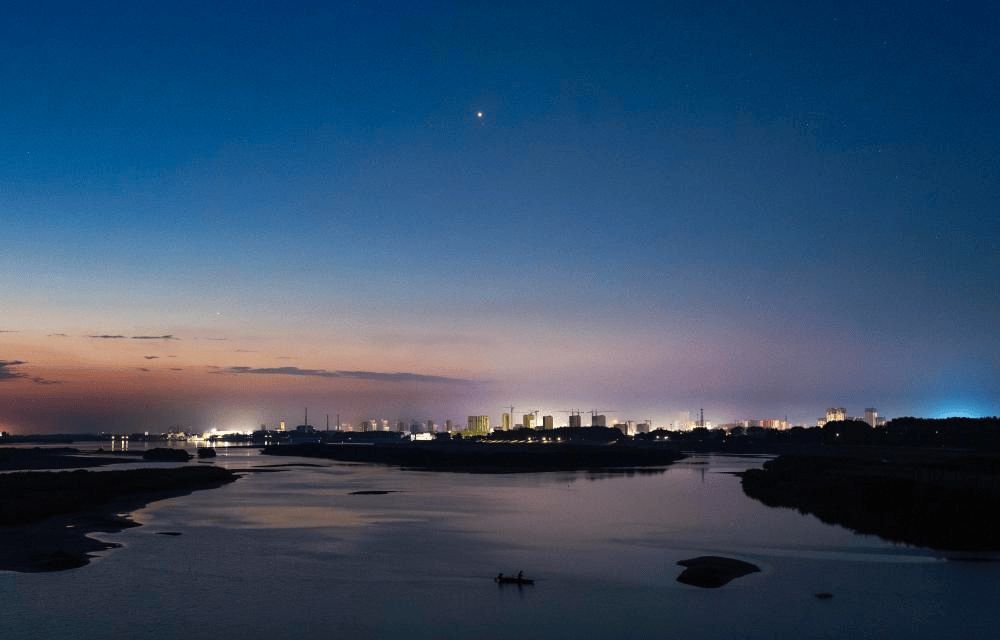
限时观测!19、20日启明星伴月现身天宇
Xin Hua She· 2025-10-17 10:16
Core Points - The article discusses the upcoming celestial event where Venus, known as the "Morning Star," will closely accompany a crescent moon on October 19 and 20, providing a romantic visual spectacle for observers in China if the weather permits [1][4][9] Summary by Sections - **Celestial Event Description** - Venus will be visible as the "Morning Star" before dawn, accompanied by a crescent moon, creating a picturesque scene in the eastern sky [1][4] - The event is particularly favorable for observation and photography due to the brightness of both Venus and the moon [2][8] - **Visibility and Timing** - The best viewing opportunity will occur in the early morning before dawn, with a window of about one hour [9] - On October 19, the moon will be slightly farther from Venus, while on October 20, they will be closer together, making the latter day more challenging to observe [4][8] - **Astronomical Context** - Venus is one of the eight planets in the solar system and is often visible for about ten months each year, playing the role of the "Morning Star" from late March to the end of the year [2][4] - The phenomenon of Venus accompanying the moon is a common occurrence, but it is particularly striking due to the brightness of both celestial bodies [2][8]