商代北疆方国文明

Search documents
陕西清涧寨沟遗址:黄土高原上的文明交融密码(下)
Xin Lang Cai Jing· 2026-01-12 18:00
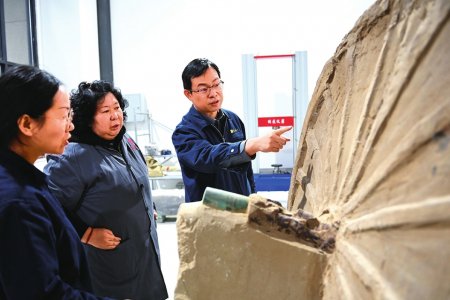
Core Viewpoint - The archaeological discoveries at the Zhaigou site in Shaanxi Province reveal significant insights into the cultural and technological advancements of the late Shang Dynasty, challenging previous understandings of the region's historical role in bronze civilization [8][12]. Group 1: Archaeological Findings - The Zhaigou site has yielded high-status burial artifacts, including a "甲" shaped large tomb and bronze ritual vessels, indicating a strong local production capability rather than merely being an input area for bronze civilization [8][12]. - The discovery of a beautifully decorated double-yoke chariot in tomb M3 pushes back the timeline for the emergence of such vehicles in China to the late Shang period, highlighting local advancements in vehicle manufacturing [9]. - The site also features the earliest known wooden flooring in China, showcasing innovative building techniques adapted to the Loess Plateau environment [9]. Group 2: Cultural Exchange and Adaptation - The presence of various artifacts such as mud clams, currency shells, and crocodile bones from regions as far as the Yangtze and Pearl River basins illustrates the active trade and cultural exchange networks during the late Shang period [9]. - The architectural design of the site, including sunken courtyards and towering rammed earth walls, reflects a sophisticated adaptation to the local environment [9]. Group 3: Social Structure Insights - Analysis of human remains indicates that the aristocracy had a significantly higher intake of animal protein compared to commoners, suggesting a clear social stratification [11]. - The prevalence of bone inflammation among the population may be linked to their labor-intensive lifestyle in the rugged terrain of the Loess Plateau [11]. Group 4: Unresolved Mysteries - The absence of inscriptions on the discovered artifacts raises questions about the identity of the powerful state associated with the Zhaigou site, as inscriptions typically serve as crucial markers of tribal identity in Shang Dynasty archaeology [12]. - Various hypotheses exist regarding the lack of inscriptions, including cultural practices that avoided marking burial items or the possibility of significant looting over time [12]. Group 5: Historical Significance - The findings at the Zhaigou site significantly enhance the understanding of the northern frontier of the Shang Dynasty, providing critical evidence for the interactions between early states and their surrounding regions [13].