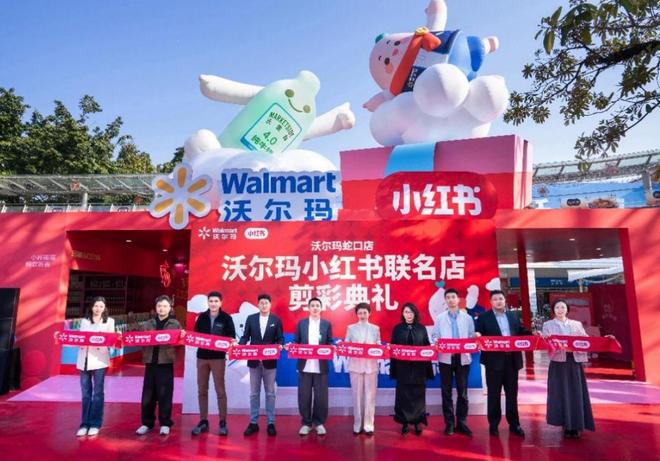
商品与购物场景深度融合

Search documents
沃尔玛与小红书达成深度合作 首推联名商品及创新体验空间
Huan Qiu Wang Zi Xun· 2026-01-17 06:38
Core Insights - Walmart and Xiaohongshu have announced a deep collaboration to integrate products and shopping experiences, launching nearly 20 co-branded products and the first "Mashi Store" innovative retail space in China [1][3] - The partnership aims to respond to the shift in consumer shopping decisions towards "high value, interest exploration, and emotional resonance" [1] Group 1: Collaboration Details - The initial product line, "Wojixian × Xiaohongshu | Treasure New Products," includes categories such as baking, dairy, health drinks, and snacks, emphasizing simple ingredients and globally sourced materials [3] - Notable ingredients include New Zealand imported butter, Belgian cocoa butter chocolate, and award-winning coffee beans, along with creative items like cilantro-flavored yogurt and Mahjong-shaped cookies [3] Group 2: Retail Experience Innovation - The "Mashi Store" in Shenzhen breaks traditional shelf display models by creating eight "interest islands" focused on customer interests, such as "Aesthetic Justice Island" and "Ingredient Assurance Island" [3] - This store design aims to extend online "grass planting" content into offline spaces, providing an integrated shopping cycle of "discovering inspiration - immersive experience - convenient purchase" [3] Group 3: Strategic Goals and Market Position - Walmart's senior vice president and chief purchasing officer stated that this collaboration helps the company align more closely with customer lifestyles and continuously create value [3] - Xiaohongshu's CMO noted significant growth in search volume and interest in Walmart within the Xiaohongshu community over the past year, highlighting the success of the partnership [3] - Walmart becomes the first full-channel retail supermarket brand to enter the Xiaohongshu e-commerce platform, with hundreds of stores across over 100 cities in China, while Xiaohongshu's monthly active users are projected to exceed 350 million by the end of 2024 [3]