国际共产主义

Search documents
理响中国|多有贡献,这是白求恩的最后心声
Zhong Guo Xin Wen Wang· 2025-08-19 05:39
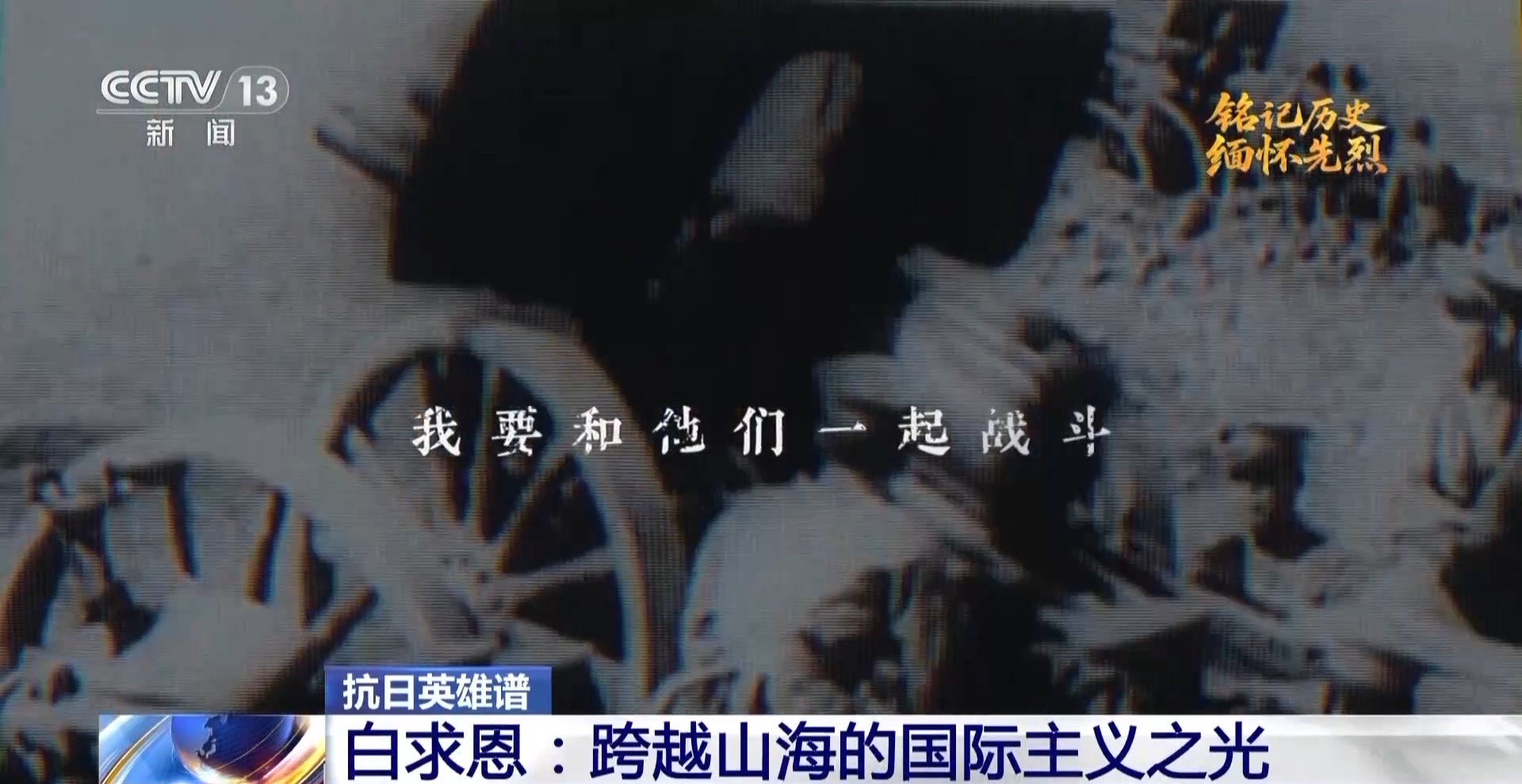
"我在这里十分愉快,我唯一的希望就是能够多有贡献。"1939年,白求恩在弥留之际写下最后心声,字 字不见生死忧惧,唯有"多有贡献"的信仰灼灼燃烧,一起聆听这位伟大的国际共产主义战士的永恒心 声。 ...
抗日英雄谱丨“毫不利己,专门利人”:他用49年写就“纯粹的人”
Yang Shi Xin Wen· 2025-07-12 04:04
Core Viewpoint - The article commemorates Norman Bethune, a Canadian doctor who selflessly aided the Chinese during the Anti-Japanese War, highlighting his contributions and sacrifices in the medical field [1][35]. Group 1: Background and Arrival - Norman Bethune was born in 1890 and joined the Canadian Communist Party in 1935. He went to Spain to assist in the Spanish Civil War before arriving in China in January 1938 to support the Chinese people's struggle against Japanese aggression [1][3]. - Upon his arrival in China, Bethune faced numerous challenges but managed to reach Yan'an by the end of March 1938, where he expressed a desire to go to the front lines [3]. Group 2: Medical Contributions - Bethune's arrival in the Jin-Cha-Ji military region was crucial for the local population, who were in dire need of medical supplies and equipment [5]. - In his first week, he examined 521 wounded soldiers and performed 147 surgeries in the following month, averaging nearly 5 surgeries per day [7]. - He not only performed surgeries but also educated medical staff and assisted craftsmen in making medical instruments, donating the surgical tools he brought from abroad to local hospitals [7][19]. Group 3: Innovations and Equipment - Among the medical equipment was a unique drug pack named "Lugou Bridge," designed to commemorate the Chinese people's resistance against Japan. This pack could facilitate 100 surgeries and 500 bandagings, serving as a mobile hospital [9][13]. - The drug pack was highly practical, allowing for quick setup as a surgical table, demonstrating Bethune's innovative approach to medical care in war zones [13]. Group 4: Dedication and Sacrifice - Bethune set up surgical stations close to the front lines to minimize the time wounded soldiers spent in transit, thereby reducing mortality rates [15][23]. - He continued to work tirelessly, performing 71 surgeries in 40 hours during a military engagement, and even delayed his return to Canada to continue aiding the Chinese resistance [19][25]. - Despite suffering an injury that led to a severe infection, Bethune remained focused on his work, expressing his commitment to the cause in a letter written shortly before his death [27][31]. Group 5: Legacy - Bethune passed away on November 12, 1939, at the age of 49, leaving behind a legacy of selflessness and dedication to humanitarian efforts [33]. - Mao Zedong later wrote a heartfelt tribute to Bethune, emphasizing the importance of his selfless spirit and the moral values he embodied [35].