地球生命演化

Search documents
“科学筑梦师”走进省科技馆
Xin Lang Cai Jing· 2026-02-17 22:46
Core Insights - The event "Science Dream Builder" organized by the Nanjing Institute of Geology and Palaeontology of the Chinese Academy of Sciences featured three immersive science reports focusing on the evolution of life on Earth and the importance of ice and snow in geological history [3][5]. Group 1: Event Overview - The event was held at the Heilongjiang Science and Technology Museum and aimed to bridge the gap between cutting-edge science and the public [5]. - It included three reports that progressed from micro-level insects to ancient human evolution, and finally to macro-level climate changes on Earth [5]. Group 2: Report Highlights - The first report by researcher Cai Chenyang focused on Mesozoic insects coexisting with dinosaurs, showcasing discoveries such as pollinating insects from 160 million years ago and giant fleas that rewrite the history of flea origins [4]. - The second report by Li Jingshu discussed the Harbin Dragon Man fossil, exploring ancient human survival strategies in harsh environments and challenging stereotypes about early humans [4]. - The third report by Zhou Min examined the Earth's 4.6 billion-year evolution, explaining the formation mechanisms of geological features like Danxia and karst landscapes, and the role of ice and snow in regulating Earth's temperature and maintaining a habitable environment [4]. Group 3: Audience Engagement - The event saw enthusiastic participation from young audiences, who actively listened and asked questions, indicating a strong interest in science [6]. - Parents expressed that such science outreach activities broadened their children's horizons and sparked their interest in scientific exploration [6]. Group 4: Future Initiatives - The Heilongjiang Science and Technology Museum plans to continue its role as a science outreach platform by introducing more quality science resources and organizing diverse science activities [6].


暑期探秘走进博物馆感受恐龙化石里的中国故事
Yang Shi Xin Wen· 2025-06-30 12:49
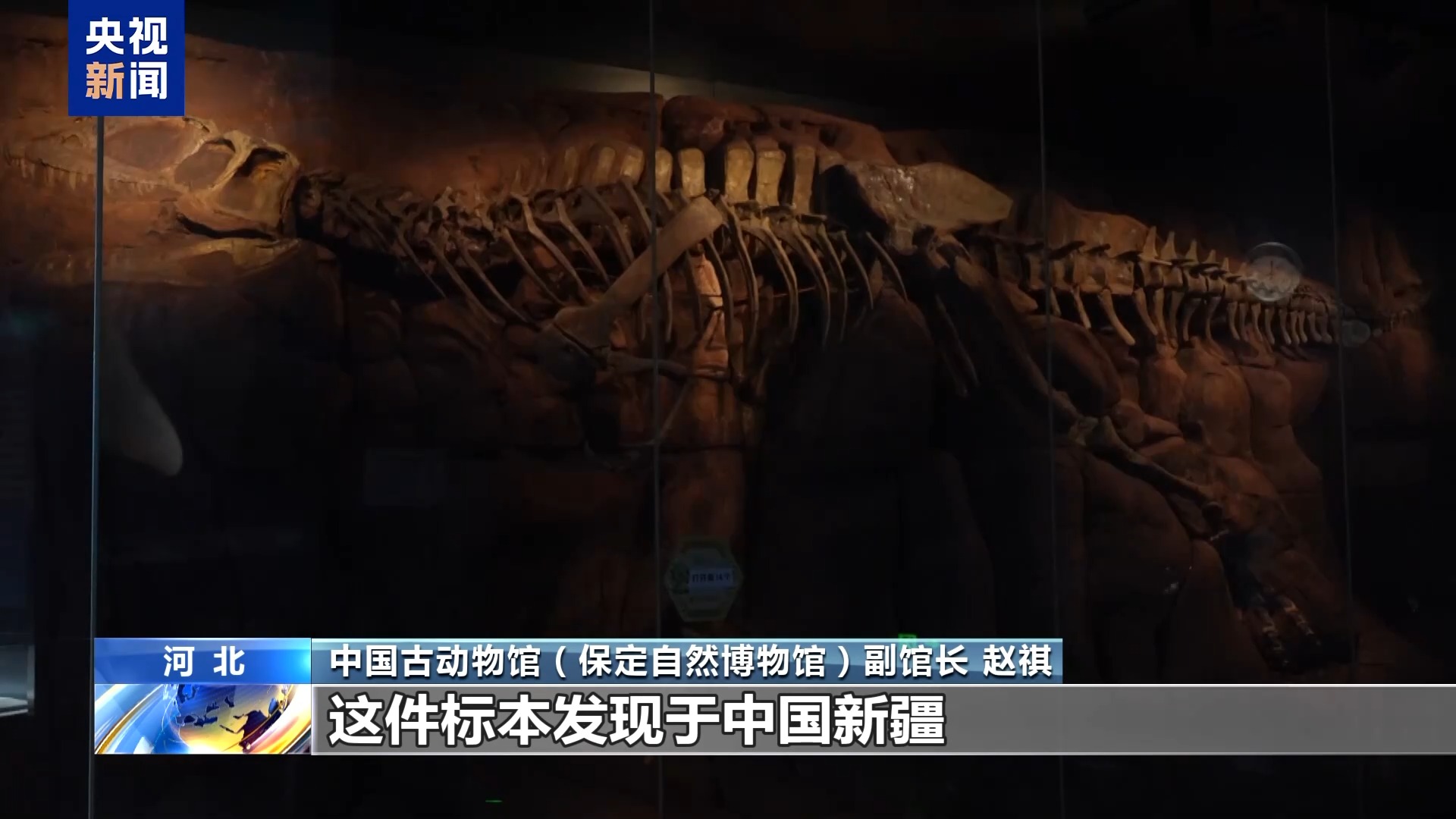
Core Points - The article highlights the significance of the Baoding Natural Museum, which features unique dinosaur fossils and utilizes technology to enhance visitor experience [1][2][9] - The museum houses the only complete skeleton of the Chinese dinosaur, Dong's Chinese Dragon, which is a rare find globally [2][3] - The discovery of the Xushi Lufeng Dragon during World War II marked a pivotal moment in Chinese paleontology, boosting national morale [3][10] - The museum's collection includes a variety of dinosaur fossils, with a focus on the Parrot-beaked Dinosaur, which has been extensively studied [5][7] - China is recognized as the country with the most dinosaur species discovered, with significant contributions from various regions [10][15] - The Chinese Academy of Sciences has a vast collection of vertebrate fossils, including feathered dinosaurs, which provide insights into the evolution of birds [12][13] - Efforts to name new dinosaur species in Chinese have been made to reflect cultural elements and regional significance [16][19] Summary by Sections Museum Highlights - The Baoding Natural Museum features the Dong's Chinese Dragon skeleton, measuring approximately 7.6 meters in length and nearly 3 meters in height, dating back 166 to 157 million years [2][3] - The museum employs advanced digital technologies like 5D cinema and AR to create an immersive experience for visitors [9] Paleontological Significance - The Xushi Lufeng Dragon, discovered in 1941, symbolizes the beginning of dinosaur research in China and served as a morale booster during difficult times [3][10] - The Parrot-beaked Dinosaur is noted for its numerous specimens and has provided valuable insights into dinosaur behavior, such as evidence of group living among juveniles [7] Research and Discoveries - China has become the leading country in dinosaur species discovery, with over 300 new species identified [15] - The Chinese Academy of Sciences holds one of the largest collections of vertebrate fossils in Asia, aiding in the understanding of evolutionary history [12][13] Cultural Integration - The initiative to name dinosaur species in Chinese has resulted in over 40 species being given names that reflect their Chinese heritage, enhancing cultural appreciation [16][19]