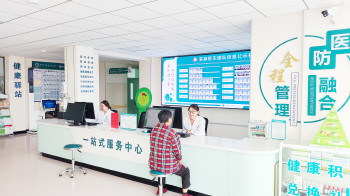
城市三级医院托管县域医共体模式

Search documents
探索集团化办医管理体制改革
Qi Lu Wan Bao· 2025-09-25 22:16
Core Viewpoint - The article discusses the innovative healthcare reform in Laixi City, which aims to address the challenges of fragmented and inadequate medical services by integrating resources and establishing a county-level medical community under the management of a city-level hospital [6][7][12]. Group 1: Healthcare Challenges - Laixi City, with a population of 720,000, previously lacked a tertiary hospital, leading to significant medical access issues for residents who had to travel long distances for complex treatments [6]. - The city had five county-level public hospitals that were competing with each other, resulting in resource dispersion and a weak healthcare system [6]. Group 2: Reform Initiatives - The reform involves a "city-level tertiary hospital managing county medical community" model, integrating existing county hospitals and healthcare facilities to create a cohesive medical network [7]. - The Qingdao Municipal Hospital, the largest tertiary hospital in the city, has been entrusted with the management of all healthcare resources in Laixi, promoting the extension of quality medical services to the county level [7][8]. Group 3: Implementation Strategies - The reform includes establishing a medical group that consolidates all public healthcare resources in Laixi, granting the Qingdao Municipal Hospital autonomy in resource allocation and personnel management [8]. - A management committee has been formed to oversee the development of the medical group, ensuring collaboration between various government and healthcare entities [8]. Group 4: Capacity Building - A total of 137 high-level experts from Qingdao Municipal Hospital have been deployed to Laixi, with 82 being permanent staff, to enhance local medical capabilities [9]. - The integration of clinical departments and the establishment of quality management committees aim to standardize healthcare services to match those of tertiary hospitals [9]. Group 5: Outcomes and Benefits - Over two years, 130 new medical technologies and projects have been implemented in Laixi, significantly improving local healthcare capabilities and filling gaps in services such as cardiac surgery [12]. - The reform has led to a 14.25% increase in emergency and outpatient visits, a 30.80% increase in surgeries, and a 42.51% increase in complex surgeries, indicating a substantial enhancement in service delivery [12]. - The average hospitalization duration has decreased by 0.52 days, and the proportion of medical service revenue has increased by 4.36 percentage points, reflecting improved operational efficiency [12]. Group 6: Community Impact - The most direct beneficiaries of the reform are the local residents, who can now access complex surgeries and medical services closer to home, enhancing their overall healthcare experience [13]. - Laixi has been recognized as a provincial model for high-quality development and medical community construction, underscoring the success of the reform initiatives [13].