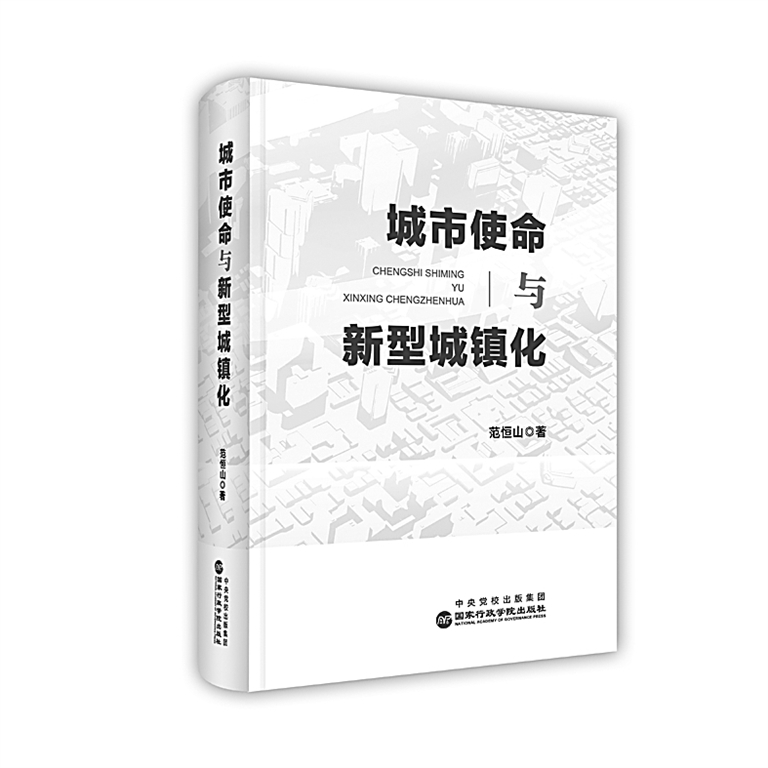
城市使命

Search documents
新型城镇化进程中的探索与经验
Xin Lang Cai Jing· 2026-02-11 19:49
Core Viewpoint - The book "Urban Mission and New-Type Urbanization" by Fan Hengshan emphasizes the unique responsibilities and functions of cities in the context of China's urbanization, proposing a "mission-oriented city" theory rooted in practical experiences and national needs [4][5]. Group 1: Concept of "Urban Mission" - The term "urban mission" highlights the special functions and responsibilities cities must undertake in human civilization, national strategy, regional development, and improving people's livelihoods [4]. - The author redefines the essence, functions, and objectives of cities, marking the beginning of a theoretical construction of "mission-oriented cities" based on Chinese practices [4]. Group 2: National Needs and Contemporary Significance - The book identifies the optimization of urban structure, coordination of regional patterns, and enhancement of development quality as key missions for cities [5]. - A significant aspect of the urban mission is to promote rural development, reflecting the importance of agricultural modernization in China's overall modernization strategy [5]. Group 3: Seven Dimensions of New-Type Urbanization - The research covers seven important areas: urban modernization direction, urban agglomeration strategies, large city governance, distinctive urban development, collaborative development of small cities, overall planning of regional economies, and urban-rural integration [6]. - The author extracts universal scientific propositions and principles from these areas, enriching the "mission-oriented city theory" [6]. Group 4: Key Measures for Urbanization Development - The book proposes seven key measures for promoting urbanization: institutional innovation for rural population transfer, optimizing industrial structure, collaborative construction of urban agglomerations, safety-oriented urban spatial optimization, leveraging technology for smart cities, promoting urban-rural integration, and advancing county and town development [7]. - The author emphasizes specific analysis for different urban clusters, providing tailored recommendations for regions like the Greater Bay Area and the Yangtze River Delta [7]. Group 5: Innovative Insights in Urban Planning - The author introduces four principles for planning: long-term consideration with high standards, highlighting style, future development benefits, and environmental considerations [8]. - The relationship between culture and cities is explored, emphasizing the value of cultural heritage in driving economic vitality and supporting urban modernization [8].