大安全大应急

Search documents
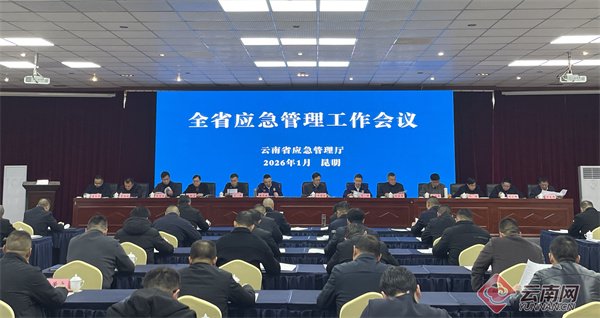
全省应急管理工作会议在昆召开 “十四五”时期云南应急管理事业成果丰硕
Xin Lang Cai Jing· 2026-01-13 13:36
Core Viewpoint - The provincial emergency management system is focused on modernizing its capabilities and ensuring safety to support high-quality economic and social development through 2026 [1][4]. Group 1: Achievements and Progress - During the "14th Five-Year Plan" period, the provincial emergency management system has made significant progress in risk prevention, with a 10.9% decrease in the number of safety incidents and a 7.0% reduction in fatalities by 2025 compared to the previous year [4]. - The province successfully managed various natural disasters, achieving an 86.7% decrease in reported forest fires, with only 2 incidents recorded during the last fire prevention period, marking a historical low [5]. - The implementation of the "1262" flood warning mechanism effectively mitigated the impact of 24 rounds of heavy rainfall and 3 severe typhoons, resulting in a 23.5% reduction in direct economic losses from disasters [5]. - The province's emergency management framework has improved, with a 50.41% decrease in safety incidents and a 46.26% reduction in fatalities from 2020 to 2025 [5]. Group 2: Future Plans and Focus Areas - For 2026, the emergency management department will focus on nine key areas, including enhancing safety production, disaster prevention, and emergency response capabilities [6]. - The department aims to complete the three-year action plan targeting major accident prevention, with a focus on high-risk industries such as non-coal mining and hazardous chemicals [7]. - Continued efforts will be made to improve natural disaster prevention capabilities, including dynamic monitoring of fire hazards and enhancing flood response mechanisms [7].

浙江夯实基层应急消防治理 放大“最小单元”作用
Zhong Guo Xin Wen Wang· 2025-12-29 13:52
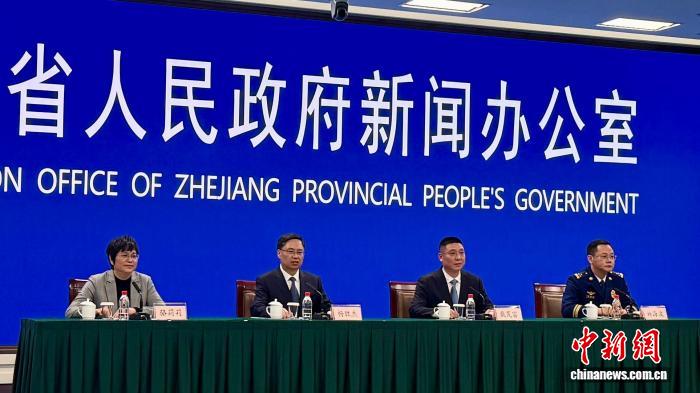
Core Insights - Zhejiang Province has made significant progress in grassroots emergency fire management, with production safety incidents and fatalities decreasing by 10.4% and 8.1% respectively, and fire incidents and deaths down by 10.5% and 26.1% year-on-year as of November [1] Group 1: Emergency Management System - The province has implemented a "three-in-one" model of emergency management, integrating fire prevention, emergency response, and rescue operations to enhance grassroots capabilities [1][2] - The establishment of emergency management command as a separate governance category has allowed for better coordination and resource allocation at the grassroots level [1] Group 2: Infrastructure and Capacity Building - Zhejiang has focused on building and upgrading emergency fire management stations, achieving full coverage of township-level stations and enhancing 700 stations and 310 professional fire teams this year [3] - The province has deployed 11.24 million pieces of small, fast-response, lightweight, and intelligent equipment to frontline emergency services [3] Group 3: Operational Effectiveness - Grassroots emergency management stations have played a crucial role in safety production and disaster risk reduction, with 91.88% of total hazard inspections conducted at the grassroots level [3] - Emergency response teams have participated in over 49,200 incidents this year, rescuing nearly 5,000 individuals and evacuating over 1,600 people [3] Group 4: Future Directions - The provincial emergency management authority aims to enhance station and team capabilities, improve equipment usage, and leverage digital tools to achieve full coverage of emergency management stations [5]
第一届“周边安全与区域发展”学术研讨会在广西南宁举办!暨南大学省级智库负责人卢文刚受邀做报告
Nan Fang Nong Cun Bao· 2025-12-02 07:26
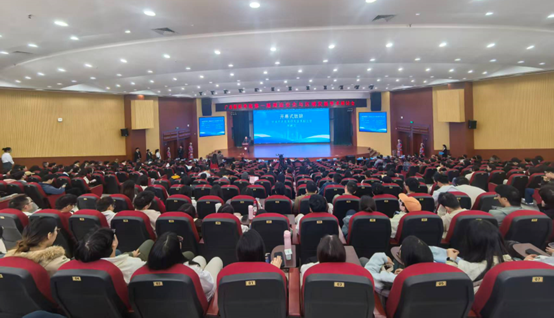
Core Viewpoint - The first "Regional Security and Development" academic seminar was held in Nanning, Guangxi, focusing on the theme of integrating development and security in line with the spirit of the 20th National Congress of the Communist Party of China [1][3] Group 1: Seminar Overview - The seminar was co-hosted by the Pacific Journal and Guangxi University of Finance and Economics, gathering over 300 representatives from various universities, research institutions, and journals [1][3] - Key topics discussed included the theoretical and practical aspects of the overall national security concept, security capabilities in key economic areas, and new explorations in regional development and security [3] Group 2: Expert Contributions - Notable speakers included Zheng Xinli, former Deputy Director of the Policy Research Office of the Central Committee, who elaborated on the dialectical relationship between national strategy and regional development [3] - Lu Wengang, Director of the Bay Area International Smart Emergency and Security Development Research Institute, presented a report on grassroots safety education practices under the overall national security concept [4][6] Group 3: Key Insights from Presentations - Lu Wengang emphasized the importance of integrating development and security during the 14th Five-Year Plan period, advocating for a comprehensive national security system and effective risk management [6] - He highlighted the need for widespread public safety education and the promotion of emergency management knowledge across various sectors, aiming to enhance public awareness and capabilities in disaster prevention and response [6]