大盗龙科

Search documents
科学家新发现南美捕食性恐龙物种
Ke Ji Ri Bao· 2025-09-26 01:24
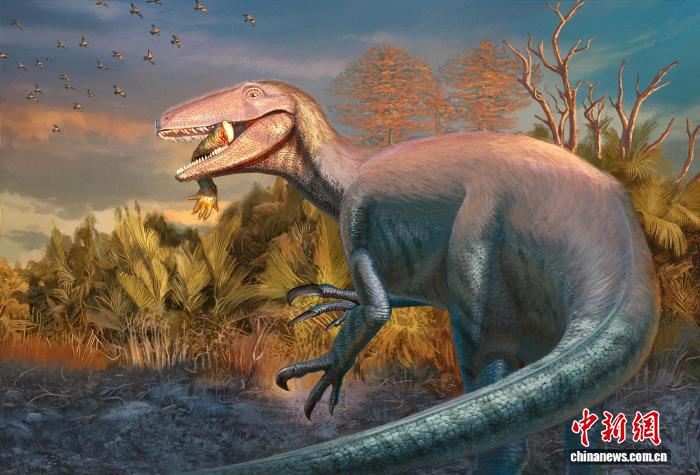
Core Viewpoint - A new predatory dinosaur species named "J.casali" has been discovered in South America, dating back to the Late Cretaceous period, making it a top predator in its region [1] Group 1: Discovery and Characteristics - The species "J.casali" belongs to the theropod family Dromaeosauridae, which existed in Asia, Australia, and South America [1] - The fossil remains include a well-preserved skull, limbs, ribs, and vertebrae, indicating a significant find for understanding this group of dinosaurs [1] - The specimen is determined to be an adult, possibly around 19 years old at the time of death, with an estimated length of about 7 meters and a weight of over 1000 kilograms [1] Group 2: Habitat and Behavior - Evidence from sediment suggests that "J.casali" lived in a warm, humid floodplain environment [1] - Fossilized crocodile leg bones found with the specimen indicate its predatory behavior, suggesting it was a top predator in its ecosystem [1] - The species is believed to have coexisted with other non-avian dinosaurs until the end of the Cretaceous period [1]
阿根廷新发现南美捕食性恐龙化石 属白垩纪晚期兽脚类大盗龙科
Zhong Guo Xin Wen Wang· 2025-09-24 07:05
Core Viewpoint - A new species of predatory dinosaur, named Joaquinraptor casali, has been discovered in Argentina, dating back to the Late Cretaceous period, approximately 70 to 66 million years ago, and is identified as a top predator in the region [1][3]. Group 1: Discovery and Characteristics - The newly discovered species belongs to the theropod family Dromaeosauridae, known for their slender skulls, strong forelimbs, and large claws, with previous understanding limited due to a lack of complete fossils [3][5]. - The fossil was found in the Lago Colhué Huapi formation in Patagonia, Argentina, and includes most of the skull, limbs, ribs, and vertebrae, indicating it is one of the most recently known dromaeosaurids [5][6]. - The estimated size of Joaquinraptor casali is about 7 meters in length and over 1,000 kilograms in weight, suggesting it was a significant predator in its environment [5][6]. Group 2: Ecological Role and Future Research - Evidence from sediment indicates that Joaquinraptor casali lived in a warm, humid floodplain environment, and the discovery of a crocodile leg bone fossil near its jaw suggests its predatory behavior [5][6]. - The authors of the study emphasize the need for further research to better understand the behavior and ecological role of Joaquinraptor casali, which, along with other dromaeosaurids, was a major predator in South America until the end of the Cretaceous [6].