寻找系外宜居行星

Search documents
瞭望 | 宇宙寻亲新路径
Xin Hua She· 2025-11-25 03:12
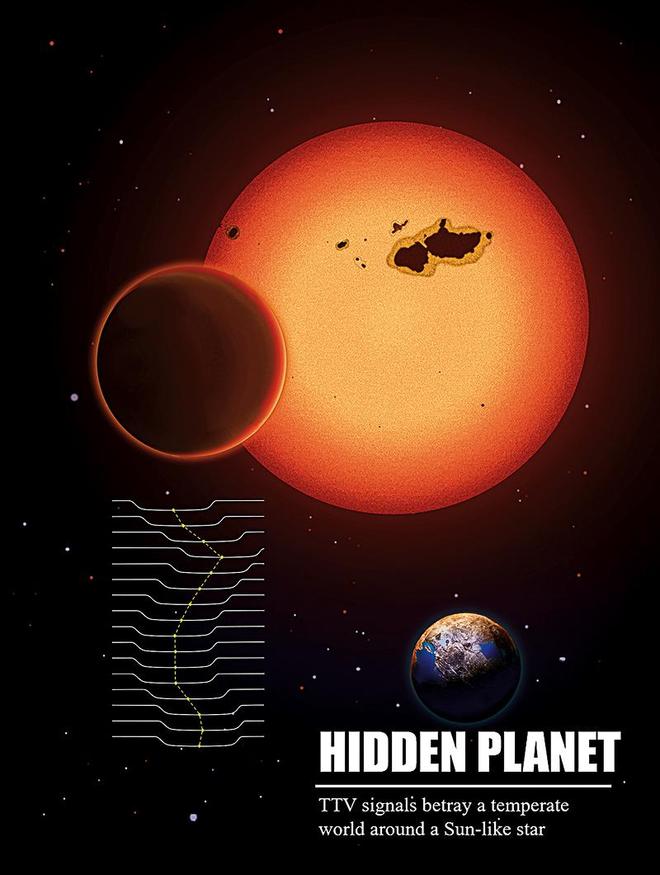
Core Insights - The discovery of the exoplanet Kepler-725c, a "super-Earth" located in the habitable zone of a sun-like star, marks a significant advancement in the search for extraterrestrial life [1][5][9] - The research team utilized a novel technique called Transit Timing Variation (TTV) inversion to identify this hidden planet, providing a new method for discovering low-mass exoplanets [6][7][9] Group 1: Discovery and Significance - Kepler-725c has a mass approximately ten times that of Earth and orbits its host star, Kepler-725, every 207.5 days, placing it within the habitable zone where liquid water could exist [5][6] - The host star, Kepler-725, is about 2,472 light-years away and is younger than the Sun, with a more active magnetic field, which may influence the habitability of surrounding planets [5][9] Group 2: Methodology - The TTV inversion technique allows scientists to detect the presence of planets by measuring slight deviations in the timing of other planets' transits, thus overcoming limitations of traditional methods like radial velocity and transit photometry [6][7] - This method does not require direct observation of the planet blocking its star's light, making it particularly useful for identifying smaller, more distant planets [7][9] Group 3: Future Implications - The successful application of TTV inversion opens new avenues for discovering more exoplanets in habitable zones around sun-like and red dwarf stars [7][9] - Ongoing and future space projects, such as the Chinese Space Station Survey Telescope (CSST) and Earth 2.0 (ET), aim to enhance the search for habitable exoplanets using advanced observational techniques [9]