
弱视

Search documents
孩子辨色异常可能是色弱信号 这些视力防控误区要避开
Xin Lang Cai Jing· 2026-01-17 04:21
Core Viewpoint - The article emphasizes the importance of early detection and intervention for children's vision issues, particularly color vision deficiencies and other visual impairments, which can significantly impact their development and future opportunities [1][2][4]. Group 1: Color Vision Deficiency - Color vision deficiency, commonly known as color blindness, is often misunderstood as a minor issue, but it can affect children's interests and academic choices [1]. - It is primarily caused by genetic factors related to the X chromosome or acquired eye diseases, with the most common type being red-green color weakness [1]. - Parents can observe signs of color vision deficiency through behavioral indicators such as low interest in colorful books and difficulty distinguishing colors in low light [2]. Group 2: Astigmatism - Astigmatism is a type of refractive error where the eye cannot focus light evenly, leading to blurred vision, and is often congenital [3]. - The condition can be hereditary, with a higher incidence in children if one parent has astigmatism [3]. - Children with astigmatism greater than 150 degrees may require glasses to improve their vision and reduce symptoms like double vision [3]. Group 3: Amblyopia (Lazy Eye) - Amblyopia is characterized by reduced vision in one or both eyes due to abnormal visual development, often linked to conditions like strabismus or uncorrected refractive errors [4][5]. - Early detection and treatment during critical visual development periods (birth to 3 years) are crucial for effective recovery [4][5]. - Treatment options include removing obstructive factors (e.g., cataracts) and using corrective lenses or vision therapy [5]. Group 4: Common Misconceptions in Vision Care - Many parents mistakenly believe that enabling "eye protection mode" on devices will prevent eye strain, but this can sometimes worsen visual fatigue [6]. - There is a misconception that using projectors is safe for children's eyes; however, close viewing distances can still lead to visual fatigue [6].
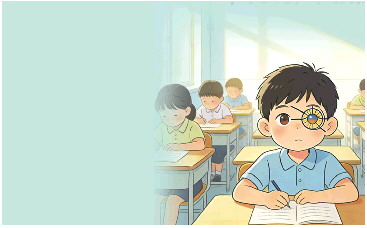
警惕“视力小偷”弱视,3-6岁是黄金干预期
Xin Lang Cai Jing· 2026-01-16 18:02
Core Viewpoint - Amblyopia, commonly known as "lazy eye," is a developmental disorder in the brain's visual cortex caused by abnormal visual experiences during critical periods of visual development in children, affecting approximately 2%-5% of children globally [2]. Group 1: Causes of Amblyopia - Refractive amblyopia occurs when there is a significant difference in refractive error between the two eyes, typically exceeding 150 degrees, leading to amblyopia in the eye with higher refractive error [2]. - Strabismic amblyopia arises when the eyes cannot align on the same target, causing the brain to suppress signals from the misaligned eye to avoid double vision, resulting in functional degradation [2]. - Deprivation amblyopia happens when congenital cataracts or other conditions block light from entering the eye during the critical visual development period, depriving visual stimulation and leading to amblyopia [2]. Group 2: Detection of Amblyopia - Amblyopia is challenging to detect as children often do not realize they have poor vision, having adapted to their visual patterns from birth [3]. - Parents should be vigilant for symptoms such as squinting, tilting the head to see, difficulty in reading and writing, clumsiness, strong resistance to covering one eye, and abnormal eye positioning or white pupils [4]. Group 3: Impact of Amblyopia - The effects of amblyopia extend beyond visual acuity, with studies indicating reduced depth perception and impaired stereopsis, particularly affecting activities requiring precise distance judgment [5]. - Untreated amblyopia can impact academic performance, career choices (e.g., limitations for pilots and surgeons), and may lead to psychological stress due to visible abnormalities like strabismus [5]. Group 4: Treatment of Amblyopia - The core principle of amblyopia treatment is "forced use," encouraging the lazy eye to work again [6]. - Optical correction through appropriate glasses or contact lenses is fundamental, providing a clear visual foundation for the brain [7]. - Occlusion therapy involves covering the dominant eye for 2-6 hours daily to compel the amblyopic eye to function, recognized as the most evidence-based and classic treatment method [7]. - Penalization therapy uses drugs or special lenses to blur the dominant eye's vision, suitable for older or psychologically sensitive children [7]. - Visual training, including activities like bead threading and tracing, can be enhanced with modern virtual reality technology to gamify the treatment process [7].

冲上热搜!朱丹一双儿女都中招,孩子3岁后这个检查得安排
Xin Lang Cai Jing· 2025-12-21 05:42
Core Viewpoint - The article discusses the issue of amblyopia (lazy eye) in children, highlighting the importance of early detection and treatment, as well as the experiences of a public figure, Zhu Dan, whose children have been diagnosed with this condition [1][3]. Group 1: Amblyopia Awareness and Detection - Zhu Dan shared her experience of her children being diagnosed with amblyopia, emphasizing the need for regular eye check-ups starting at age three [3][10]. - Many parents are unaware of amblyopia and often confuse it with myopia, leading to a lack of timely treatment [20][24]. - A significant portion of children visiting eye clinics are diagnosed with amblyopia, indicating a need for increased awareness among parents [21][22]. Group 2: Treatment and Management - Early intervention is crucial, as the treatment success rate for amblyopia is significantly higher before the age of six [30]. - Treatment methods include corrective glasses, patching the stronger eye, and visual training, which are essential for improving the weaker eye's vision [31][32]. - Parents are advised to ensure their children wear prescribed glasses consistently to stimulate visual development [31]. Group 3: Importance of Regular Eye Exams - Regular eye examinations are recommended every three to six months for children to catch any vision issues early [30]. - Signs of amblyopia can be observed through behaviors such as squinting, tilting the head, or difficulty reading [27][28]. - Parents should not delay treatment, as the effectiveness of amblyopia treatment decreases with age [30][34].
