情报泄露

Search documents
外媒:冷战时期的美国中情局“最凶残叛徒”死于狱中,曾多次破坏美方情报活动
Huan Qiu Shi Bao· 2026-01-08 22:40
Core Viewpoint - Aldrich Ames, a former CIA officer known as the "most notorious traitor," died in prison after being convicted for espionage during the Cold War, where he provided intelligence to the Soviet Union in exchange for money, significantly undermining U.S. intelligence operations against the USSR [1][4]. Group 1: Background and Career - Ames was born in 1941 and was the son of a CIA agent, which led him to join a CIA internship program for children of agents during high school and later being hired by the CIA after college [3]. - He quickly rose through the ranks and became the head of counterintelligence for the Soviet division in 1983, showcasing strong work capabilities [3]. Group 2: Espionage Activities - Ames struggled with severe alcoholism and had a history of losing important intelligence, which contributed to his decision to sell secrets to the KGB for financial gain [4]. - In 1985, he provided what he believed to be "worthless" information to the KGB for $50,000, which led him to escalate his betrayal, ultimately receiving $2.5 million for selling out over ten U.S. agents, resulting in their execution by the Soviets [4]. - His actions not only compromised U.S. intelligence but also led to the dissemination of false information to mislead American operatives [4]. Group 3: Capture and Aftermath - Ames's lavish lifestyle raised suspicions from the FBI, leading to his exposure and arrest in 1994, where he was sentenced to life imprisonment [4]. - A notable incident during the investigation involved a KGB defector, Yurchenko, who misled U.S. authorities by suggesting another agent was responsible for the leaks, potentially to protect Ames [5].


俄军中将为何倒在“最不像战场的地方”?
Xin Lang Cai Jing· 2025-12-23 08:47
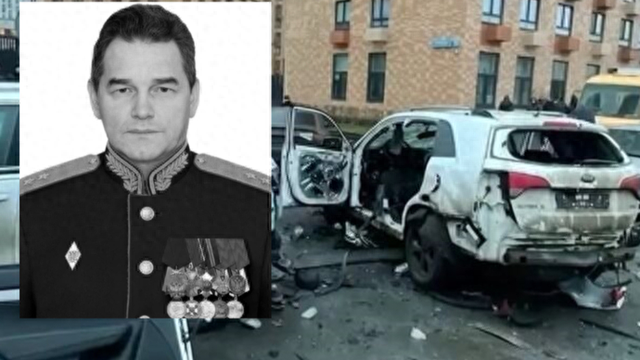
Core Viewpoint - The assassination of Major General Faniil Salvarov in Moscow highlights the vulnerabilities of Russian military officials in urban environments, raising concerns about security and potential intelligence leaks amid ongoing conflicts [3][9][10]. Group 1: Incident Details - Major General Faniil Salvarov was killed by a roadside bomb while preparing to leave his residence, marking a significant loss for the Russian military [3][5]. - This incident is part of a troubling trend, as Salvarov is the third high-ranking Russian officer to be killed in Moscow and its surroundings in over a year [7]. Group 2: Implications for Military Security - The attack reflects a structural asymmetry, where Russian officers live in relatively open environments without adequate security, contrasting with Soviet-era practices [9]. - The lack of a robust security framework post-Soviet Union has created a vacuum that has translated into real risks for military personnel [9]. Group 3: Intelligence and Information Leak Concerns - Following the assassination, discussions about potential information leaks have intensified, with calls to identify possible insiders [10]. - Salvarov's personal information was found on a Ukrainian extremist website, raising questions about the sources of intelligence that may have facilitated the attack [10][11]. Group 4: Broader Context and Strategic Considerations - The timing of the attack coincides with U.S. efforts to mediate ceasefire negotiations between Russia and Ukraine, suggesting possible strategic motives behind the assassination [12]. - Observers speculate about the potential indirect involvement of Western intelligence agencies, although U.S. officials have denied such claims [14].