文明交流与融合

Search documents
“中国年”风靡世界 “春节游”魅力四射
Xin Lang Cai Jing· 2026-02-22 02:32
Group 1 - The core idea of the articles is that the Chinese New Year has evolved from a local celebration to a global cultural phenomenon, symbolizing a shared human pursuit of values such as reunion, harmony, and progress [2][4] - The Chinese New Year is now recognized as a public holiday in nearly 20 countries, with the issuance of zodiac stamps in over 30 countries, indicating its growing global influence [2] - The celebration includes various cultural exchanges, such as foreign tourists engaging in traditional Chinese activities, which enhances mutual understanding and appreciation between cultures [3][4] Group 2 - The increase in inbound and outbound tourism during the Chinese New Year reflects a significant rise in cultural exchange, with data showing a threefold increase in visitors to Sanya and a 15% rise in foreign tourists at Harbin Ice and Snow World [3] - The articles highlight the economic benefits of this cultural exchange, with Chinese goods being exported globally while foreign products find their way into China during the festive season [4] - The overall sentiment is that the Chinese New Year serves as a bridge for civilizations, promoting inclusivity and shared aspirations for a better life, thus contributing to a sense of a global community [4]
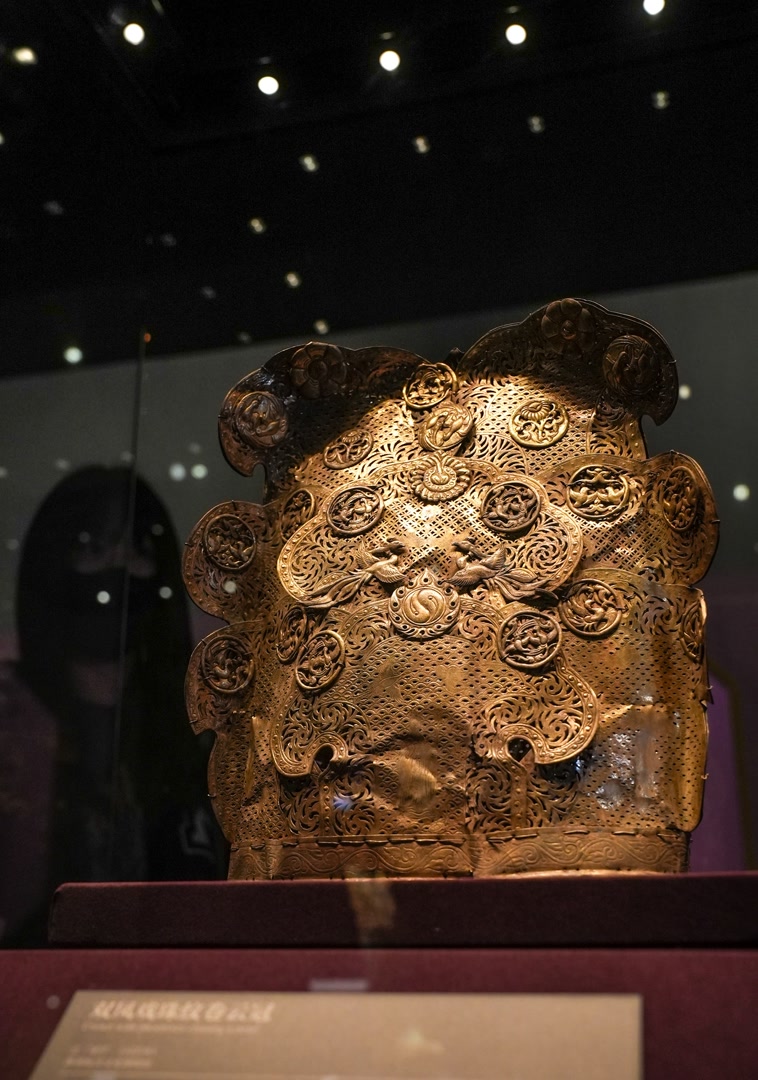
170余件套香港故宫金器首博首秀,展至明年3月1日
Bei Jing Ri Bao Ke Hu Duan· 2025-10-22 04:08
Core Viewpoint - The exhibition titled "Gold Threads: Ancient Gold Artifacts from the Hong Kong Palace Museum" showcases over 170 pieces of gold artifacts, highlighting the 3,000-year history of gold craftsmanship in China and its role in cultural exchange across civilizations [1][4]. Group 1: Exhibition Overview - The exhibition features a theme of "Gold Threads, Mutual Learning as a Bridge," systematically exploring the production, use, and dissemination of gold across regions such as the Eurasian steppe, Central Plains, and Tibetan Plateau [1]. - Most of the exhibits are being displayed for the first time, including a unique cavalry warrior-shaped ornament that reflects the peak of Persian art and its influence on various regions including China, Western Europe, Africa, and India [1][4]. Group 2: Cultural Significance - The gold artifacts not only possess high artistic value but also represent a historical narrative of cross-temporal cultural exchanges, linking pastoral and agricultural civilizations as well as Eastern and Western cultures [4]. - The exhibition includes various types of artifacts such as jewelry, belt ornaments, horse and carriage decorations, and ceremonial items, showcasing diverse designs and exquisite craftsmanship [4]. Group 3: Historical Context - Artifacts from the 15th to 13th centuries BC illustrate the trajectory of gold craftsmanship from the western end of the Eurasian continent to the east [7]. - Items from the Warring States to Han Dynasty display the unique "animal pattern" artistic style of nomadic cultures, while Tang Dynasty gold pieces reflect the rich cultural fusion along the Silk Road [7]. - The exhibition aims to demonstrate the evolution of Chinese gold craftsmanship techniques, from early hammering and casting to later complex gilding and gem inlaying, allowing visitors to appreciate both the artistic beauty and the advanced skills of ancient artisans [7]. Group 4: Exhibition Details - The exhibition is free to the public and will run until March 1, 2026 [7].