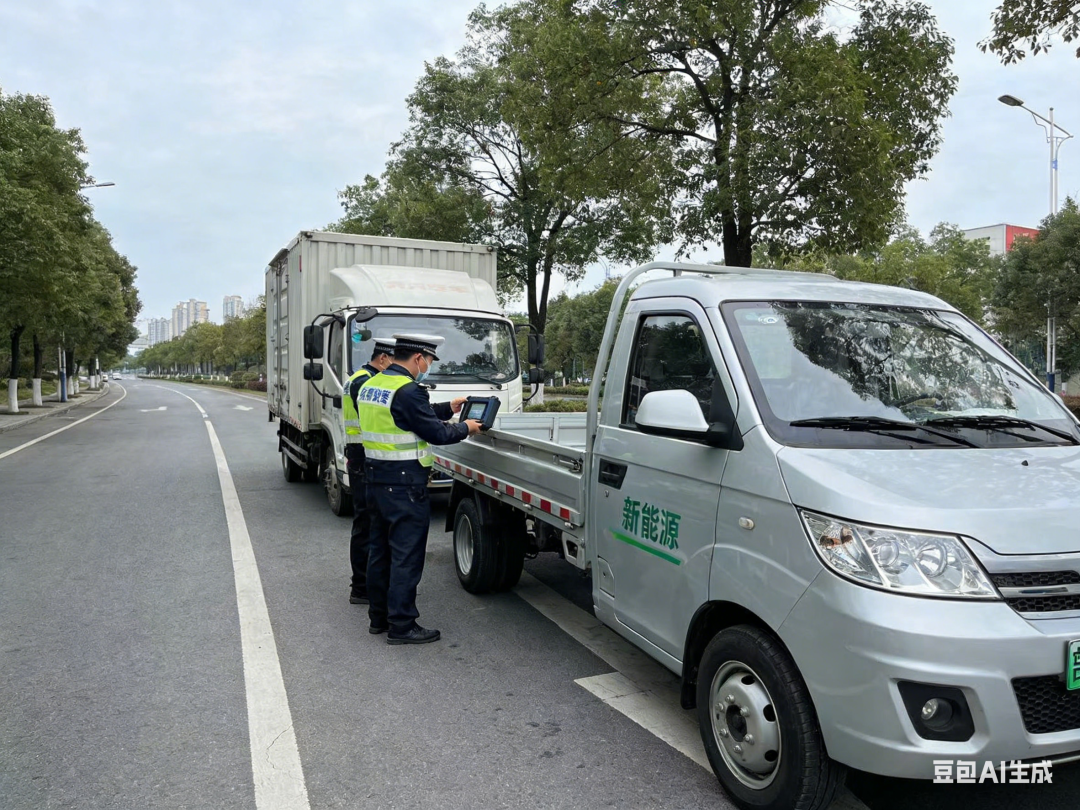
新能源小卡轻卡化

Search documents
新能源小卡的“轻卡化”
Xin Lang Cai Jing· 2026-02-05 12:18
Core Insights - The core viewpoint of the article is that the small electric truck segment is rapidly evolving from a supplementary role to a key driver of growth in the logistics industry, characterized by a trend towards "light truck" features, including increased vehicle size and load capacity, which encroaches on the traditional light truck market [1][18]. Market Growth and Trends - The sales of small electric trucks are projected to experience explosive growth, with an estimated total of 81,952 units sold in 2025, representing a year-on-year increase of 65.8%, capturing 13% of the electric logistics vehicle market, an increase of 2.2 percentage points from 2024 [1][18]. - Monthly sales in June and December are expected to exceed 8,000 units, indicating strong market demand and solidifying the foundation for the "light truck" transformation of small trucks [1][18]. Dual Development Tracks - The surge in small electric truck sales is driven by car manufacturers' precise market insights, leading to the continuous introduction of new products that adapt to market needs, with platform-based products and "light truck" customized products being the two main growth drivers [2][18]. Platform-Based Products - Platform data from major freight platforms like Huolala indicates that small trucks with cargo box lengths of 3.7m and 3.8m are the most adaptable and highest in order volume for urban distribution logistics, prompting manufacturers to focus on these dimensions [3][19]. - Notable examples include the remote F3E with a 3,700mm cargo box and the Foton Xiangling M2 EV, which also features a 3,700mm cargo box, all designed to meet high-frequency urban distribution needs [3][19]. "Light Truck" Customized Products - Customized "light truck" products are characterized by larger sizes, higher load capacities, and extended ranges, effectively bridging the gap between small and light trucks [4][20]. - For instance, the BYD T4 has a cargo box length of 4,100mm, while the Jianghuai Kaida EX6 has a total weight of 4,495kg and a load capacity of 2,000kg, closely matching traditional light trucks [4][20]. Regulatory Influence - The acceleration of the "light truck" transformation for small electric trucks is significantly influenced by regulatory changes, which have tightened compliance for 4.2m light trucks, creating opportunities for small trucks to capture market share [7][22]. - The compliance advantages of small electric trucks, with total weights of 3.495 tons and 4.495 tons, allow them to fill the market void left by stricter regulations on light trucks [7][22]. Product Diversity and Innovation - The release of regulatory benefits has led to a diverse development of small trucks, with manufacturers introducing innovative product concepts that break traditional boundaries [8][23]. - Examples include the Yutong T2, a "small light truck" that combines the flexibility of small trucks with the load capacity of light trucks, and the BYD T4, which features a passenger car design while maintaining "light truck" advantages [8][23]. Shift in Logistics Solutions - The logistics industry is undergoing a fundamental shift from a model where one vehicle type serves all needs to a solution-oriented approach that emphasizes precise adaptation to specific transport scenarios [10][25]. - Logistics companies are increasingly prioritizing suppliers that can offer a comprehensive range of vehicles to meet diverse operational needs, enhancing efficiency and cost-effectiveness [11][26]. Manufacturer Strategies - Almost all major manufacturers have entered the small electric truck market, expanding their product matrices to provide comprehensive solutions for logistics companies [12][27]. - Companies like Foton and Jianghuai are developing multiple models to cover various cargo lengths and battery capacities, aiming to achieve full scene coverage and meet the diverse needs of logistics enterprises [12][27]. Future Outlook - The trend of "light truck" transformation in small electric trucks is expected to deepen, with parameters aligning more closely with 4.2m light trucks, and product forms integrating passenger and intelligent features [15][30]. - The market competition will increasingly focus on solution offerings, with companies that have comprehensive product matrices likely to dominate [15][30].