昭宣中兴

Search documents
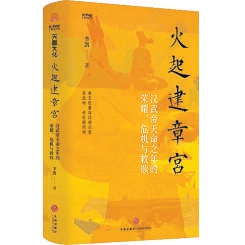
宇宙之殿建章宫的兴衰
Xin Lang Cai Jing· 2026-02-15 06:20
Core Viewpoint - The article discusses the historical significance and architectural grandeur of the Jianzhang Palace, built during the reign of Emperor Wu of Han, highlighting its role as a political center and its eventual decline, reflecting the complexities of Emperor Wu's life and reign [2][10][14]. Group 1: Historical Context - Jianzhang Palace was established in 104 BC, following a fire at the original site, and was later destroyed during the turmoil of Wang Mang's usurpation [2][9]. - The palace served as a political hub for Emperor Wu, who sought to continue his legacy and ambitions through its construction, symbolizing the peak of the Han Dynasty [2][10]. Group 2: Architectural Significance - The palace complex spanned over 20 li (approximately 10 kilometers) and was equivalent in area to eight Forbidden Cities, showcasing its monumental scale [10]. - The design included innovative features such as the "One Pool and Three Mountains" layout, representing a blend of garden art and the emperor's aspirations for immortality [10]. Group 3: Political Dynamics - Jianzhang Palace became a center for political activities, where Emperor Wu held meetings and made decisions, marking a significant phase in his rule [11]. - The palace's grandeur coincided with Emperor Wu's personal crises, reflecting his increasing paranoia and the impact of his mid-life challenges on governance [11][12]. Group 4: Decline and Legacy - Following Emperor Wu's death, the palace's significance diminished as political power shifted back to Weiyang Palace, indicating a departure from the previous era's ambitions [13][14]. - The eventual destruction of Jianzhang Palace by Wang Mang, who repurposed its materials for his new dynasty, symbolizes the cyclical nature of power and the transient legacy of Emperor Wu [14].