暗生命

Search documents
地球深部微生物生存奥秘破译
Ke Ji Ri Bao· 2025-08-07 01:28
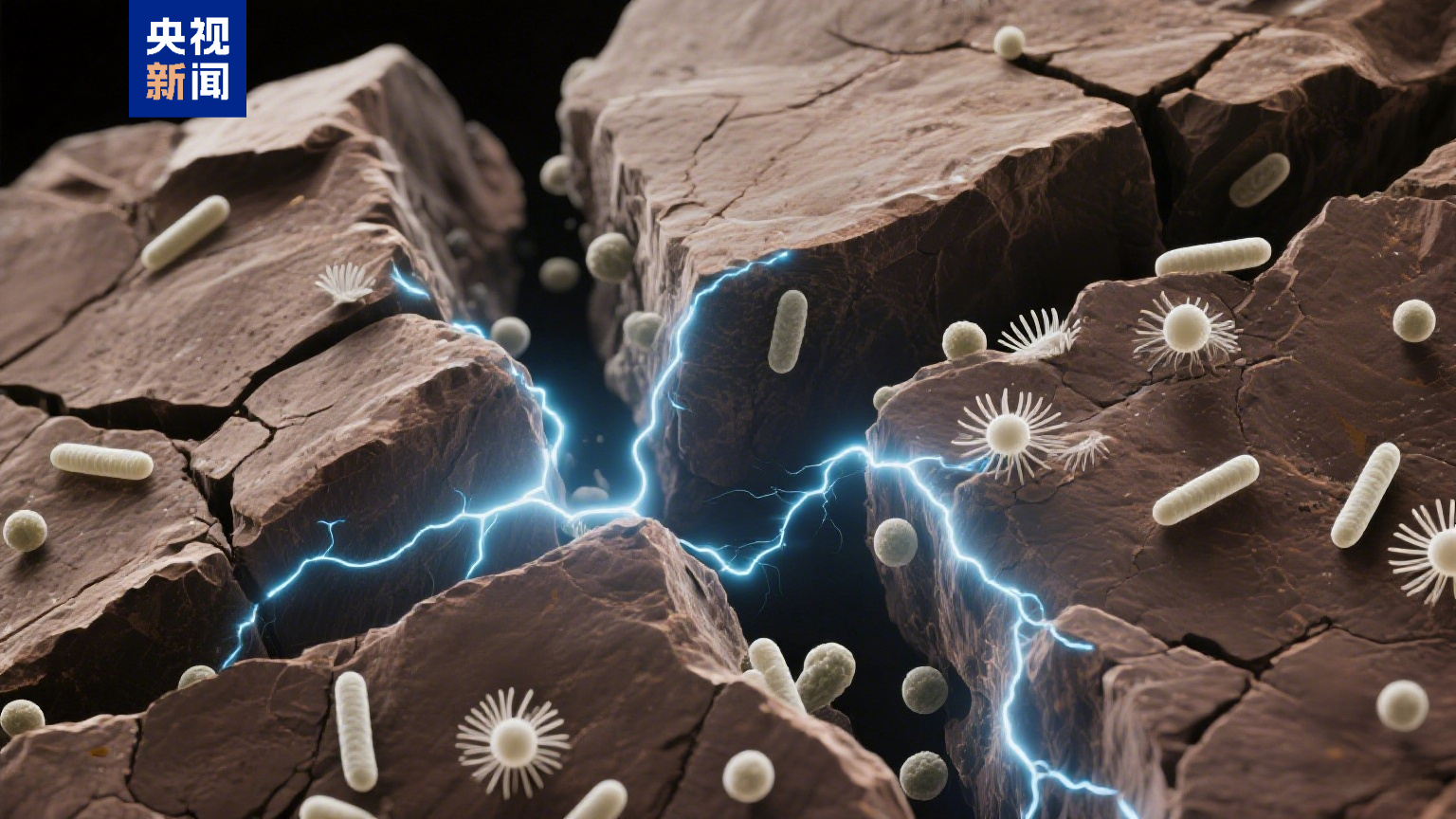
Core Insights - A significant discovery by the Guangzhou Institute of Geochemistry reveals that chemical energy released during geological faulting can sustain deep subsurface microbial life, challenging previous understandings of energy sources in Earth's deep ecosystems [1][2] - The research indicates that the hydrogen gas produced during rock fracturing is at least 100,000 times greater than that generated by known serpentinization or radiolytic processes, suggesting a robust energy source for microbial communities [1] - This energy mechanism could also apply to extraterrestrial environments, such as ancient fault lines on Mars or cracks in the ice shell of Europa, providing a potential energy source for "dark life" in the solar system [2] Research Findings - The study utilized a "fracturing-reaction" experimental platform to simulate fault activities several kilometers underground, demonstrating that the interaction of fractured rock surfaces with water generates substantial amounts of hydrogen and hydrogen peroxide [1] - The research team discovered that the coupling of hydrogen radicals and hydrogen peroxide drives an iron redox cycle, creating an "underground electric grid" that supplies essential energy to microorganisms without the need for photosynthesis [1] - Calculations indicate that earthquakes can produce a hydrogen flux of 737.2 moles per square meter annually at fault surfaces, which exceeds the energy requirements for microbial communities, allowing for rapid growth and reproduction [2]
中国科学家研究发现 地壳断裂瞬间释放的化学能成为地下微生物的“阳光替身”
Yang Shi Xin Wen· 2025-07-20 06:21
Core Insights - A groundbreaking study published by the Guangzhou Institute of Geochemistry reveals that chemical energy released during crustal fractures can serve as an alternative fuel for underground microorganisms, potentially reshaping the understanding of deep Earth ecosystems and providing a basis for the concept of "dark life" on planets like Mars and Europa [1][2] Group 1: Research Findings - The research team simulated fracture activities at depths of several kilometers, demonstrating that the hydrogen gas produced during rock fractures is significantly higher than previously known processes, with a yield at least 100,000 times greater than serpentinization or radiolytic processes [1] - The coupling of hydrogen free radicals and hydrogen peroxide drives an iron oxidation-reduction cycle, continuously releasing electrons that flow between essential elements for life, forming an invisible "underground grid" that microorganisms can utilize without photosynthesis [1] Group 2: Implications for Extraterrestrial Life - Calculations indicate that earthquakes can generate a hydrogen flux of up to 737.2 moles per square meter annually, providing energy that far exceeds the needs of microbial communities, allowing for rapid growth and reproduction [2] - This energy mechanism may also occur in ancient fault lines on Mars or in cracks in Europa's ice shell, potentially serving as a long-term "battery" for "dark life" in the solar system [2] - Future extraterrestrial life detection missions should focus on searching for redox signals near fracture zones, which may indicate the presence of life [2]